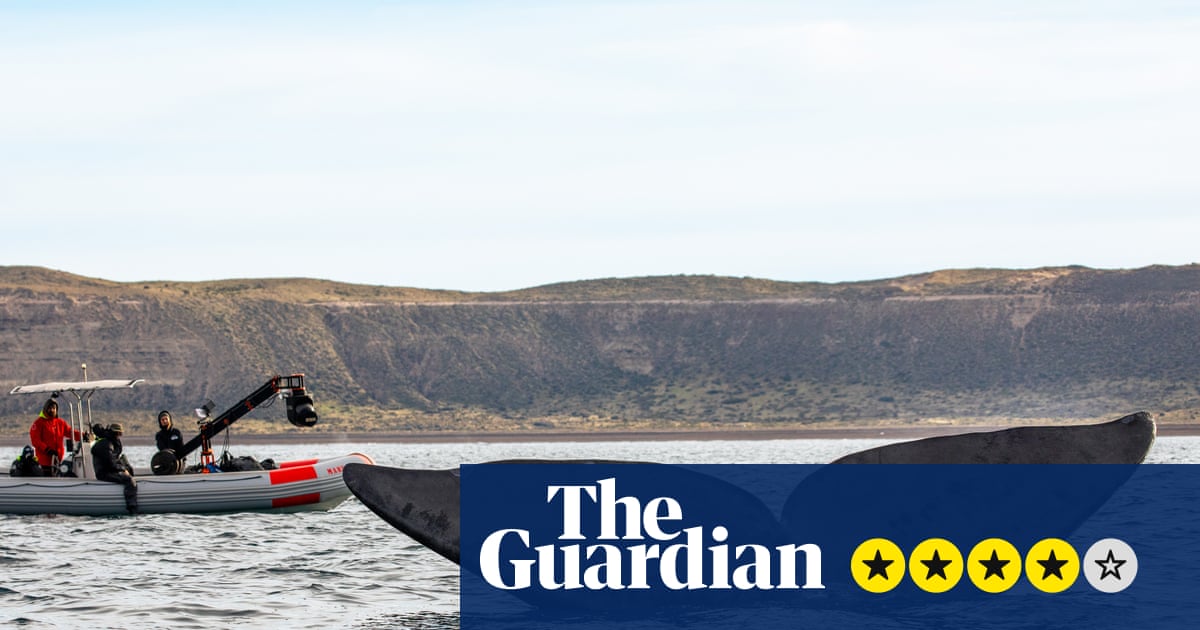
We settle down in front of a fresh Blue Planet, trying to escape a weary sadness that stalks us from several angles. It is a new natural history show narrated by the 100-year-old David Attenborough, so there cannot be many more of those to enjoy. It is a Sunday-night showcase on BBC One, which is nothing like as significant a shared cultural event as it once was.
The film-making can’t possibly be as revelatory as the original Blue Planet in 2001, and even the impact Blue Planet II had on conservation in 2017 feels unrepeatable: the attention it brought to plastic pollution in the ocean turned out to be a minor blow struck in a battle against environmental catastrophe that we have, since then, continued to lose. But if we stop requiring it to be another landmark and appreciate it as just another wildlife series, Blue Planet III is a corker. Its excellence is a bright flash of hopeful defiance, and if it often falls into familiar patterns, that familiarity is a comfort.
There are, too, still wonders left to find. Episode one lands a scoop on the sandy sea floor in Shark Bay, Western Australia, where the Blue Planet team solve the mystery of why dolphins can be seen clutching sea sponges in their mouths. Stick around for the making-of featurette at the end, which reveals that solving the puzzle required the skilful use of the latest remote cameras, a careful courting of the dolphin in question, and the real risk of Alex, the cameraman, being eaten by a tiger shark.
Around the corner in northern Australia, tawny sharks are doing something new, or at least new to us: not just hunting in packs, but pulling off a grand deception as a team by pretending to be asleep so as not to spook the herring, before working together to drive those tasty minnows shorewards, trap them, and feast. Every big new Attenborough show has to have a tense death chase, and for that we travel to Brazil, where it’s shark v turtle. The turtle loves to munch on seaweed at the bottom of the deeper waters away from the beach, but eventually it has to break the surface to grab some air, and by doing so it alerts the shark to its presence.
A drone in the air above, and a camera fixed to a turtle’s back show us every play in the game as the turtle flees to the shallows and, when that doesn’t work, pulls off a sharp-turn manoeuvre that leaves the shark’s teeth glancing off hard shell. We must, also, have some comic relief, to the sound of jauntier music and a playful mischief in Attenborough’s tone. So off we go to Indonesia, to marvel at a pair of harlequin shrimp in their ridiculous two-tone livery, tumbling around adorably as they try to snack on a starfish.
Their every movement is funny, although it’s less amusing for the starfish, which suffers the indignity of having one of its arms pulled off by two prawns in jester costumes. There’s more hilarity in the Brazilian mangroves, which brings us the obligatory report from the unnervingly relatable animal dating scene. In the sloppy mud of low tide, a fiddler crab is proud of his one big claw and waves it expectantly at the local females, only for the camera to pan back and reveal he is but one of hundreds of filthy loners, waggling their precious appendages and craving attention.
Extract — continue reading at the source.