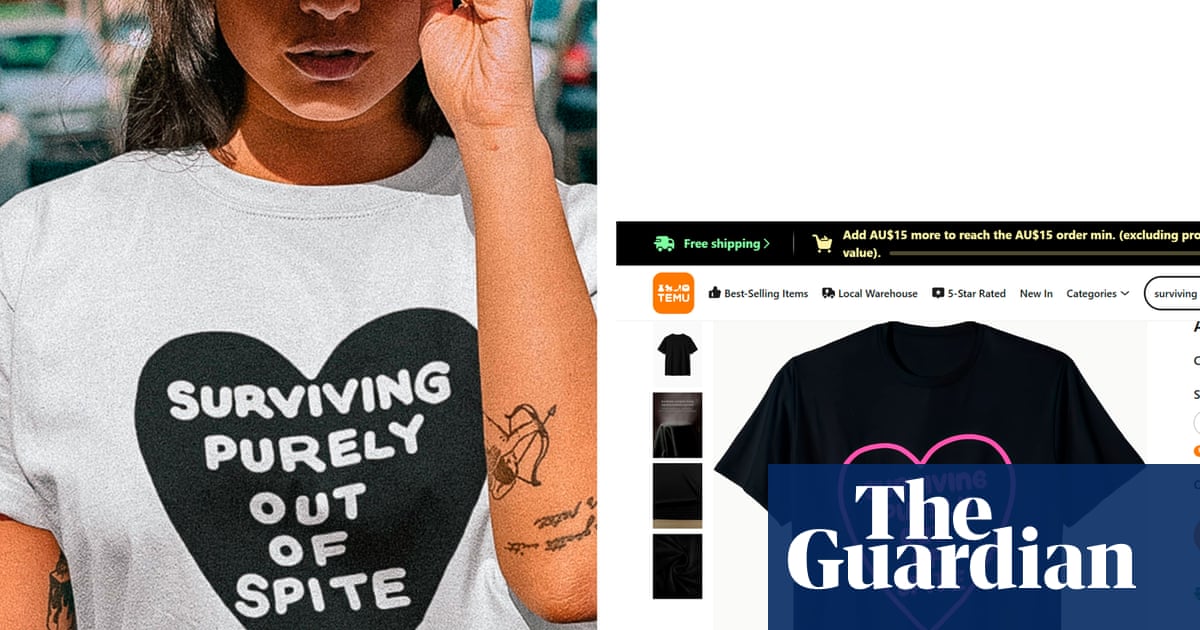
After 15 years running a small business making T-shirts, Warwick Levy says it was “brutal” when he first discovered an identical design for sale on Temu. It turned out there was an overwhelming amount of T-shirts identical to his own for sale on the Chinese e-commerce marketplace. Between 2025 and earlier this year, Levy, 37, found thousands of rip-offs.
Levy urged Temu to take greater responsibility for copyright infringement by the merchants who sell products on its website, do more to stamp it out, and improve its complaints processes. His story is the latest in a string of complaints by designers accusing major companies of facilitating theft of their designs, cases in which AI “scraping” tools may have been used to extract their art online before it was copied. Despite original creative works being automatically protected by copyright law in Australia, making a claim of copyright infringement is not necessarily straightforward.
Amid broader concerns from artists and small brands about their designs being regurgitated by massive online retailers, the Albanese government is considering giving AI companies greater access to Australians’ content. The government remains entangled in copyright negotiations with major AI companies, but the proposed reforms could give tech companies the legal right to scrape online content and use it to train their latest AI models. Levy says he believed his T-shirts were copied by an AI tool which took the designs by scraping the entire Lonely Kids Club website.
Levy, who notes that generative AI was not used in any of his T-shirt designs, says any government moves to facilitate the AI scraping of creative content would be “devastating”. Ultimately, Levy says he was able to get Temu to take down the listings by making a trademark claim rather than a copyright claim over the designs, because the sellers were using the “Lonely Kids Club” brand name on their listings. Levy says that attempting to complain to Temu was a stressful process full of “roadblocks”: the standard reporting forms kept failing or closing, and direct emails “got nowhere”.
He used his Australian trademark over his business name to bulk-report the listings and the overwhelming majority came down, although he said he had spotted some copycat T-shirts since then. A Temu spokesperson said it was a marketplace used by independent sellers, whom it prohibited from listing products that “infringe intellectual property rights”.
Extract — continue reading at the source.