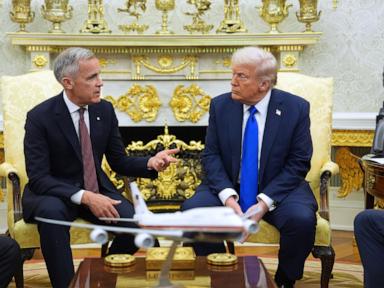
British Chancellor John Healey will set out the country’s autumn budget, the government’s tax and spending plans, the first under Prime Minister Andy Burnham’s premiership amid high inflation and government spending levels. While the budget will be announced in parliament on Wednesday at , speculation about what it will lay out has ranged from a series of tax announcements to commitments to defence spending. But the country continues to deal with a rising cost-of-living crisis and energy bills are expected to see their biggest rise in four years in January due to the ongoing conflict in the Middle East.
As total United Kingdom borrowing broke through the 3 trillion pounds ($3.99 trillion) barrier for the first time in September, the country is already spending 100 billion pounds ($133bn) each year just on servicing that debt. Despite that challenge, the chancellor has said the budget will move “money and power out of Westminster and into every postcode around Britain”. In a speech last month, Healey said that he and Burnham were in “lockstep” in meeting fiscal rules, “to balancing the books, with a buffer to protect against uncertainty, to control borrowing to bear down on inflation, and reducing long-term pressures on our public finances”.
Following the two budgets from former Chancellor Rachel Reeves, which included big tax and spending increases, Healey’s budget is expected to take a more “steady as she goes” line, which some say is the wrong approach. Here’s how he will be expected to achieve that. On Monday, Burnham said Healey would set out a plan to fully fund the government’s defence plans and commitments, telling ITV’s Good Morning Britain that his government’s first challenge was financing the already announced defence investment plan.
Announced in June, the plan is backed by 298 billion pounds ($396bn) of investment and will transform the armed forces as the country moves to “warfighting readiness” and stepping up “European security”, according to a government policy paper. But Burnham said it was “crucial that we have a funded plan that we can then implement, and we will set out more details on Wednesday as to how we’ve done that”. He added that NATO commitments of spending 3 percent of gross domestic product (GDP) on defence spending by 2030 and 3.5 percent by 2035 are included in the pathway, explaining that national security issues were “at the top of the priority list”.
As it stands, Britain spends about 2.6 percent of its GDP on defence. The Guardian reported that on defence spending, Healey aims to close a 4.7-billion-pound ($6.2bn) funding gap in the government’s plan inherited from the previous Labour Party leader, with cuts to other departmental budgets likely to fund it. Government borrowing and inflation continue to rise, which is a potential spanner in the works for proposed spending.
Last week, UK inflation and government borrowing both hit their highest levels in a year. According to the Office for National Statistics, borrowing was nearly 25 billion pounds ($33bn) last month alone, “a little higher than a year earlier, as spending, including higher debt interest costs, increased more than government income, partly reflecting the impacts of inflation”. ONS added that in the financial year to September 2026, borrowing remained below the same period last year, but it was higher than the Office for Budget Responsibility’s forecast.
Extract — continue reading at the source.