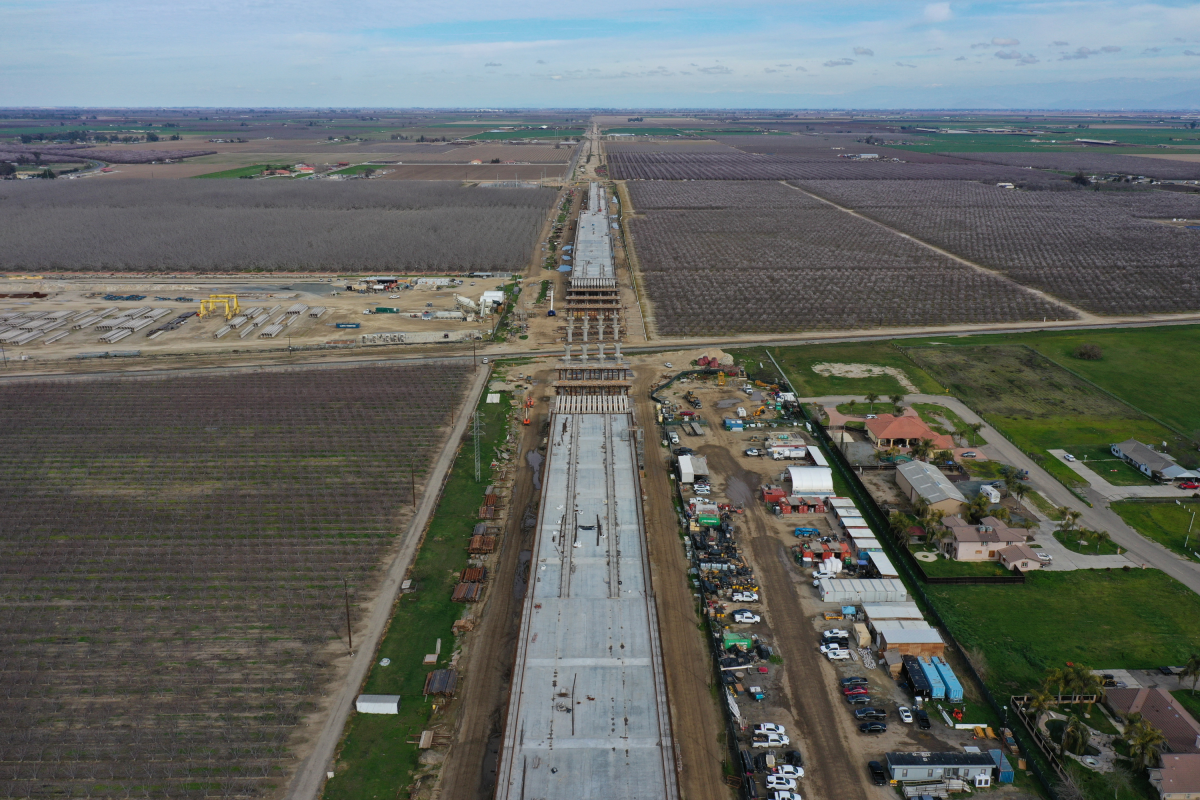
California's high-speed rail project could run out of money by December 2027, potentially forcing officials to further scale back the planned Central Valley route, according to Inspector General Benjamin Belnap. State leaders will need to find new funding or secure a loan next year to avoid a looming financial cliff that could disrupt construction plans. Communities expecting service on the planned Bakersfield-to-Merced route could see the initial operating segment shortened even further if additional money is not secured.
Newsweek reached out to Belnap via email for comment on Monday. California's high-speed rail project, meant to take riders from Los Angeles to San Francisco, has faced years of delays, rising costs and funding challenges while state officials work toward opening an initial passenger route in the Central Valley. Now, the project's government watchdog warns that time is running short, with a funding gap that could force officials to reduce the scope of the first operating segment unless lawmakers act.
Speaking on California Politics 360 on Sunday, Belnap said he warned about the approaching fiscal cliff earlier this summer, but lawmakers took no action before concluding the legislative session in September. According to Belnap, state officials will have to move quickly next year to identify money in the budget or obtain financing to keep construction plans on track. "What that means is, they have to dramatically reprioritize expenditures," he said on the show.
Project leaders have already narrowed their focus to completing a rail line between Bakersfield and Merced because the broader vision for the statewide system remains beyond current funding capacity. That Central Valley segment is expected to cost as much as $36 billion. Belnap said the financial situation could force another reduction in scope.
Instead of connecting Bakersfield and Merced, officials may have to concentrate on completing a shorter stretch between Madera and Poplar Avenue in rural Kern County. Belnap said concerns about long-term financing emerged when he reviewed the authority's 2023 project update after assuming his role. One challenge involves the project's inability to secure so-called "non-impairment language" during the most recent legislative session.
Belnap said that provision would have helped the authority use future revenue from California's cap-and-invest program to support financing efforts. The next opportunity to obtain that language will not come until July 2027, leaving limited time before the projected funding shortfall arrives. As a result, policymakers may have to weigh difficult decisions about whether to devote additional taxpayer money to the project or pursue borrowing.
Extract — continue reading at the source.