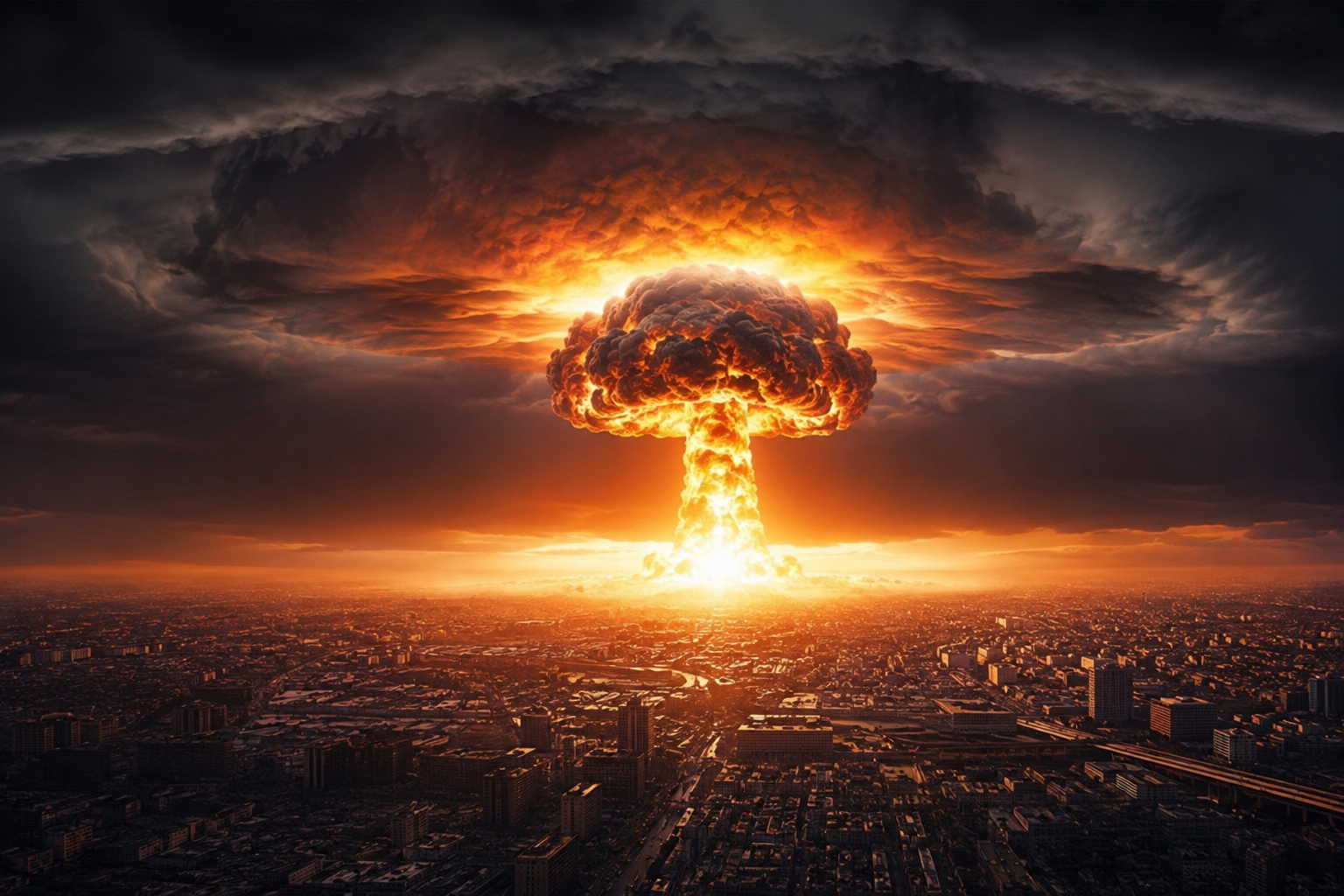
Every year on 29 August, the world observes the International Day against Nuclear Tests. Established by the United Nations General Assembly in December 2009, the day is more than a symbolic entry in the international calendar. In today’s increasingly uncertain geopolitical environment, its significance has become particularly pronounced.
Rising tensions between major powers and renewed debates over nuclear deterrence have once again brought the risks associated with nuclear weapons and testing to the forefront of international attention. A nuclear weapon is capable of destroying a city within minutes, killing or injuring hundreds of thousands of people and leaving environmental consequences lasting for generations. Radiation does not recognize borders, distinguish between villains and victims, or disappear when a war is over.
The effects of nuclear weapons extend far beyond the moment of detonation. For decades, the relative absence of nuclear war created a dangerous sense of familiarity. Humanity became accustomed to living under the shadow of weapons capable of ending civilization.
Yet survival should not be confused with safety. The fact that nuclear weapons have not been used in war since 1945 does not prove that the international system is secure. It may demonstrate the effectiveness of deterrence and the influence of international norms.
After the Cold War ended and the Soviet Union collapsed, many believed that the nuclear danger had sharply diminished. The theory of nuclear deterrence rests on a simple but terrifying proposition that no rational state will launch a nuclear attack if it knows that the response will guarantee its own destruction. During the Cold War, this logic became known as mutually assured destruction.
Nuclear weapons were presented not as instruments to be used, but as weapons whose very existence would prevent their use. History contains numerous episodes in which nuclear escalation was avoided not because deterrence operated perfectly, but because individual people questioned an alarm or refused to follow the logic of the moment. A security system that depends on permanent technical perfection and uninterrupted human factors cannot be described as completely safe.
Extract — continue reading at the source.