US Treasury Secretary Scott Bessent has unveiled a new phase of Washington's economic campaign against Iran, this time aimed not only at sanctioned Iranian institutions but at the international networks Tehran has used to keep money and goods moving. Speaking on August 24, Bessent said the United States would target what he called five economic lifelines: digital assets, technology, gold, aviation and shipping. He also warned foreign entities that help the country illicitly move money around.
"Any entity that facilitates money laundering for Iran will be removed from the US dollar-based financial system," Bessent said. "The countdown starts now." The approach represents an effort to tighten secondary sanctions, putting pressure on companies, financial intermediaries and trading partners outside Iran rather than simply adding restrictions on an economy already heavily sanctioned. The US announced measures against around 60 individuals, entities and vessels.
But it stopped short of targeting major Chinese banks, highlighting the limits of how far the US may be willing to push enforcement against Iran's biggest remaining trading partner. For years, Iran has relied on networks outside the formal banking system to move money. Exchange houses, gold, cryptocurrency, front companies and opaque shipping networks have helped Iran bypass sanctions.
The latest US strategy appears designed to make those methods more difficult by increasing the cost for foreign intermediaries and comes at a vulnerable moment for Iran. Oil exports have fallen sharply amid US efforts to disrupt Iranian oil shipments. Shipments to China, Iran's main oil customer, dropped to about 534,000 barrels per day in August from 823,000 in July and from a peak of around 1.58 million barrels earlier this year.
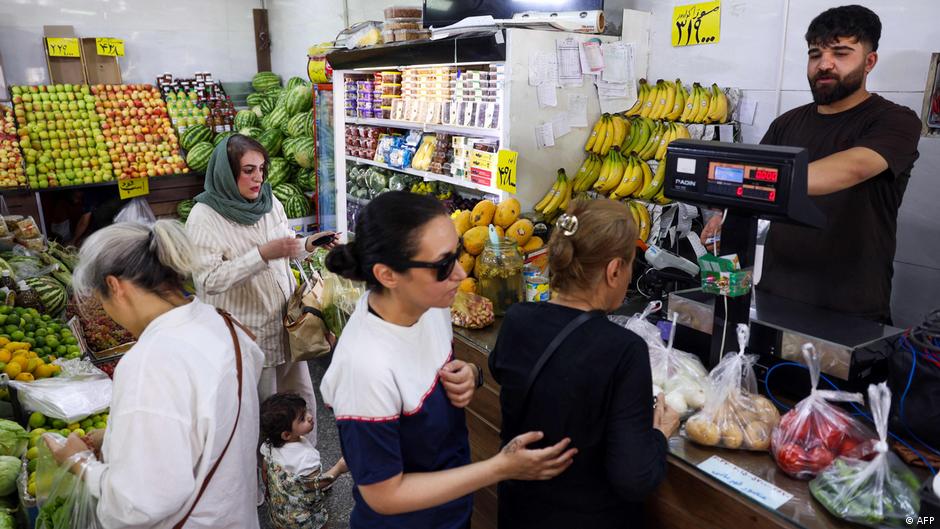
At home, food prices rose around 128% year on year in July, according to official data cited by news agency. Iran's currency has lost so much value that many transactions, including property and car sales, are now conducted in US dollars. Advertisements are sometimes even priced in dollars.
The pressure is increasingly visible in ordinary businesses. A building materials seller in the capital, Tehran, told DW that inflation has become so severe that simply holding goods can sometimes be more profitable than selling them. "If I keep something in my warehouse for a month, its price may rise by more than the profit I would make by selling it today," he said.
Extract — continue reading at the source.