BRUSSELS— The European Union and Canada are teaming up on compute power — a key element for training artificial intelligence models — with Canada set to join the EU's supercomputer network. European Commission president Ursula von der Leyen said on Thursday Canada "will now become part of this network", confirming a POLITICO report from earlier this week that both sides were discussing the country's entry into the European supercomputing network. Canada joining "enables Canadian industry, startups and researchers to access European supercomputing," von der Leyen said.
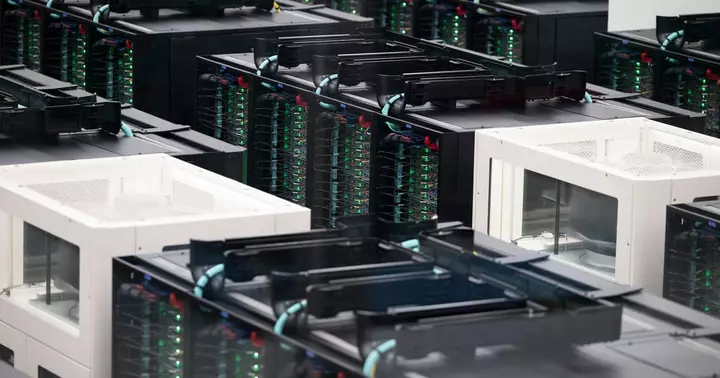
"Paired with Canada's pioneering AI industry, this would allow us to develop highly competitive, innovative and safe AI systems." The EU's supercomputing network is run by the EuroHPC Joint Undertaking, an EU public-private vehicle with an €8.2 billion budget. The network consists of 14 supercomputers (some ranked in the global top 10), 19 AI-focused AI factories and 10 quantum computers. The vehicle will also run seven massive AI data center hubs, known as AI gigafactories, set to be built next year with a total investment cost of €30 billion.
Experts praised a possible EU-Canadian compute power team-up, but warned it's only the start. But he added that for now “it doesn’t put a dent into the actual dependence" on the U.S. Canada's engagement in the EU's supercomputer network builds further on Canada's previous partial involvement in the EU's flagship research and development program, Horizon Europe.
To date, 38 countries have participated in the EU's supercomputing network: 27 EU member countries plus non-EU countries including Norway, Switzerland, the United Kingdom, Israel and Turkey.
Extract — continue reading at the source.