By Mazahir Afandiyev, in collaboration with the Editorial Team The 27th of September 2020 began for the entire Azerbaijani people as a long-awaited and proud day. It once again demonstrated the strength, determination and bravery of the victorious Azerbaijani Army, a strength that Azerbaijan had experienced throughout its history of statehood and that was demonstrated to the whole world. On that very day, the Armenian armed forces, which grossly violated the ceasefire regime, launched another aggression against Azerbaijan by intensively striking the positions of the Azerbaijani armed forces along the entire front line, while deliberately subjecting populated areas of the Tartar, Aghdam, Fuzuli and Jabrayil districts to artillery fire.
As a result, alongside military personnel, 11 Azerbaijani civilians, including two children, were killed. Guided by the norms and principles of international law, as well as the four well-known resolutions of the United Nations Security Council that had remained on paper for 27 years, and with the aim of repelling the enemy's military provocation and putting an end to its aggression, as well as ending the occupation of our territories that had continued for more than 30 years, Supreme Commander-in-Chief and Great Commander, President Ilham Aliyev, immediately ordered the Azerbaijani Army to launch a counter-offensive along the entire front. Thus, our activities aimed at liberating Karabakh, for which we had yearned for 30 years, began on September 27 with the “Iron Fist” counter-offensive operations and turned into the 44-day Second Karabakh–Patriotic War, ending with the liberation of Shusha, the pearl of Karabakh, from occupation.
As a result of successful military operations, by November 9, five cities, four settlements and 286 villages were liberated from occupation, while the victorious Azerbaijani Army defeated the Armenian armed forces and the terrorist groups formed in Karabakh. On November 10 of the same year, following Armenia's official appeal to the Russian Federation, the war was stopped with the direct participation of Russia and by agreement of the heads of all three states. A declaration consisting of nine provisions was adopted between Azerbaijan and Armenia, and thus Armenia signed an act of capitulation.
As stated by Armenian Prime Minister Nikol Pashinyan, Armenia had no choice but to accept defeat before our Glorious Army. Therefore, the occupying side admitted its defeat and the conflict was officially brought to an end. Yet the end of active hostilities did not mean that the consequences of the conflict disappeared overnight.
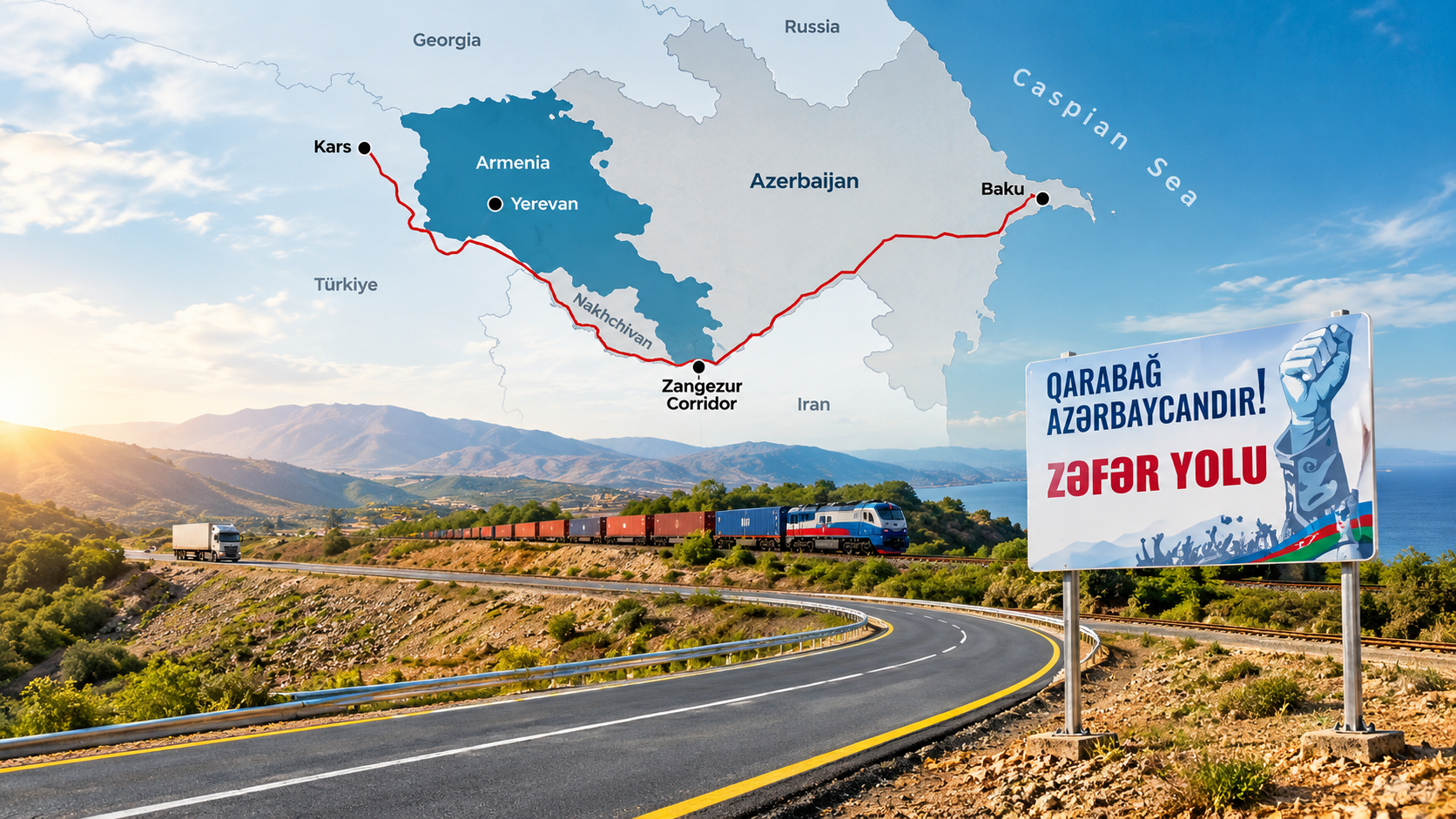
The post-war period created a second and equally important task: to turn military victory into a durable political, economic and social reality. This meant restoring communities, rebuilding infrastructure, returning people to their homes, reviving economic life and, ultimately, changing the physical and economic geography of a region that had been shaped by conflict for decades. As a result of continuing the victory achieved on the military front at the political level, within 20 days after the 44-day Patriotic War, three districts—Aghdam on November 20, Kalbajar on November 25, and Lachin on December 1—were handed over to Azerbaijan.
On August 26, 2022, the city of Lachin, as well as the villages of Zabukh and Sus, were taken under control. Thus, in accordance with the trilateral statement, the process of peacefully returning the Aghdam, Kalbajar and Lachin districts was completed. The War, which lasted only 44 days, and the bravery of our heroic officers and soldiers turned the centuries-old aspirations of our grateful people into reality, liberated our lands that had been under occupation, and restored historical justice.
Extract — continue reading at the source.