Beijing has revealed concerns over the unpredictable risks of artificial intelligence—including to the survival of its long-ruling party state—amid resistance in both the United States and China to calls for the industry to slow down. Chinese state news outlets this week appeared to roundly reject a manifesto on global AI safety published over the weekend by Anthropic CEO Dario Amodei, who suggested pausing the development of frontier systems to give companies time to ensure thorough testing and model "alignment," or compliance with ethics guidelines. Amodei had warned that the risks of the powerful technology—loss of human control of AI or the misuse of AI for cyberattacks against the world’s increasingly digital economies—were outweighing the benefits of rapid advancement without proper safeguards.
Sam Altman of OpenAI and Elon Musk, who founded xAI in 2023, which was later acquired by SpaceX and rebranded as SpaceXAI in 2026, both agreed. The nationalist Chinese tabloid the Global Times said on Sunday that Amodei’s statement seemed rational on the surface but had a "hidden agenda" targeting the Chinese AI sector. It pointed to recommendations that would see the U.S. cut China out of its ecosystem of more advanced AI hardware and know-how to stay ahead of the competition.
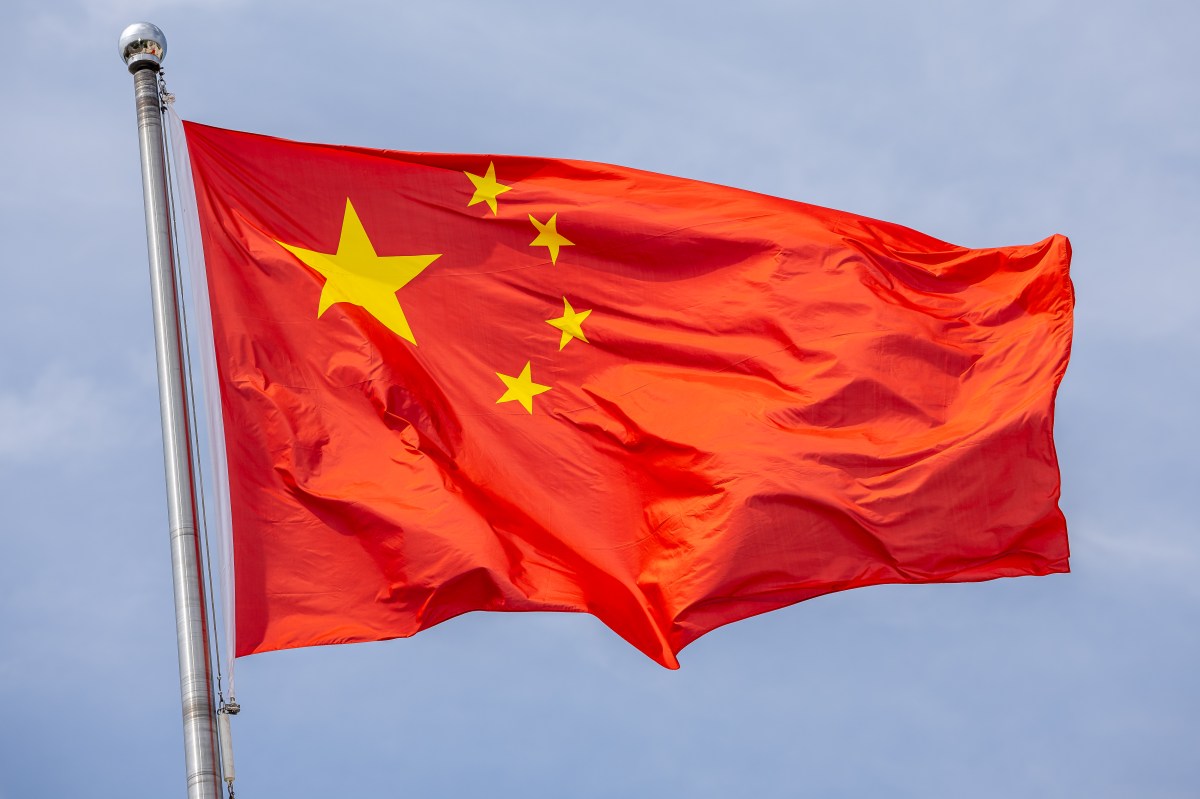
U.S. restrictions on emerging technologies that could turbocharge the stagnant Chinese economy have long been a concern for leaders in Beijing. But the collective hard security risks of falling behind in the AI race were outlined publicly for the first time last week by the country’s top intelligence official, Chen Yixin. In an article in the magazine China Cybersecurity, Chen placed regime security at the top of six major AI risks.
Hostile forces wielding AI models not under Chinese control could spread false and harmful narratives that could directly threaten China’s "political security," he said. Potential attacks against critical infrastructure were among the other concerns, alongside the extraction of sensitive data by foreign intelligence agencies, tech export controls, challenges to social governance and the use of AI in modern warfare. The formal declaration about AI security included warnings previously stated by Chinese leader Xi Jinping himself and by the Ministry of State Security, which Chen leads.
China’s main spy agency has for years warned that foreign actors could misuse AI tools such as cheap generative images to manipulate public opinion, threatening the Communist Party’s usually tight hold on information. The solution to the "complex risks and challenges" posed by rapid AI growth, he said, was to "adhere to the party's control of the internet and the party's control of data," and "transform the advantages of the party's leadership into effective AI governance." Chen’s statement showed that the U.S. definition of AI safety differed from that of China, with the former focused on catastrophic outcomes for humanity and the latter on the legitimacy and longevity of the Communist Party, experts said. "In other words, from the CCP’s perspective, the central question is not simply AI versus no AI.
Nor is it even fundamentally a contest between the U.S. and China. It is a contest between the U.S. and the CCP over who gets to control AI, data, information, and ultimately the future of society," Henry Gao, a professor of law at Singapore Management University, said on X. "And whoever wins that contest will decide the future of humanity," Gao said.
Extract — continue reading at the source.