China has emerged as a central player in the growing debate over artificial intelligence regulation, prompting calls for global cooperation on a "slow down" agreement. The country's top intelligence official warned that AI could threaten the Chinese Communist Party's grip on power, calling for tighter government oversight and greater party control of the technology in an article published by the state-run magazine China Cyberspace on Sunday. Chen Yixin, head of China's Ministry of State Security, said AI poses risks ranging from foreign espionage and misinformation campaigns to cyberattacks on critical infrastructure, while also highlighting U.S.
AI models as emerging cybersecurity threats, The New York Times reported. On Monday, Anthropic co-founder Jack Clark said AI companies should be required to maintain a verifiable "kill switch" that can shut down advanced AI systems if they become dangerous. Clark told the BBC that Anthropic already has such a mechanism and suggested governments could eventually mandate independent third-party audits to ensure AI firms can "pull the plug" when necessary.
Despite echoing calls for regulation from lawmakers and AI industry leaders, President Donald Trump has said the United States must prioritize winning the global AI race over slowing development. Guo Jiakun, a spokesperson for China's Ministry of Foreign Affairs, shared similar sentiments during a press conference Monday when asked about AI regulations. China's state-backed Global Times newspaper went further, describing proposals that include tighter controls on Chinese access to advanced chips as a "Cold War playbook." Newsweek reached out to the Chinese embassy in Washington, D.C., via email for comment.
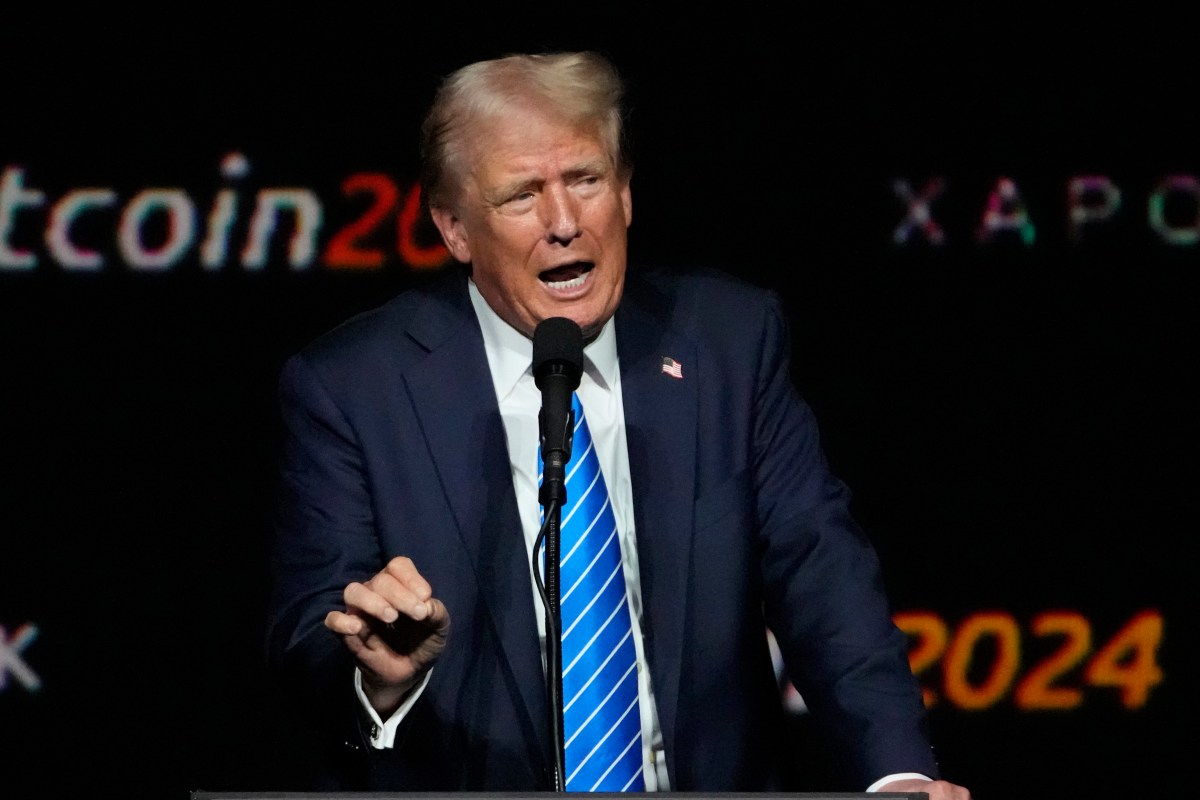
"The only control or 'guardrails' that AI needs is a STRONG AND SMART (High IQ!) PRESIDENT, and the U.S.A. has that, in spades!" Trump posted Monday on social media. The remarks highlight a widening divide between policymakers pushing rapid AI expansion and some of the industry's most influential leaders, who are warning that the technology is advancing faster than governments and companies can safely manage. His comments came just days after Anthropic CEO Dario Amodei warned that increasingly powerful AI systems could outpace existing safety protections and called for a global effort to slow frontier AI development.
The debate is no longer just about technology, as it is increasingly being framed as a geopolitical competition between the United States and China, with implications for economic growth, national security and military power. Both Trump and Vice President JD Vance have argued that heavy regulation could undermine America's lead just as competition with China intensifies. Vance said Monday that he was skeptical of major AI companies asking the government to regulate them, saying it felt "a bit of a Trojan horse" and warning against policies that could hamper innovation.
At the same time, leading AI executives, including Amodei, OpenAI CEO Sam Altman and Elon Musk, have endorsed measures to slow the development of increasingly powerful models while stronger safety systems are created. They argue that advanced AI could present risks ranging from cyberattacks and disinformation campaigns to autonomous systems that operate beyond human oversight. Cybersecurity experts, who have already warned of the dangers of AI interfering with industries everyday Americans rely on, say the answer is not necessarily to stop innovation but to build better safeguards alongside it.
Extract — continue reading at the source.