AI agents are reshaping educational systems and transforming teaching and learning in design disciplines. However, the psychological mechanisms underlying AI-agent use among design graduate students remain underexplored, as does the interaction between design-specific tasks and AI agents. To address this gap, this study integrates the Technology Acceptance Model (TAM) and Task–Technology Fit (TTF) theory to explain how technological cognition and task-fit perceptions jointly shape behavioral intention to use AI agents.
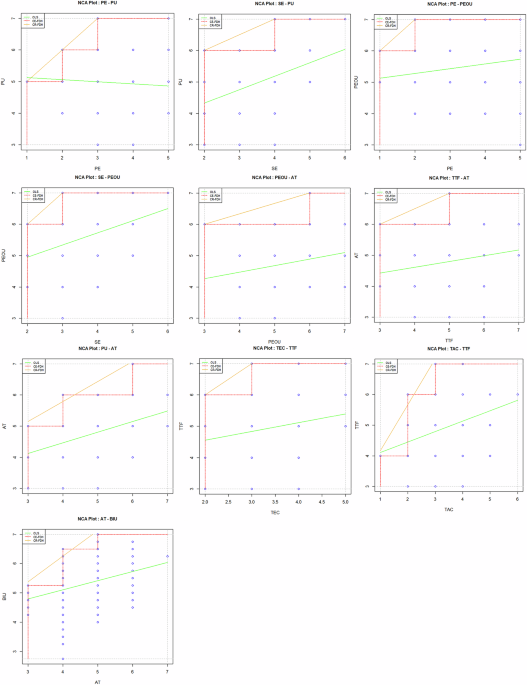
Because conventional structural modeling mainly captures hypothesized linear relationships, MLP-ANN was added to assess nonlinear patterns and predictor importance. Using 405 valid questionnaire responses, the model was tested through Partial Least Squares Structural Equation Modeling (PLS-SEM), a Multilayer Perceptron Artificial Neural Network (MLP-ANN), and Necessary Condition Analysis (NCA). PLS-SEM supported nine of ten hypotheses.
Self-efficacy positively affected perceived usefulness (β = 0.458, p
Extract — continue reading at the source.


