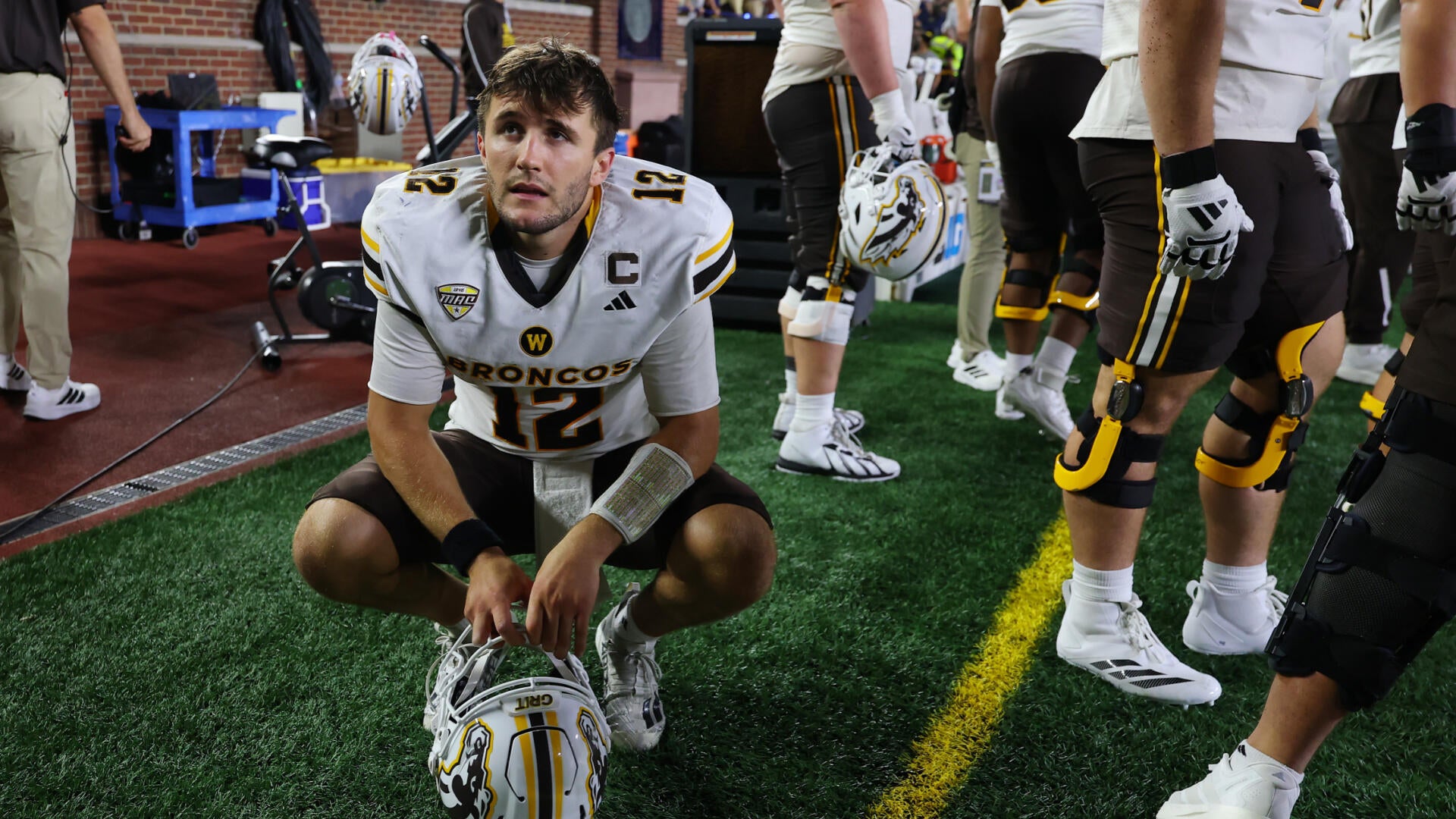
Physicists point to the speed of light or the edge of a black hole, but for the Big Ten, the boundary is apparently a national television broadcast. It turns out the clock ticking on your screen and the official timing utilized by officials don't always sync up. Michigan managed a wild 13-12 escape against Western Michigan thanks to a second Hail Mary attempt, a miracle from a replay review that found a single second left after Bryce Underwood's initial pass was ruled incomplete.
Social media, predictably, exploded with skepticism and conspiracy. To the naked eye, the clock had clearly hit triple zeroes on the broadcast before Broncos safety Micah Davis made contact with the football in the back of the end zone. The conference's synchronization efforts revealed a jarring disparity: while the NBC feed showed zeroes, the replay system captured a lone, precious second remaining the moment Davis made contact with the ball.
Under the letter of the law, a play is whistled dead the instant a player begins from an out-of-bounds position, leaps, and touches the ball in bounds. A statement regarding the results of tonight's game between Michigan and Western Michigan. pic.twitter.com/DzJVN2ZLTc The logic is sound, and the rule is undeniable. However, we're left with a bigger, nagging disconnect.
Why is the official timing used by the Big Ten's replay center operating on a different wavelength -- however fractional -- than the broadcast clock eyed by millions of fans across the country? The Big Ten synchronizes all broadcast cameras for the replay system, including a camera on the game clock, 85 minutes before games with a strobe system "to ensure all cameras are aligned." The conference explained that "a direct shot of the game clock in the stadium" was used to make the ruling. That replay center's video, made public after the game, clearly shows one second on the clock when Davis touches the ball.
On the NBC broadcast, that wasn't the case. I generally steer clear of the conspiracy rabbit hole, and maybe it is a total overreaction to suggest the Big Ten actually nailed the call. Still, witnessing that sequence on a standard television feed makes the ensuing outrage entirely understandable.
I even began wondering in this litigious era of players, schools and conferences suing each other, if maybe Western Michigan could somehow take this decision to court. "Not unless Michigan has enacted a Dumbass Football Referee Act," noted sports attorney Tom Mars told me in a text message late Saturday.The core issue remains: how do we bridge the gap between the digital clock on our screens and the one officials scrutinize? Is synchronization even achievable in our current reality?
Extract — continue reading at the source.