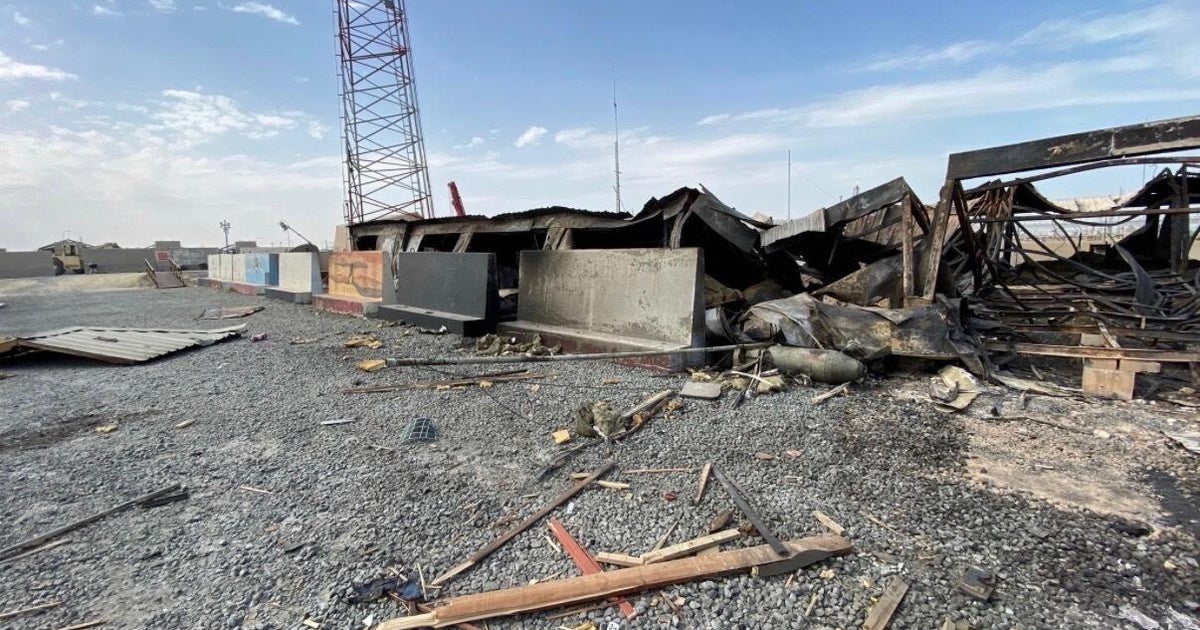
The dozens of U.S. troops bombarded by Iranian drones at a small Kuwaiti port in the opening days of the Iran war could have relocated to safer positions in western Saudi Arabia, multiple sources told CBS News, but those plans were rejected by the unit's commanding general despite intelligence warning of a potential attack on their post. About one week before the launch of Operation Epic Fury, most American soldiers and Air Force personnel stationed in Kuwait were moved to Jordan and Saudi Arabia — farther away from Iranian missile range. At least two options were scouted, planned and presented to the leadership of the 103rd Sustainment Command, the Army Reserve unit that ran logistics for U.S.
Central Command: one was Logistical Support Area (LSA) Jenkins, a U.S. military base near the southwest port city of Yanbu, and another was Prince Sultan Air Force Base, just southeast of the Saudi capital city Riyadh. A third option, supported by the commander, Brig. Clint Barnes, was to follow the playbook from the unit that was previously deployed to Kuwait before the 103rd arrived in September 2025.
During the 12-day war between Israel and Iran that July, the active unit briefly moved from their home base at Camp Arifjan in Kuwait to Port of Shuaiba, roughly 30 miles south of Kuwait City and just 65 miles southwest of Iran. "That was a totally different scenario," one service member, speaking on condition of anonymity because he was not authorized to speak with the media, told CBS News. "Missiles and drones were flying overhead between Iran and Israel and we were more worried about one of them being intercepted and falling out of the sky." The U.S., Israel and other allies joined in shooting down dozens of the Iranian ballistic missiles fired at Israel that summer, but Iran never directly targeted U.S. positions in the Mideast.
By late fall 2025, however, Army intelligence began to map out potential Iranian retaliation scenarios in the event the U.S. became more engaged in military activity against the Iranian regime. In January, the sources said Army intelligence began briefing Barnes that Port of Shuaiba was a potential target, but in the days before the launch of Operation Epic Fury, he nonetheless chose to move the unit there instead of Saudi Arabia. "Shuaiba was the easy button," another service member said.
The Army on Thursday declined comment. CBS News has also reached out to Barnes but has not received a response. The revelations are the latest in a series of whistleblower accounts made by active and reserve service members regarding the decision-making process leading up to and following the deadliest attack of the war.
Six U.S. troops were killed in the strike on March 1, and more than 20 were wounded. Notably, Prince Sultan Air Force Base, one of the other options for the unit's relocation, was also attacked by Iranian fire. Pictures obtained exclusively by CBS News showed damage to a large Air Force jet, though there were no reported deaths as a result of the strikes on PSAB.
Extract — continue reading at the source.


