Two empires compete to bewitch you in this exhibition that offers a double bubble of beauty. It collides the Byzantine empire, whose capital Constantinople was officially inaugurated on 11 May AD330, with the Ottoman Turks who conquered this great city in 1453 and turned it into Istanbul. The combined glories of two lost worlds – the Ottoman empire was dissolved in 1922 – beget an utterly enrapturing blockbuster.
I lost all track of time in this dream city of gold and ivory. Even the human form is magically transfigured here into mineral and metal. The martyred abbess St Eudokia becomes a Byzantine icon of marble inlaid with coloured glass, wearing a crown of precious stones and an exquisite dress patterned with diamonds and decorated with pearls and emeralds.
It is a masterpiece of abstract splendour that looks like a Klimt painting, but this icon can’t have influenced him because it wasn’t excavated until 1929. Beat that for splendour – but the Ottoman empire could. A 16th-century kaftan, probably worn by Sultan Selim II, irradiates you with light-giving yellow and geometric white designs, part flower, part solar disc: it is made of zerbaft, a fabric said to be “woven from gold”, and looks it.
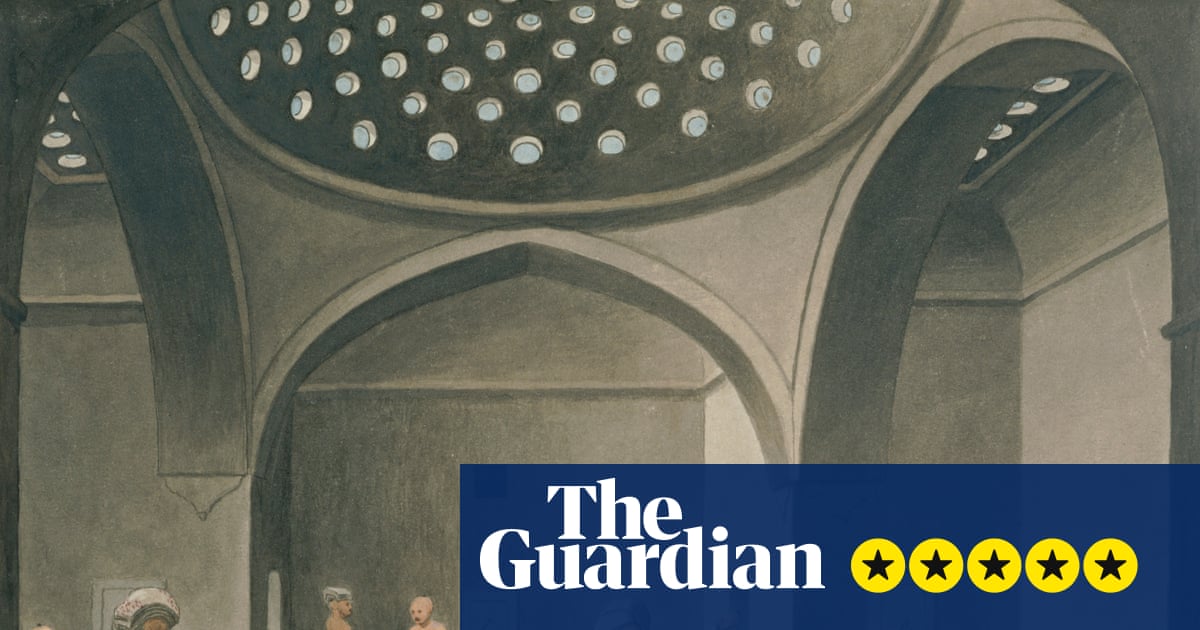
But it’s not all precious metals. There are blue and white glazed tiles from a hamam that conjure images of steaming bathhouse comfort, along with a bath wrap of red silk. Wooden foot supports from a women’s hamam are inlaid with mother of pearl.
As a wall text points out, if you have a nice bathroom you are living under the influence of Ottoman Istanbul. The story all begins with Constantine, the emperor who accepted Christianity. He created New Rome, or Constantinople, at a strategic point between Europe and Asia to deal with the unmanageably vast Roman empire.
You can see here sublime relics of this eastern capital including a mosaic from Constantine’s palace of a huge moustached face of weird godlike mystery. That luxury was seen in public places too. Constantine brought the Roman policy of “bread and circuses” here and adorned the chariot racing hub, the Hippodrome, with artistic masterpieces pillaged from ancient Greece and Egypt.
Extract — continue reading at the source.