Even as not everyone shares the same opinion on the Make America Healthy Again movement, it has increasingly led Americans to question where their food comes from. As a result, some consumers are more selective with the brands they choose and are more conscious of their own habits. A 2025 survey of 2,000 Americans conducted by Talker Research on behalf of HP showed that each year, the average American experiences 48 days of “eco guilt” where they worry they could be doing more, which includes seeking out companies that prioritize sustainability.
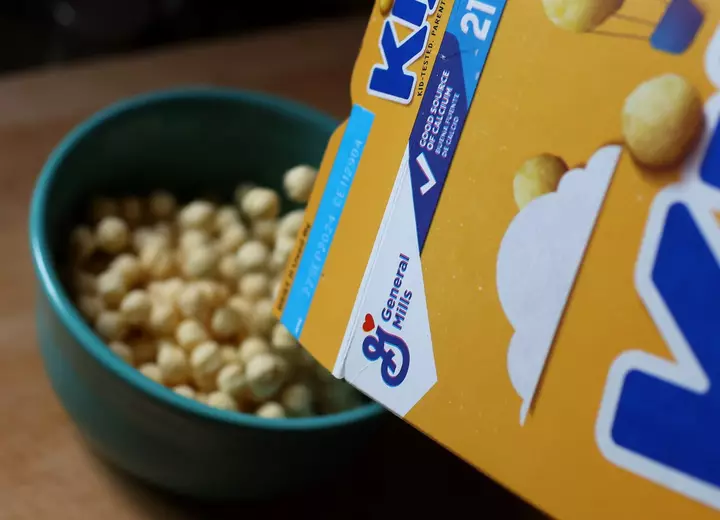
One company that has been steadily adapting to what today’s eco-conscious consumer wants is multinational food manufacturer General Mills. Jay Watson, senior director of sustainability at the company, told Newsweek: “At General Mills, we’ve been on our sustainability journey for more than a decade.... Our goal is to build a more resilient food system.” General Mills’ Supplier Code of Conduct “establishes expectations for human rights, health and safety, the environment and business ethics,” explained Watson.
This is complemented by focused work with farmers and partners throughout our supply chain to advance regenerative agriculture, reduce greenhouse gas emissions and design packaging to be recyclable or reusable,” he said. Watson continued, “Within our own operations, teams across sourcing, manufacturing, logistics, innovation, quality, finance and our brands are responsible for incorporating sustainability into everyday decisions.” But while many consumers are more willing to make choices that are ethically aligned with their values, their busy schedules make this hard to effect in practice. General Mills is working to overcome this by tweaking food products that customers are already familiar with.
The company’s Cascadian Farm Climate Smart cereals include 1 percent Kernza, a perennial grain with deep roots that can help support soil health, water quality and resilience. By 2025, 95 percent of General Mills’ packaging met its standards for protecting food and quality while being recyclable or reusable. Some positive changes will take longer.
Weather, geography, farm economics and local infrastructure all influence what is possible, and changes in farming practices take time to scale,” Watson said. The goal is not to optimize one part of the lifecycle at the expense of another; it is to make decisions that improve the overall system and deliver measurable progress toward a more resilient planet.”
Extract — continue reading at the source.