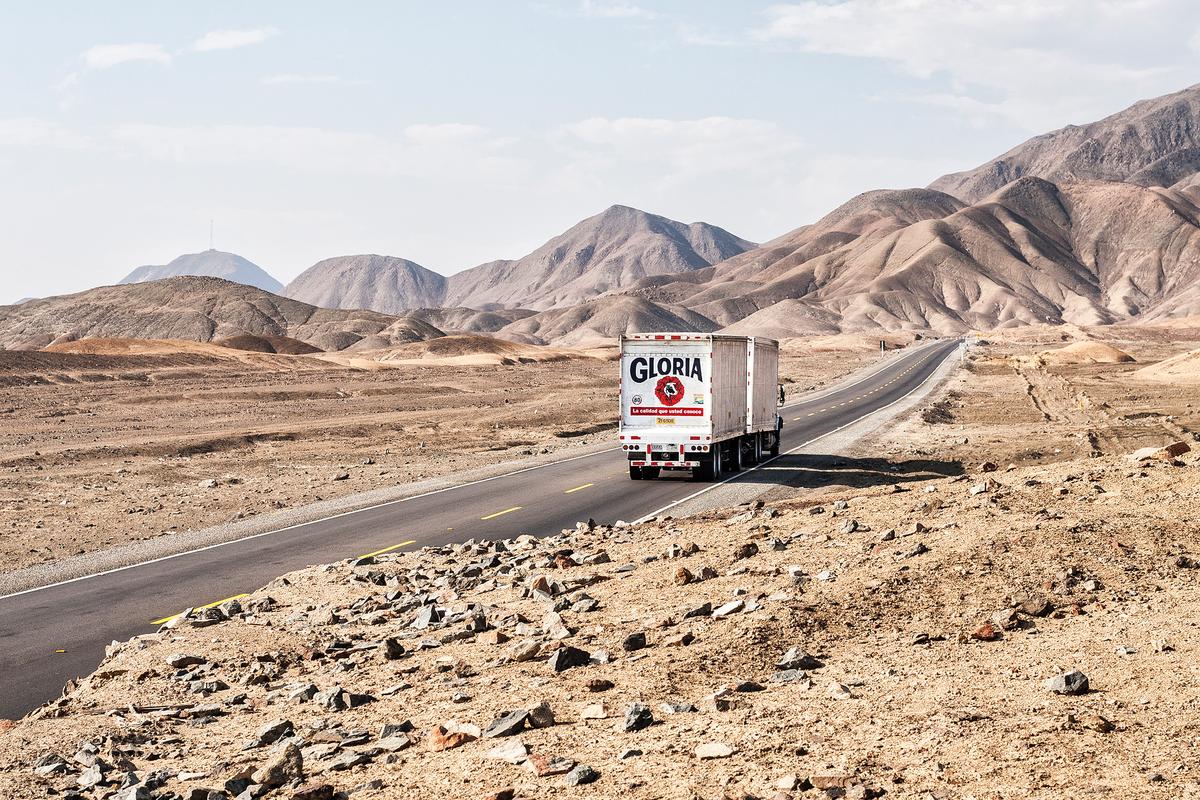
The Peruvian coastal desert section of the Pan-American Highway in Huarmey, Peru. Photo by Ricardo Ribas/SOPA Images/Getty Images Leônidas Borges de Oliveira drove the first 300 miles of the world’s longest road trip alone. The date of his departure, in early 1928, meant that the young Brazilian army officer also had the road almost entirely to himself.
This gave him time to think about what he had taken on. The vehicle beneath him, a donated Ford Model T with a decade of delivering newspapers on the odometer, chattered with ease over alternating segments of fresh gravel and steaming asphalt that constituted Brazil’s new highway, connecting Rio de Janeiro with São Paulo. On both sides of the road, Oliveira surveyed the deforested Paraíba Valley, which had hosted the world’s first coffee boom – ranks of bean-fruiting bushes whose product had reached global markets in 60-kilo sacks on the backs of mules.
Oliveira was among the first to see his nation at highway speed, and velocity could make the eroded landscapes of the past feel irrelevant. He believed he was chasing the future. His compatriots shared his optimism.
With shining medals around his neck and a new Swiss chronograph on his wrist, Oliveira departed from Rio to the fanfare of two brass bands and a flourish of civic oratory. He arrived in São Paulo to cheering crowds and a press corps keen to follow his automotive exploits. Oliveira’s rapid progress on this first leg, not to mention his countrymen’s enthusiastic support, fortified his resolve to push on to his final destination: the United States’ capital at Washington, DC.
Oliveira’s inspiration to make the long drive sprang from a novel idea, first proposed in 1923: the construction of an automotive highway that would link up the Western Hemisphere with a long ribbon of asphalt. Nobody knew exactly where the proposal had originated, and some official reactions in Latin America were tepid, but the popular response revealed an accelerating enthusiasm, and auto makers moved to capitalise on it. In 1924, the US Department of Commerce, which was headed by former auto executives, welcomed delegates from 19 Latin American nations to the largest promotional junket the US had organised to date, including a greeting at the White House by President Calvin Coolidge and a month-long highway tour that circled from New York to North Carolina and Minnesota to Michigan.
The objective was to promote what Americans were calling a ‘Highway of Friendship’ – a Pan-American road, from the northern reaches of Alaska to the tip of Tierra del Fuego, over which they hoped to see unfettered automotive travel and the emergence of stronger hemispheric cultural bonds. Scores of intrepid adventure motorists were electrified by the possibility of such a road, and they believed the best way to support the proposal was to drive it, even before contractors had broken any ground. Oliveira, short in stature but ruggedly muscular, sought a little personal glory, he confessed, and none could blame him for that.
Extract — continue reading at the source.