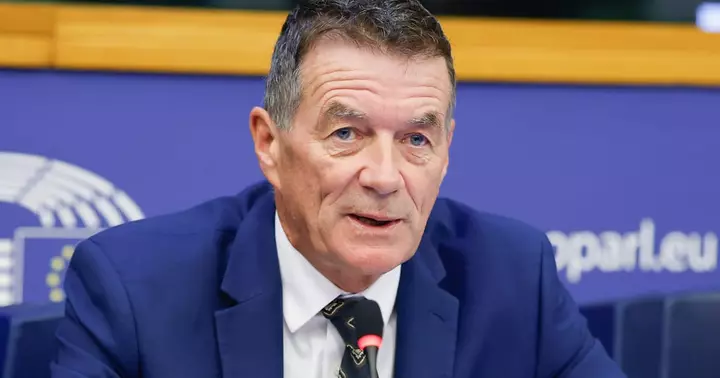
The European Commission’s bid to make the EU’s billions more responsive to the unknown crises of the future might also make them more prone to misuse, the EU’s top spending watchdog warned. European Court of Auditors President Tony Murphy said key pillars of the Commission’s plan to overhaul the EU’s long-term budget would muddy the view for those in charge of making sure public money is spent as intended. It’s sort of a self-policing.” The warning comes as EU leaders continue fighting over the price tag for the EU’s post-2027 budget in Brussels this week — and as the auditors document an increase in misspending of taxpayer funds.
Yet separate from the budget’s bottom line is the debate over how that money gets divided. As a spending cycle marked by the pandemic, wars and climate-fueled disruption comes to a close, the Commission wants to make the next seven-year budget more agile by assigning about half of it — almost a trillion euros over seven years — to a single pot of money that countries can spend on objectives ranging from migration to agriculture and regional development. Those agriculture and regional development funds — often delivered in the form of subsidies to farms and local projects — have long been vulnerable to fraud and misuse.
According to Murphy, giving capitals more leeway to shift spending would make spending even harder to track. More of the oversight will depend on the checks each country has already put in place. As it stands, misspending of the EU budget was on the rise last year, with errors affecting transactions for an estimated €5 billion according to the ECA’s latest report.
In the next EU budget, it might not be possible to even estimate such a number, Murphy warned, as each country’s auditors have different roles and ways of doing things. His head of cabinet, Wolfgang Stolz, added during the interview: “Year after year we have found that the work of these auditing authorities is not fully reliable.” In a statement, the Commission defended its proposal, underlining that “key principles” of the current control system will remain in place. National authorities are “well-functioning,” the statement contended, but added that the Commission would maintain the right to ask capitals to “amend the plan or introduce correction mechanisms if needed.” One of the Commission’s proposed innovations is putting the Common Agricultural Policy — historically a standalone budget line — into a behemoth umbrella fund known as the National and Regional Partnership Plans.
Murphy stressed that he’s not advocating for any model over the other. But as EU money increasingly merges with national budgets, it will be harder for Brussels to monitor where its money actually goes. The CAP is simpler to audit when “it’s not mixed up in this mixed bag,” Murphy said.
Headlines about farm subsidies paying for fake pastures in Greece and cash meant to support rural tourism in Slovakia instead going to luxury villas for the rich offer lurid illustrations of the challenge of policing these funds under the current system. And the model for the new spending system — the EU’s post-Covid recovery fund — doesn’t bode well, Murphy said. While it became easier for countries to direct the funds where they were needed, the spending also became more opaque.
Extract — continue reading at the source.