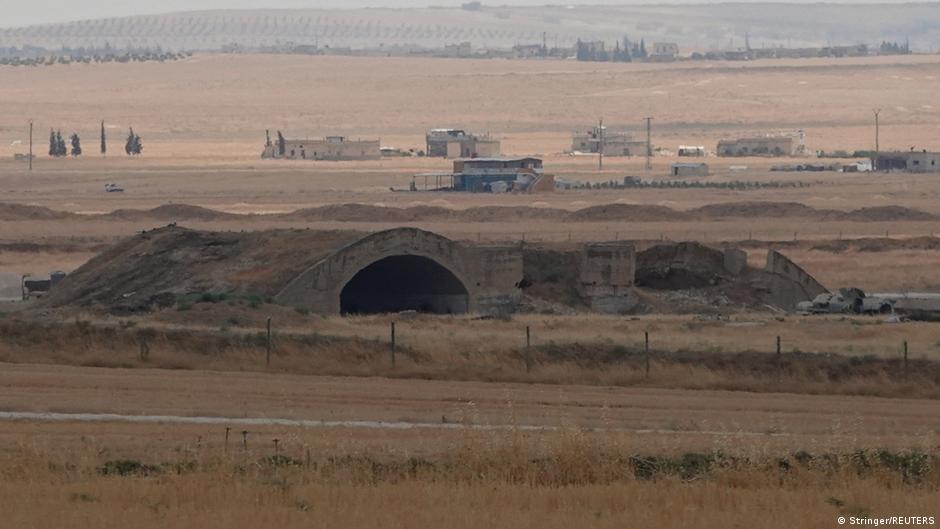
Following US mediation, Syrian and Israeli representatives met in Jordan last weekend for the first time in months. The talks aimed to defuse tensions following the recent Israeli attacks on Syrian territory and prevent hostilities between Israel and Turkey from spilling over into Syria. The escalation was sparked by an Israeli attack on the Abu Duhur military airfield in Idlib Province on August 18.
According to Syrian sources, the attack struck the runway and storage facilities without causing any fatalities. Israel stated that Syria had violated — or threatened to violate — a previous security agreement by allowing Turkish troops to use the airfield. Damascus and Ankara rejected these allegations.
The US criticized the attack by its Israeli ally as an "unnecessary escalation." In diplomatic terms, this amounts to a fairly clear show of rhetorical support for Ankara and Damascus. Israel views a potential Turkish military presence in Syria as a red line. Yet, it remains unclear whether such a deployment is planned in the long term or whether it was even imminent at the time of the attack.
Evidence on this matter is not publicly available. However, as early as April 2025, news agency cited anonymous sources saying Turkey had inspected at least three air bases in Syria where it might want to station troops as part of a planned joint defense pact. Israeli airstrikes were already taking place at that time as well.
The Washington-based think tank Foundation for Defense of Democracies (FDD), which is considered pro-Israel, justifies the attack as follows: "Israel worries that Ankara could eventually use its military presence in Syria as a platform to pressure or threaten Israel, and remains wary of the close relationship between Syrian President Ahmad al-Sharaa and the Turkish leadership." For Bente Scheller, Syria expert at the German Green Party-affiliated Heinrich Böll Foundation, this explanation falls short. "There is no evidence so far that Turkish troops are actually supposed to be stationed there," she told DW. While Israel may indeed have its own intelligence, the recent attack must be viewed against the backdrop of Israel's overall policy toward Syria as well as Turkey's growing regional role, she noted.
Marcus Schneider, a Middle East analyst at Germany's Friedrich Ebert Foundation — which is affiliated with the German Social Democratic Party (SPD) — in Beirut, also points out that a struggle for power and influence is unfolding in Syria and beyond. "The attack primarily raises the question of what kind of military order will emerge in Syria in the future," he told DW. In his view, Israel wants to keep Syria weak, as a sovereign state that controls its own airspace would restrict Israel's military freedom of action.
Extract — continue reading at the source.