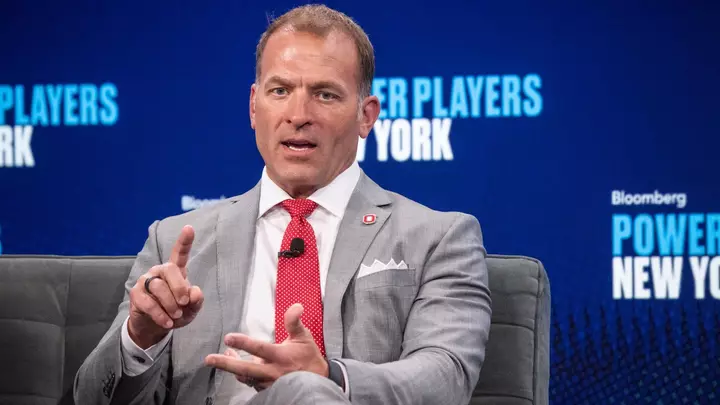
The Big Ten has already adopted what amounts to a salary cap in college athletics, and now it might take another step toward mimicking the NFL with its approach to scheduling. Ohio State athletic director Ross Bjork said the conference is looking at a results-based scheduling model. Bjork joined "The Ryan Day Show" on 97.1 The Fan and shared some insight about discussions around scheduling.
Bjork noted that -- when the Big Ten first expanded to include the West Coast teams -- scheduling rotations were based upon historical records in football. Well, teams like Indiana are in a very different place now than they were even five years ago. "They looked at historical rotations over the course of everyone's football life," Bjork said.
"Indiana was not what Indiana is today when they set the model. Same thing with UCLA." Bjork said changes could begin with the 2028 season, explaining that opponents wouldn't be set in stone until after the 2027 campaign. The Big Ten would use a dynamic scheduling model, like the NFL's, based on the previous season's results.
Worse teams would get more favorable slates. Better teams would get tougher matchups. The one major difference is that the Big Ten would ensure key rivalries, like Ohio State vs.
Michigan, remain in place every year. "So, next year's schedule, we would not know who we're playing, other than protecting the rivalry games," Bjork said. "Obviously, we have the biggest one.
Other than that, the rest of the schedule could be based on how the teams finished the previous year. That's how the NFL does it." Bjork said a new model is required due to the parity created by NIL and the transfer portal. A dynamic scheduling model could be a more equitable way to balance strength of schedule across the league.
Extract — continue reading at the source.