Dapperlings and toughshanks, bonnets and brittlegills, bird’s nests and fairy clubs. Fungi season has begun, and for me it is heralded by the “fungus foray” held at Bangor University’s Treborth Botanic Garden. An annual event, this year it produced more than 200 species in just 90 minutes, thanks to the 225 forayers who took part.
Among the feast of colour and form was one I’d never seen in 50 years of foraying – orange ping‑pong bat fungus (Favolaschia calocera), glowing vivid along a fallen twig. Climate change is implicated in its rapid global spread, and it was first recorded in the UK only in 2012. Every year, the botanic garden’s foray turns up something special.
Back home on Anglesey (Ynys Môn), we’re blessed to have a remarkable range of fungi – including in surprising locations such as our sand dunes, one of the island’s defining habitats both in scale and in ecological importance. Aberffraw Dunes on the west coast are treeless, exposed and ever-shifting. Yet here we recently found fairy rings of two toadstools – parasols (Macrolepiota mastoidea) and champignon (Marasmius oreades) – patterning the links, while in the damper hollows were fibrecaps (Inocybe) and webcaps (Cortinarius), both of which can be highly toxic.
Above the beach, one plant is king – marram (Ammophila arenaria). This is the only plant on earth that can stabilise sand and make tall dunes. Its underground stems keep pace with the engulfing dunes, but without fungi to assist it in mining the sand for vital minerals and nutrients, it would starve and be subsumed.
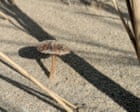
And so, scattered about the bare sand between clumps of marram, we found scores of salt-resistant dune brittlestems (Psathyrella ammophila). This is only ever found growing with marram and is responsible for decomposing its constant supply of ailing roots and recycling them, ready to be absorbed in the next phase of the plant’s growth. Other, much smaller, mycorrhizal fungi are on hand to help out too, all specialised to seek out organic materials to satisfy their host plant’s insatiable appetite.
This year, the word “funga” has been adopted both by the Cambridge Dictionary and negotiating parties at the forthcoming Cop17 conference, as an equivalent to flora and fauna. At last, fungi are being given the status they deserve.
Extract — continue reading at the source.


