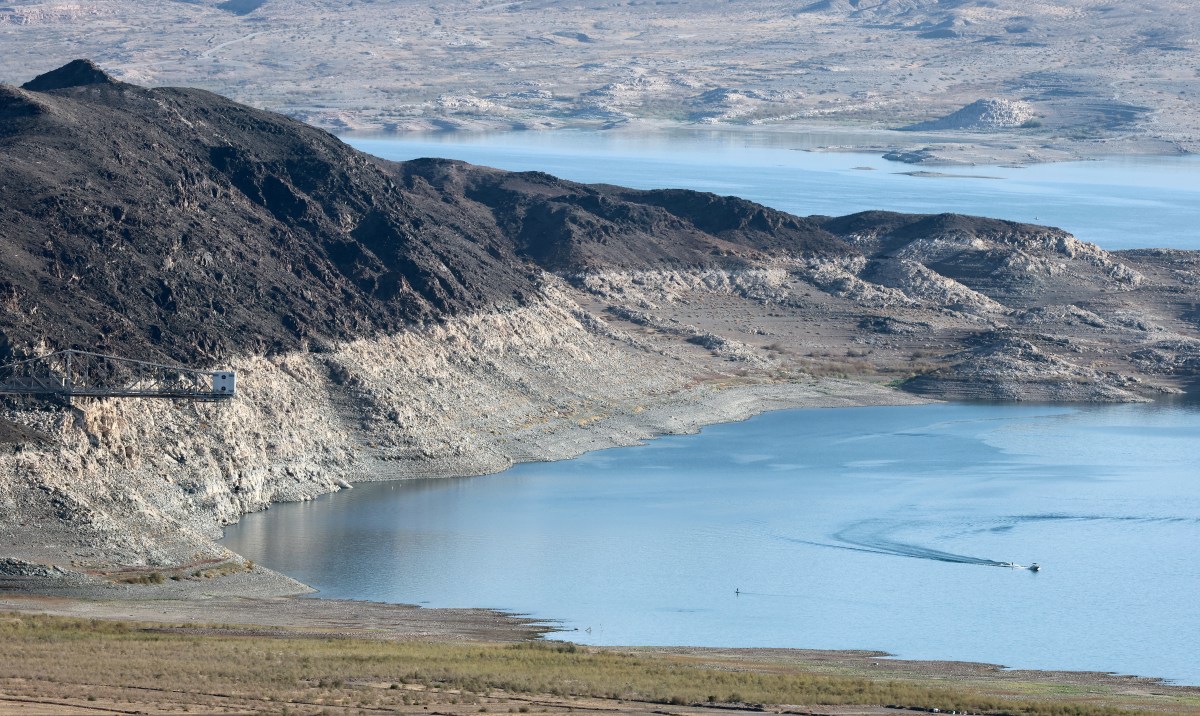
As the two largest reservoirs in the United States sink to historic lows, a growing debate is unfolding over whether the booming data center industry belongs in one of the country's most water-stressed regions. Lake Mead and Lake Powell, the massive reservoirs that anchor the Colorado River system, have both recently reached record-low levels amid a decades-long drought, poor snowpack, overuse, and rising temperatures. More than 40 million people across the Southwest rely on the Colorado River for water, while the system also supports agriculture, recreation and hydropower generation.
Lake Mead recently fell below its previous record low set in 2022, while Lake Powell also dropped to its lowest level since the reservoir was created. Experts have warned that long-term water availability in the basin remains uncertain. Against that backdrop, websites tracking existing and proposed data centers suggest a heavier concentration of facilities near Lake Mead, particularly around Las Vegas and Henderson, Nevada, than around Lake Powell in northern Arizona and southern Utah.
The contrast reflects a collision between two major trends: the rapid expansion of artificial intelligence infrastructure and mounting concerns over water scarcity in the American West. Newsweek reached out to the U.S. Bureau of Reclamation, which manages both lakes via email for comment.
Data compiled by Data Center Map and the advocacy website Brockovich Data Center Reporting show a noticeably larger cluster of existing and proposed data centers around Lake Mead and the Las Vegas Valley than around Lake Powell. The pattern likely reflects Southern Nevada's status as a major population and infrastructure hub. Lake Powell, by contrast, sits in a more remote region of northern Arizona and southern Utah with fewer large population centers and less existing technology infrastructure.
The facilities clustered around Lake Mead are concentrated primarily in the Las Vegas-Henderson area and are operated by a mix of major technology companies and colocation providers. The most notable include Google's Henderson data center campus, which supports services such as Google Search, Maps, YouTube and Google Cloud, and Switch's The Core Campus. While the exact number of facilities varies depending on how existing, planned and proposed projects are counted, the concentration around Lake Mead is significantly larger than around Lake Powell.
No data centers are reported around Lake Powell according to Data Center Map, whereas Erin Brockovich's map shows one community-reported data center south of Lake Powell in Page, Arizona. While the facilities are not drawing water directly from the lakes themselves, their concentration within the broader Colorado River Basin has become a focal point for critics who argue that continued growth in water- and energy-intensive industries should be scrutinized as Lake Mead and Lake Powell reach record-low levels amid a prolonged drought and increasing pressure on the river system. Modern data centers consume substantial amounts of electricity and, in many cases, water used for cooling servers.
Extract — continue reading at the source.