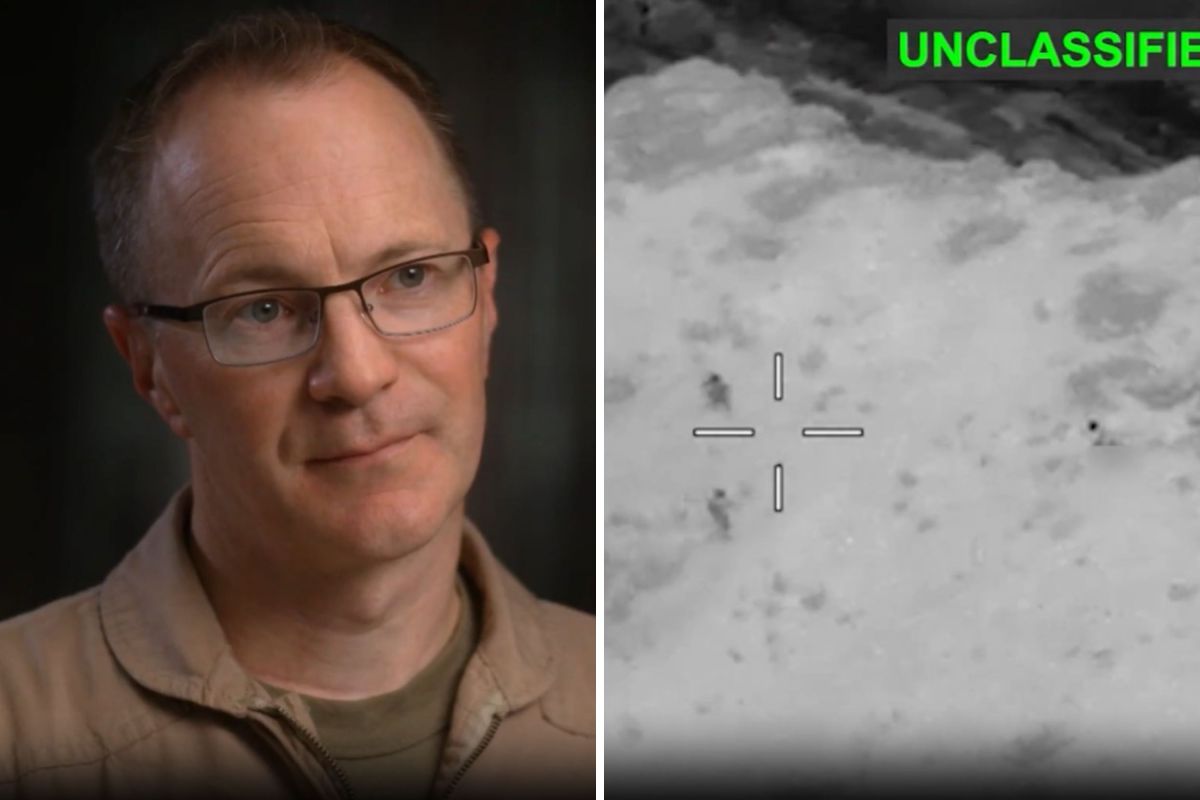
Declassified video from the U.S. military shows the daring rescues of two American airmen shot down behind enemy lines in Iran. A two-seat F-15E involved in the operation codenamed "Dude 44" was hit by a shoulder-fired missile near a mountainous area south of Isfahan on April 2. The two airmen with the call signs Alpha and Bravo ejected and landed roughly five miles apart as Iranian forces searched for them.
Footage shows the rescue of Alpha while Bravo remained behind Iranian lines for roughly two days. "At one point when I looked up and saw no parachute, that was the most terrifying thing I've ever seen," Bravo said in his first public remarks on what happened. "So I paused, right then, and I prayed, 'Lord, your will be done.
But if I'm getting through this, I need help.'" Video shows Air Force rescuers reaching Bravo and spiriting him to safety on a U.S. Air Force HH-60W Jolly Green II helicopter. Bravo told CBS News' 60 Minutes seeing the American forces arrive to save him was “one of the greatest moments of my life." Asked how dangerous the mission was, Chairman of the Joint Chiefs of Staff Dan Caine told Norah O'Donnell, "Anytime you go behind enemy lines in daylight, it's gonna be dicey.
"But given the threat to 44 Alpha, the decision was taken to boldly go behind enemy lines in daylight to make sure that we could get to him before anybody else could." Admiral Brad Cooper, the American commander of U.S. Central Command said that more than 90 U.S. service members were on the ground, several hundred people were in the air, and several thousand served as support in the rescue mission. This is a developing story; refresh for updates.
Extract — continue reading at the source.