The Correct the Map resolution to promote map projections that more realistically reflect the true size of continents endorsed by the United Nations in New York at the beginning of September was a huge success for the African countries that led the campaign. In the General Assembly, 164 member states voted to encourage the use of Equal Earth projection and other equal-area maps instead of the 16th-century Mercator projection. Robert Dussey, the foreign minister of Togo, which sponsored the Correct the Map campaign at the UN, spoke of a "feeling of pride." Correct the Map is also supported by the African Union.
"Finally, Africa is fighting to regain its place in the community of nations," he told DW. "The place it has been reserved to this day is unfair. It does not correspond to Africa's reality, not in historical, geographical or economic terms." Dussey made clear that the debate about global maps was also clearly about symbolically redrawing the maps of facts and knowledge, culture and identity and redressing misperceptions about political and economic realities and power.
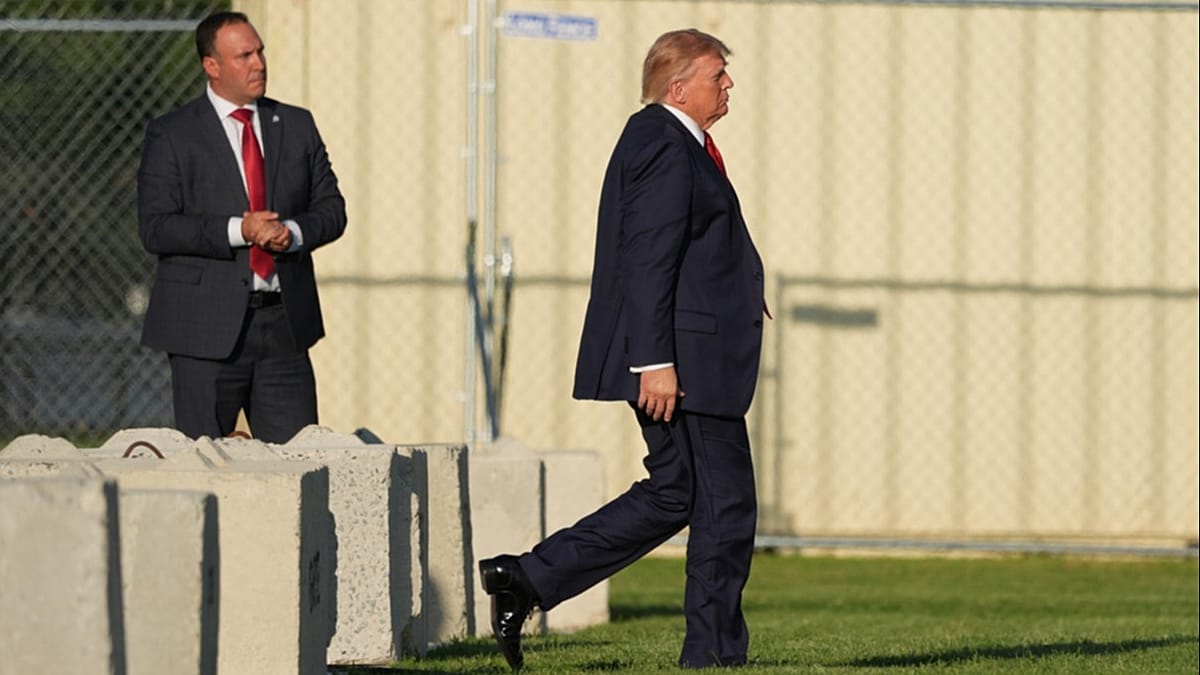
The only UN member state that rejected the resolution was the United States, whose president Donald Trump has engaged in various acts of political symbolism, having issued orders for places to be renamed on maps which he would presumaby also like to redraw Trump has signed executive orders to rename the Gulf of Mexico as the Gulf of America, and Lake Ontario as Lake America. The UN resolution, meanwhile, is part of a broader, global trend, as French historian Romain Tiquet from the African Worlds Institute (IMAF) told DW. "Since the late 2000s and early 2010s, there has been a great deal of debate about the decolonization of knowledge — in universities, museums and cultural institutions, as well as within social movements and civil society." He said many questions were being explored: "Who established the categories through which we conceptualize the world?
And what power dynamics result from this? And cartography fits right into this context." Many African states have also been trying to free the school systems from colonial influence, often for political reasons. In October 2025, the Malian government decided to remove French history from the school curriculum.
The decision was made to stop teaching about the French Revolution but to focus on Malian history and the other ancient West African kingdoms. In just a few years, the country's military government has made a clean break with the former colonial power. Mali ended its military cooperation with France in 2022, and French soldiers began to withdraw from the country.
Burkina Faso and Niger did the same and the three formed the Alliance of Sahel States in 2023. Philemon Mtoi from Tumaini University Makumira in Tanzania said Mali had made an important step: "As a historian, I believe that a country without a strong understanding of its own history is like a country without clear leadership and direction. This decision is important because it seeks to strengthen patriotism and foster a stronger sense of national identity." By investing in the research and preservation of African history, Mali — like Africa as a whole — was making a strong contribution to global scholarship, Mtoi explained.
Extract — continue reading at the source.