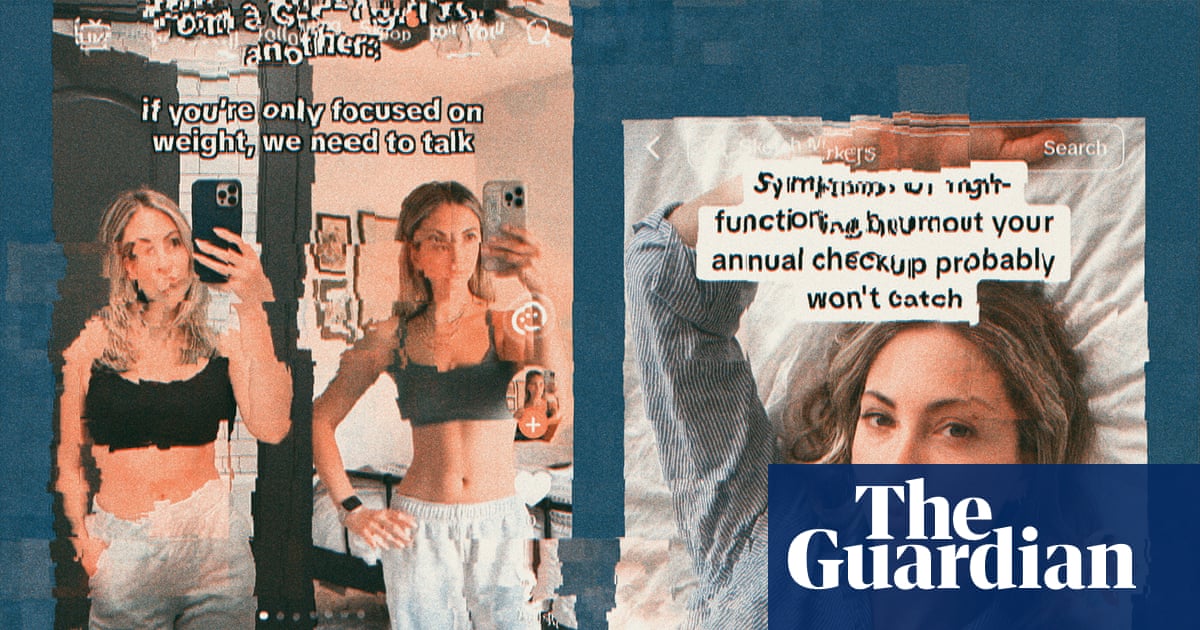
Earlier this year, Emily Schuman, the creator of the lifestyle blog Cupcakes and Cashmere, saw a photo of herself she didn’t recognize on Instagram. In a sponsored ad, Schuman, who has more than 500,000 Instagram followers, is holding up a vial of GLP-1 drugs, advertising the telehealth company Gala. There was just one problem: Schuman had never heard of Gala and had nothing to do with the ad.
The ad was based on a digitally altered version of a selfie Schuman had taken in her car and posted on Instagram years earlier. Once her followers got wind, they flooded her inbox with questions about the sponsorship as it didn’t seem consistent with Schuman’s personal brand. Soon after, Schuman discovered this was just the beginning.
There was also an Instagram post where an AI version of her with darker hair appears to apply foundation to promote a makeup brand called Meroda Cosmetics, and TikTok posts with generated images of her promoting the blood testing company Superpower. The videos and images look “just like me, but the upside down version”. Neither Gala nor Meroda responded to requests for comment.
Superpower CEO Max Marchione said the TikTok post wasn’t a real ad, but instead came from a scammer his company later reported. As generative AI makes it easier to create text, code and media, it has also supercharged the creation of deepfakes, the synthetic photos and videos that can be nearly indistinguishable from reality. Influencers are some of the easiest people to impersonate due to the sheer amount of videos and images AI can learn from.
The vulnerability represents a new workplace threat: influencers aren’t just competing for brand deals with other creators, but also fighting to preserve the credibility of their own likeness – the very asset that generates their income. Global consumers may have lost as much as $3.7bn due to deepfake scams in 2026, according to an investigation from the VPN-maker Surfshark’s research team. The investigation found that social media impersonations on social media accounted for about half of all losses.
Celebrities and influencers are often the easiest to impersonate because they “have hundreds of hours of footage and thousands of pictures of them online. So you can feed that into a model and produce a fairly convincing deepfake,” said Marwick. Taylor Swift, Oprah Winfrey, Kim Kardashian, Gwyneth Paltrow and Tom Hanks have all been deepfaked by AI to promote various products online.
Extract — continue reading at the source.