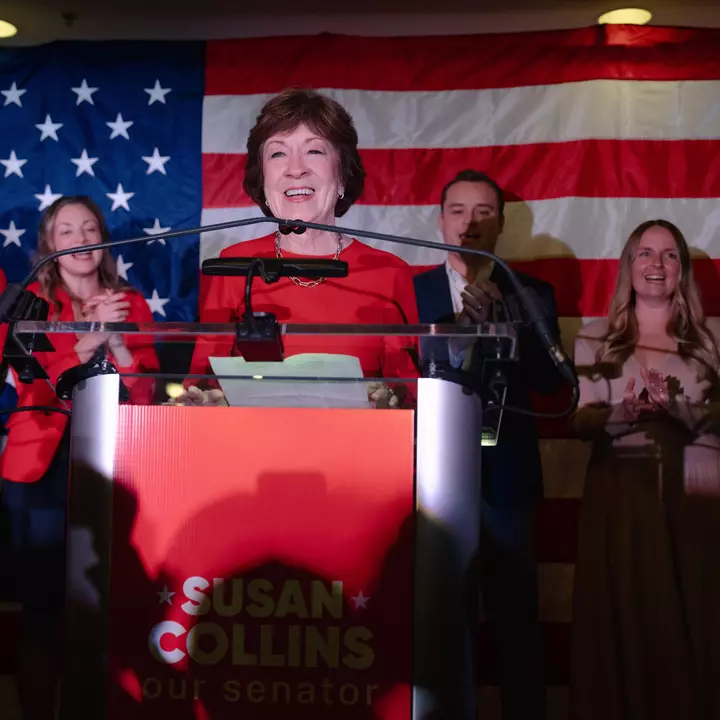
Democrats coasted into victory late last night, taking control of both the House of Representatives and the Senate by considerable margins. Several states that are traditionally characterized as "deep red," including Texas, Kansas and Iowa, flipped towards Democrats in the Senate for the first time in decades. Democratic candidates also took a convincing majority in House races, despite competing in several states whose districts were redrawn to favor Republicans.
Across the country, Democratic gubernatorial candidates also burst ahead, winning races in GOP strongholds like Georgia, Ohio and Texas. Heading into 2027, Democrats will officially retake control of Congress and hold at least 28 governorships. Newly elected Democratic officials, party leaders and pollsters joined Morning Edition on Wednesday morning to share their insights on the massive wave of Democratic victories in state and local races.
In their interviews with NPR's Steve Inskeep and Michel Martin, these Democrats discussed takeaways from the midterm results, the effects of mid-decade redistricting efforts, the mandate received from voters and the next steps for the party. You can read some key takeaways from the discussions below. Democrat Abdul El-Sayed made history in Michigan, becoming the first Muslim elected to the Senate as Democrats retake control of Congress.
He said his opponent, Republican Mike Rogers, campaigned weaponizing El-Sayed's name and faith rather than addressing issues Americans really care about, like Medicare for All and the price of everyday items. El-Sayed also discussed his opinions on legislation surrounding the war in Iran, and he agreed with Trump's scheduled end to roughly $4 billion in annual military aid to Israel. Martin asked him about his lack of support from some Jewish and Black voters, something El Sayed said he hopes to remedy.
"There's always more work to do. There's always more to build. There's always more conversations to have," he said.
To listen to Abdul El-Sayed's full Morning Edition interview, click here. Eric Holder, chairman of the National Democratic Redistricting Committee and attorney general under former President Obama, discussed how mid-decade redistricting affected the results of the midterm. Speaking with Martin, he said that GOP gerrymandering efforts backfired, causing candidates to lose in districts that were specifically drawn for their success.
Extract — continue reading at the source.