Think of the many stories that use it, from The Three Little Pigs to Goldilocks and the Three Bears and The Three Musketeers. Public information and political campaigns use it for impact and ease of recall (“Stop, look and listen”; “See it. Sorted”; “Reduce, reuse, recycle”).
And then there are psychological or philosophical frameworks: Freud with his id, ego and superego; Plato’s three parts of the human soul; the Holy Trinity. Well, it turns out neuroscience isn’t immune from tri-mania. In 1959 Paul D MacLean set out a new way of thinking about the evolution and function of the brain, which he christened the “triune” – three-in-one – model.
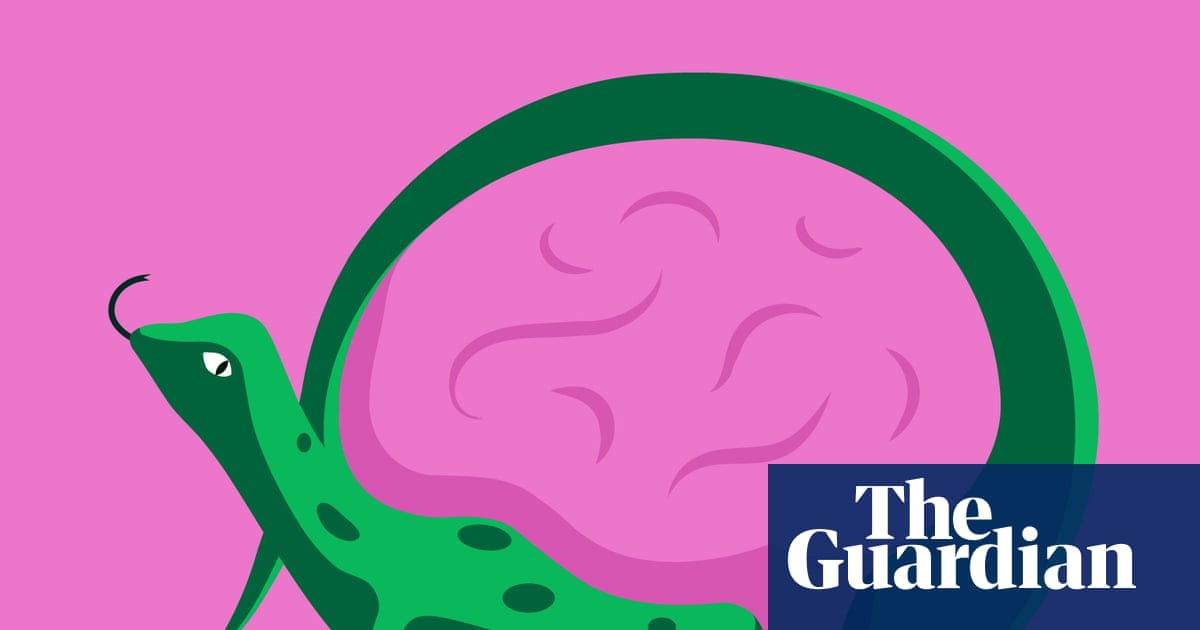
It quickly became one of best known and most enduring concepts in human biology. His idea was that a trio of distinct brains are layered inside our skulls, one on top of the other, all fighting to generate our feelings and thoughts. Deep inside, at the centre, lurks the primitive lizard brain, retained from an ancestor we share with reptiles.
This contains ancient regions responsible for survival, helping us to hunt and forage, and driving our sexual impulses so that we reproduce. A second layer sits wrapped around the first, the so-called mammalian brain. It contains the limbic system, deemed to be the seat of our emotions.
It enabled mammals to play, care for and nurse their young and communicate in some crude way. The third and final layer, sheathing all of this and making humans in particular a cut above, is the “neomammalian” brain: the eminently rational cortex. This, it was proposed, provides us with our superior intellect, capacity for language and ability to reason.
According to MacLean, it helped to keep in check our primitive, lizard-like impulses and rudimentary emotional reactions. Human behaviour was thought to be a result of interactions between all three layers of the triune brain. Frayed tempers, impulsive acts and short termism were signs of the lizard brain winning out.
Extract — continue reading at the source.


