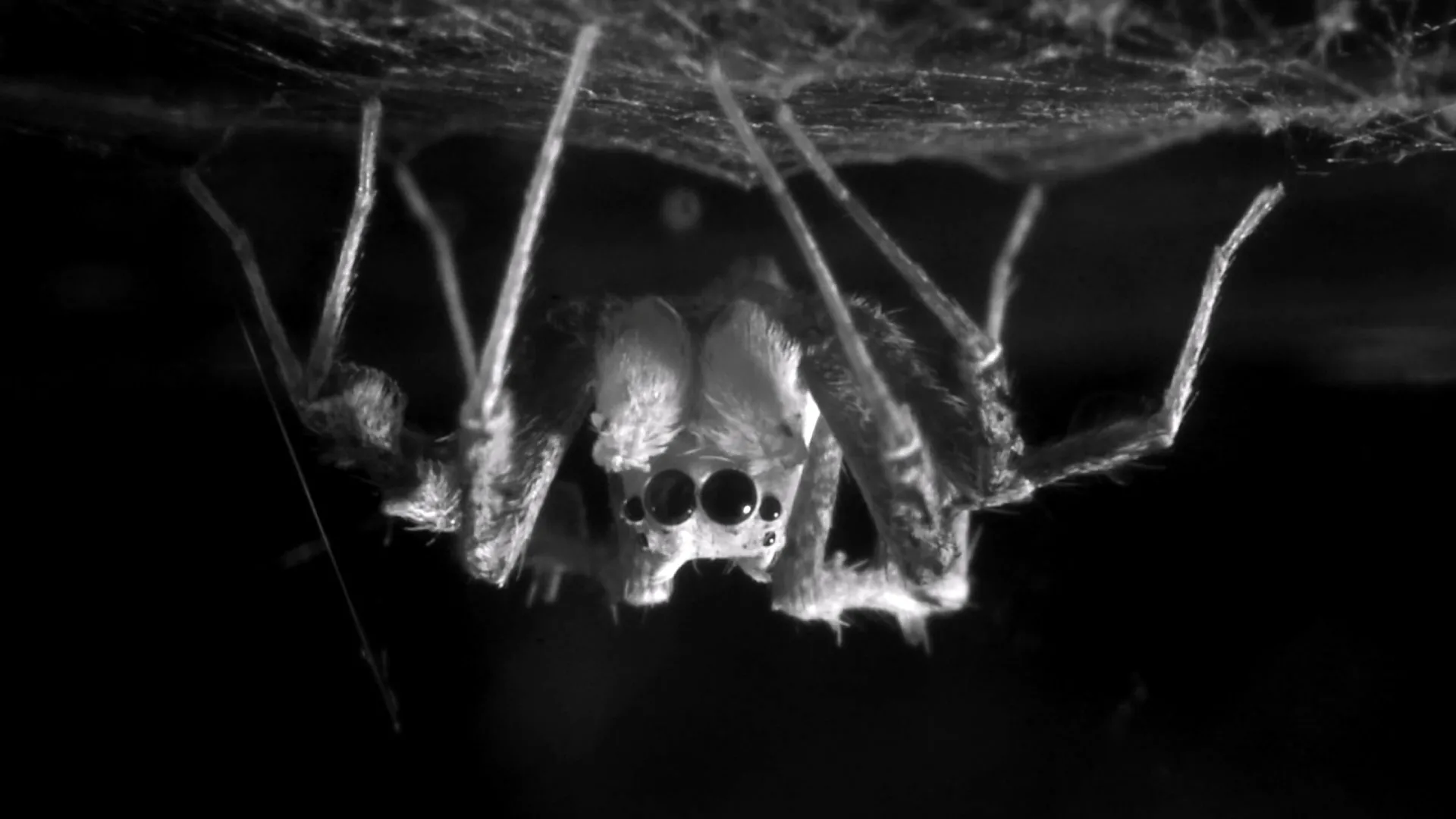
Scientists at the University of Bonn have discovered that spiders experience distinct stages of sleep, including a REM-like state that shares surprising similarities with human sleep. During this stage, the spiders move their eyes and twitch their muscles, behaviors also associated with REM (rapid eye movement) sleep in humans and other vertebrates. The findings provide the first comprehensive experimental confirmation that spiders experience genuine, regulated sleep rather than simply remaining inactive.
They also raise intriguing questions about how sleep evolved and whether animals with very different nervous systems might share some of its fundamental features. Researchers at the University of Bonn's Institute of Organismic Biology made the discovery while studying the Australian jumping spider Portia fimbriata, a small but remarkably sophisticated predator. A Tiny Spider With Remarkable Hunting Skills The Australian jumping spider Portia fimbriata is only about the size of a one-euro coin when fully grown, but its hunting abilities make it particularly interesting to scientists.
Unlike many spiders that primarily capture insects, members of the genus Portia specialize in hunting other spiders. They use a variety of sophisticated strategies to catch their prey, including imitating the vibrations made by struggling insects trapped in spiderwebs. These deceptive signals can lure web-building spiders toward what appears to be an easy meal, only for them to encounter the hunting Portia instead.
Such complex behaviors suggest that these spiders have unusual learning abilities, making them valuable subjects for investigating the relationship between sleep, nervous system function, and cognition. Scientists Discover Two Distinct Stages of Spider Sleep Although sleep has been extensively studied in humans and other vertebrates, scientists still know relatively little about how it works in animals with very different nervous systems. To investigate whether spiders experience genuine sleep and whether that sleep includes different stages, the researchers closely monitored Portia fimbriata over several days and nights.
They discovered that the spiders exhibit two clearly distinguishable sleep stages. One of these resembles REM sleep, the phase in humans associated with rapid eye movements, muscle activity, and vivid dreaming. During this REM-like stage, the spiders displayed characteristic eye movements and muscle twitches.
These observations suggest that some features of sleep previously studied mainly in vertebrates may also occur in spiders. The researchers emphasize that identifying REM-like movements does not establish whether spiders dream. However, the discovery provides important evidence that sleep in these animals is more complex than previously understood.
Extract — continue reading at the source.