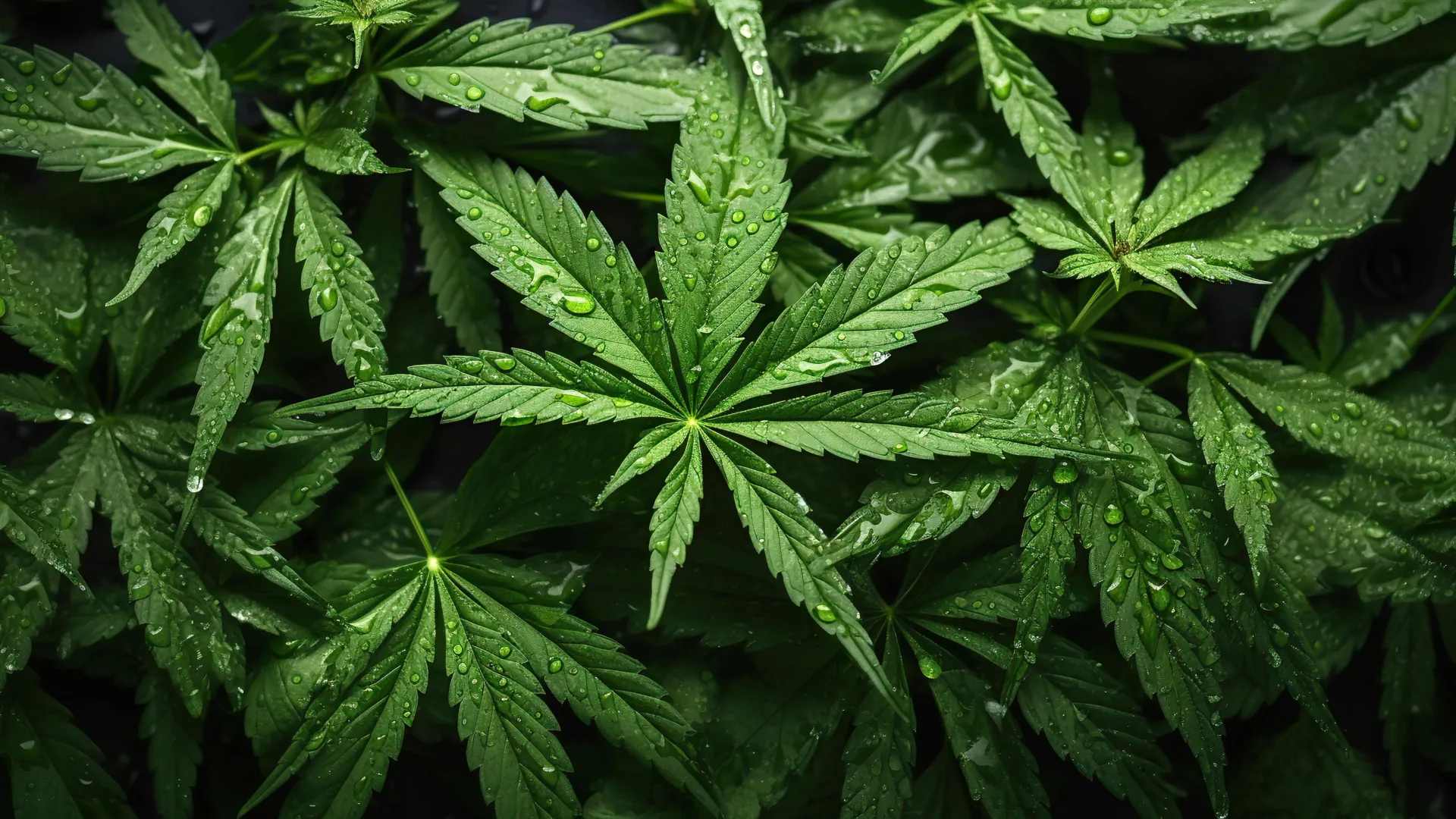
Scientists studying the chemistry of Cannabis leaves have uncovered something that had never been documented in the plant before: evidence of a rare group of natural compounds known as flavoalkaloids. Analytical chemists at Stellenbosch University (SU) made the discovery while examining the complex mixture of chemicals found in commercially grown Cannabis from South Africa. Their findings suggest that the leaves, which can be treated as low value plant material or waste, may contain a much richer collection of potentially useful compounds than previously recognized.
Rare Compounds Hidden in Cannabis Leaves Flavoalkaloids belong to a broader family of plant chemicals known as phenolic compounds. Phenolics are produced naturally by plants and include substances involved in pigmentation, defense, and protection from environmental stress. One major subgroup, flavonoids, is especially well known.
These compounds have drawn considerable interest from pharmaceutical researchers because many are associated with antioxidant, anti-inflammatory, and anti-carcinogenic properties. Flavoalkaloids, however, are much less common in nature. In the new analysis, the researchers detected 79 phenolic compounds across three strains of Cannabis grown commercially in South Africa.
Of those, 25 had never previously been reported in Cannabis. Sixteen of the compounds were tentatively identified as flavoalkaloids, providing the first evidence that this rare class of chemicals occurs in Cannabis leaves. Even more strikingly, most of the flavoalkaloids appeared primarily in just one of the three strains.
The findings were published in the Journal of Chromatography A. Cannabis Contains Hundreds of Different Metabolites Dr. Magriet Muller, an analytical chemist in the LC-MS laboratory of the Central Analytical Facility (CAF) at Stellenbosch University and first author on the paper, says studying plant phenolics can be especially difficult.
These compounds are often present at very low concentrations, and their chemical structures can vary enormously. That makes it challenging to separate, identify, and distinguish one compound from another within an already complex plant sample. "Most plants contain highly complex mixtures of phenolic compounds, and while flavonoids occur widely in the plant kingdom, the flavoalkaloids are very rare in nature," she explains.
Extract — continue reading at the source.


