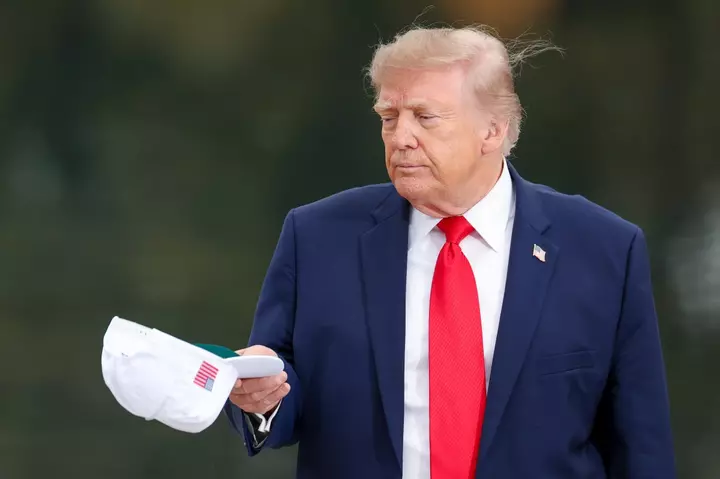
President Donald Trump may be red today—in both party and face after the brutal repudiation of his presidency in yesterday’s midterms—but it wasn’t always so. When Trump married Melania Knauss, as she was then, in Palm Beach in 2005, his old Democratic friends, the Clintons, were among the guests. Trump was registered as a Democrat from 2001 to 2009.
He gave to Hillary Clinton’s Senate campaigns, and his foundation gave $100,000 to the Clintons’. In a 2004 interview, he told CNN’s Wolf Blitzer: "In many cases, I probably identify more as Democrat." He had returned to the Republicans in 2009, and for good by 2012, after Democratic President Barack Obama famously used The Lion King to roast him at the 2011 White House Correspondents Dinner. Trump has at various points in his life registered as a Republican, Democrat, or independent, showing a chameleon’s instinct for adapting to the political environment.
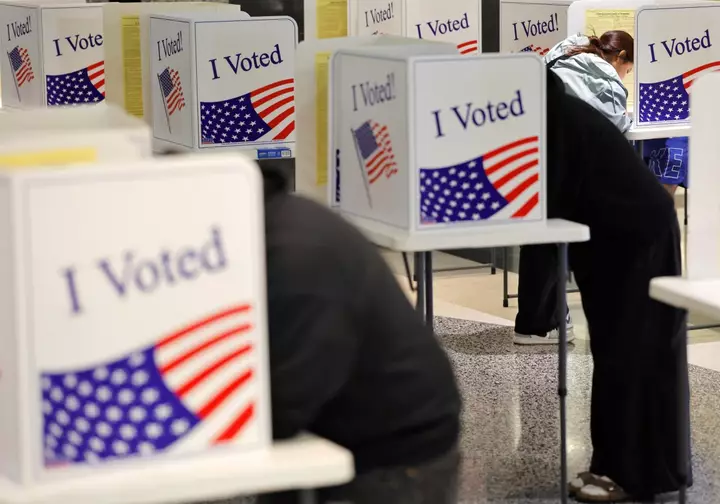
That was on display last night as Democrats emphatically secured majority control of the House and Senate. Speaking to Politico’s Dasha Burns, Trump said he had already spoken to Democrats as the results rolled in, and that he was ready to work with them to "make sure things go well for our country." Trump touted his veto power, though he added: "But I don't want to be just sitting there for two years vetoing everything. They want to see things happen too." He made similar comments when he phoned in to Fox News and CBS News, telling the latter: "My message is, congratulations to the Democrats, and I look forward to working with you for the good of our country." This is the lame duck president speaking.
But perhaps he’s really a lame Democrat. Trump’s method has always been threat, then pivot. Markets call it TACO, or Trump Always Chickens Out, a label coined by Financial Times columnist Robert Armstrong in May 2025 after a run of tariff climbdowns.
Trump rejects the label: "It’s called negotiation." We had a preview of the latest threat on Election Day, before polls closed, when Trump said that if Republicans lost he would become "Mr. Veto." There is precedent for Trump working with Democrats despite his party colors. In September 2017, Trump overruled Republican leaders to take Chuck Schumer and Nancy Pelosi’s three-month debt-ceiling deal.
There’s also a deeper and perhaps more surprising overlap between Trump and a Democratic Party moving toward the kind of economic nationalism that MAGA had stood for. Senator Bernie Sanders, an independent democratic socialist who caucuses with the Democrats, welcomed Trump’s move to take a 9.9 percent stake in Intel as an idea he had proposed three years earlier. United Auto Workers President Shawn Fain, who campaigned against Trump in 2024, cheered his auto tariffs.
Extract — continue reading at the source.