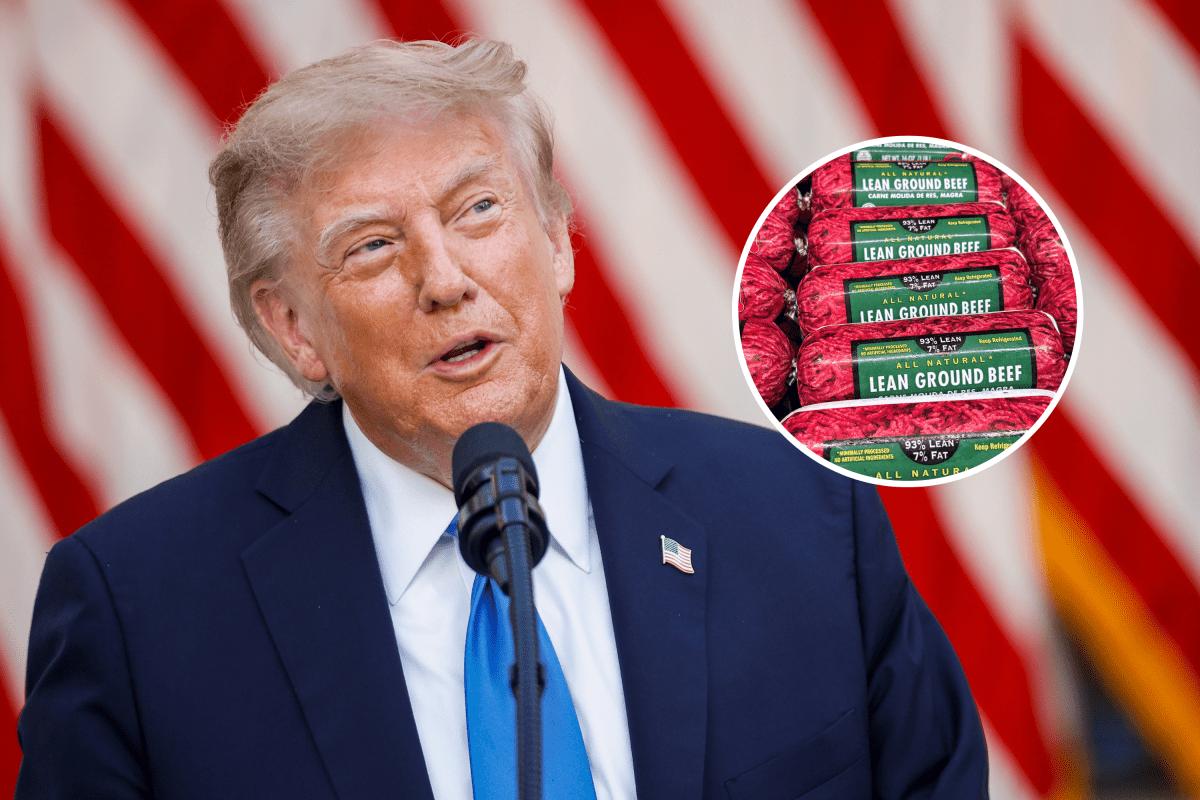
President Donald Trump’s net approval among rural voters fell 22 points from June to August, plunging as a new beef-import policy has opened a rift between the White House and ranch-country Republicans. The shift—recorded by ActiVote’s monthly presidential approval tracker poll—has come amid Trump's announcement on August 21 that higher tariffs would be suspended for 90 days on up to 300,000 metric tons of imported product intended for ground beef. The president said suppliers would sell it at a 25 percent discount below the prevailing market price, presenting the measure as a way to make a household staple more affordable.
The import policy was quickly met with anger from cattle producers and came as Republicans are facing unusually competitive midterm races in Nebraska, Texas and Iowa. Despite the move on beef imports, the polling drop cannot all be attributed to just that decision. ActiVote collected its August responses from August 1 to August 31, with a median field date of August 16, meaning the survey largely captured opinion before the plan was announced.
The approval slide offers a glimpse of a potentially difficult backdrop for the White House to navigate as the policy draws opposition from cattle producers as well as some Republican lawmakers. Rural communities have been central to Trump’s electoral coalition and any erosion in support could be significant ahead of the midterms. The import policy means ranchers could face greater competition from imported beef, and GOP candidates must balance producer concerns against the administration’s promise to reduce grocery bills.
Newsweek emailed the White House on Thursday morning for a response to the latest polling figures and to ask whether there are concerns that the beef policy could further weaken Trump’s rural support. Trump’s political strength has historically depended largely on running up the margins outside metropolitan areas, which could make sustained rural dissatisfaction more consequential than an ordinary fluctuation within an unfriendly group. His beef plan could combine with other unpopular issues and place the administration’s affordability agenda in tension with the interests of domestic producers.
Critics inside the GOP say additional foreign beef could depress cattle values and weaken the financial incentive to expand domestic herds. Republican senators including John Barrasso, Tom Cotton, Thom Tillis, Mike Rounds, Jerry Moran, Chuck Grassley, Deb Fischer and Pete Ricketts have publicly criticized the tariff adjustment, exposing a divide between the White House and members of its own party. Grassley said on X of the beef policy, "After Tyson closure in Illinois last wk I’m concerned for the cattle markets +now Pres Trump’s decision to temporarily open up subsidized beef imports USA cattlemen shld always be put 1st thru America 1st policies Need 2keep up progress fighting screwworm+ expanding domestic herd." Rounds wrote on X, "What our market really needs is a stable, America-First national policy that promotes American beef rather than continuing to import foreign beef as a quick “fix.” For the administration, the calculation runs in the opposite direction.
More supply may offer consumers some relief at the supermarket, giving Trump a tangible response to persistent concern about food costs. A price reduction large enough for shoppers to notice could intensify pressure on producers, while a limited retail effect would leave the White House carrying the political cost of angering ranchers without securing a clear affordability win. White House spokesman Davis Ingle has defended Trump’s record, pointing to the administration’s claims of gains on jobs, inflation and housing costs.
Extract — continue reading at the source.