"People would be laughing now but it's something that would have worked, no doubt about it." This weekend, and across each one to follow through the Premier League season, thousands will make the journey from all over the island of Ireland to take in a game from England's top flight. Indeed, despite increased interest in the league from all four corners of the globe, those making the short trip from across the Irish Sea still account for the greatest number of travelling supporters each season. Such is the fixation with all things Premier League that the 75,000 fans who packed a sold-out Croke Park for last week's friendly between Manchester United and Leeds represented a record crowd for any football match in the Republic of Ireland.
Earlier in the month, Arsenal also drew a huge crowd to the Aviva Stadium for their own friendly with Real Betis. But what if such occasions were a fortnightly norm rather than summer one-offs? Well, three decades ago an outlandish plan asked that very question.
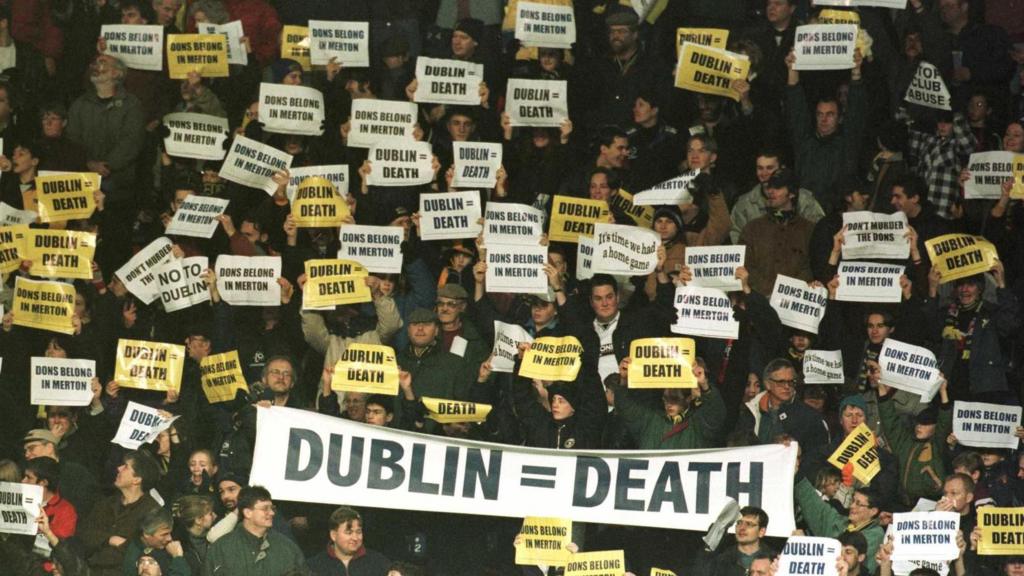
It started with an innocuous report in a Sunday broadsheet. The newspaper told of Wimbledon chairman Sam Hammam's fractious relationship with Merton Council and the ongoing struggle to come to an arrangement over a permanent home for the club. Hammam had bought the club in 1981 but, with plans for an all-seater stadium in Merton having come to nothing, they had been ground-sharing with Crystal Palace since 1991, a situation that suited neither landlord nor tenant.
"We'd always get dog's abuse off Palace fans calling us squatters," recalled Kenny Cunningham, the Dublin-born full-back who joined the club from Millwall in 1994. "There wasn't a huge amount of respect there, I don't think. A bit tongue in cheek maybe, but I think they meant it." By then, the FA Cup-winning 'Crazy Gang' era had come to a close but, under former Republic of Ireland international Joe Kinnear, Wimbledon were firmly established as a top-flight side.
While there were still grumbles over their direct style, the side were undoubtedly effective, finishing sixth in the 1993-94 campaign. "We were a small team in what was becoming the greatest league in the world. It was a great feeling to be stood in the tunnel, ready to go up against world class players and knowing we had a chance," added Cunningham.
"But there was always the issue with the ground, always the talk about what would happen in the medium to long term. Would they go back to Plough Lane? Would they groundshare?" Upon reading of Hammam's impasse with the council in the paper, Tommy Higgins landed on a more radical solution.
Extract — continue reading at the source.