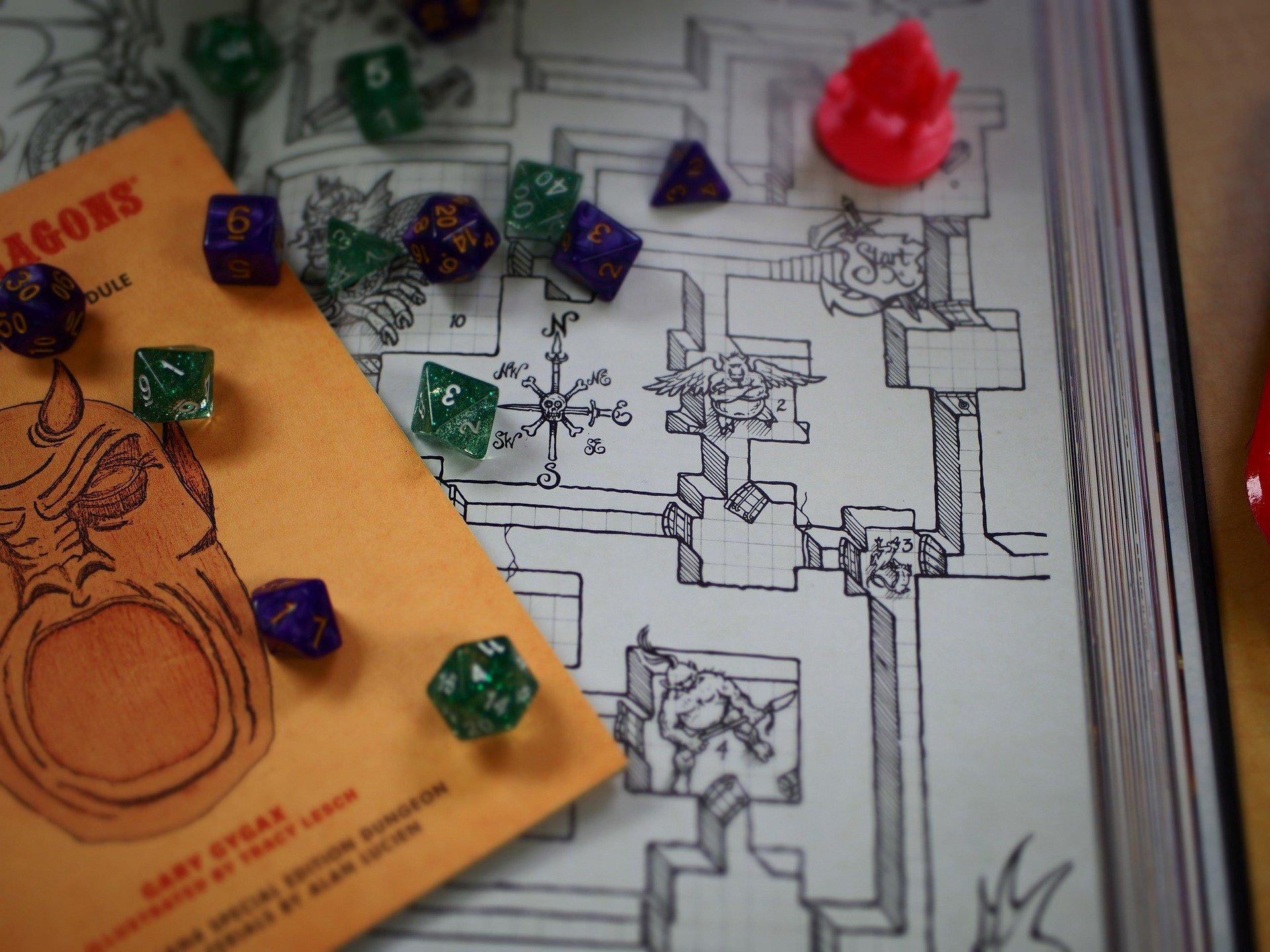
This article has been reviewed according to Science X's editorial process and policies. Editors have highlighted the following attributes while ensuring the content's credibility: Rolling dice and battling imaginary monsters might seem an unlikely source of well-being, but Te Whare Wānanga o Waitaha | University of Canterbury (UC) research suggests Dungeons & Dragons groups can provide meaningful social connections and a strong sense of belonging. Doctoral student Courtney Matthews has investigated tabletop role-playing games as a source of belonging and well-being, using the Dungeons & Dragons community as a case study.
Her research, Tabletop roleplaying games (TTRPGs) as a source of belonging and wellbeing: A social identity perspective, published in the Journal of Community & Applied Social Psychology, explores whether these established gaming communities could provide the kind of meaningful group membership known to support well-being. Matthews says research has shown social groups can be important sources of mental well-being and belonging, but not every group provides the same benefits. "For a group to facilitate good mental well-being, it needs to be a positive and meaningful part of a person's life," she says.
That led her to consider the potential of Dungeons & Dragons, commonly known as D&D. The tabletop role-playing game involves players creating characters and collaboratively telling a story, guided by another player known as the Dungeon Master. "The core of it is basically a choose-your-own-adventure game with other people," Matthews says.
"You are sitting together; you're not playing it by yourself." Matthews has played D&D since she was 17 and says her interest in researching it grew from seeing the effect the game could have on players. She recalls people saying the game had given them "the social confidence to go and join other social groups," while others appeared increasingly confident expressing themselves. "You're bonding over something that is meaningful that can also facilitate social skills, teamwork, collaboration, diplomacy, problem-solving," she says.
The study included 305 existing players from the New Zealand D&D online community. Participants completed an online survey covering well-being, loneliness, self-esteem and their sense of belonging to their D&D group. They also mapped their wider social networks and rated different groups according to factors including positivity, support and compatibility with other parts of their social lives.
Matthews says D&D groups were consistently rated among the most positive and supportive groups in participants' social networks, despite participants spending less time with them on average than with friends or family. The researchers also found that a stronger sense of belonging to a D&D group was positively associated with well-being and self-esteem. "Despite only spending a short amount of time with their D&D groups, that time had a lasting impact on people's lives outside of the game." The research could have wider implications for efforts to address loneliness and improve social connections, particularly because tabletop role-playing games are already established and relatively easy to access.
Extract — continue reading at the source.