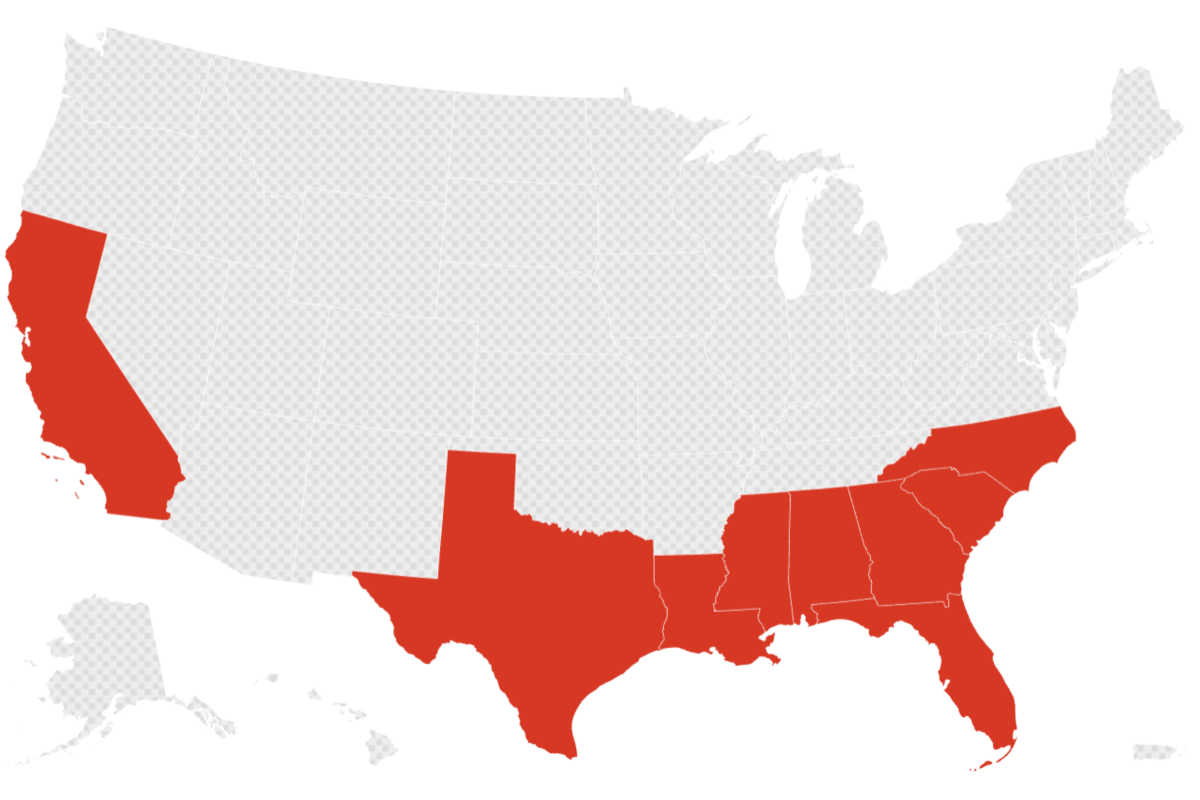
California and the Southeast could see some of the greatest impacts of El Niño, which is expected to be stronger this winter than it has been in decades, a meteorologist from the National Oceanic and Atmospheric Administration’s (NOAA) Weather Prediction Center (WPC) told Newsweek on Monday. El Niño is strengthening across the Pacific Ocean and could potentially bring severe weather to the United States over the next several months into early 2027. Its impacts could be felt across the country, but some states may face particularly severe storms this year.
Particularly strong El Niños can bring severe weather including flooding, damaging storms, drought and record-breaking heat to different areas across the globe. The NOAA's WPC says there is a greater than 90 percent chance of a very strong event this year, having key impacts for millions of Americans. El Niño is the warm phase of the El Niño–Southern Oscillation (ENSO), a recurring climate pattern driven by interactions between the Pacific Ocean and the atmosphere.
Its counterpart, La Niña, is the cool phase of the cycle. The pattern is defined by unusually warm sea-surface temperature in the Pacific, bringing stormier weather to the Southern U.S. and drier conditions to parts of the north. It can also cause changes in hurricane activity.
The 1997-98 Super El Niño contributed to destructive flooding in California and Peru, while the 2015-16 event was associated with global temperature records and widespread climate disruptions. California and the Southeast are likely to see more intense storms due to El Niño, Fracasso said. California is likely to see more storms due to the phenomenon, and that will be carried across the country, leading to a warmer winter for most areas.
Fracasso noted that every El Niño “is different,” and that there have been instances where it does not bring as much rain or snow to California, but that over the past 75 years, the state has seen more rain during El Niño. The South also generally sees wetter conditions, he said. States along the Gulf and potentially the Carolinas could see much wetter conditions this year.
Overall, El Niño brings warmer temperatures, but there can still be cold air and the potential for snow. Some areas further north around the Great Lakes, however, may see drier conditions, Fracasso said. NOAA wrote in its August 13 discussion that El Niño was expected to continue strengthening through the end of this year.
Extract — continue reading at the source.