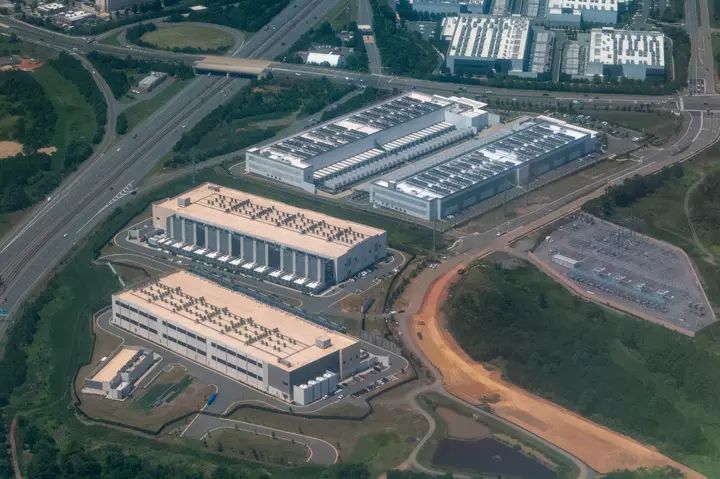
Your paycheck, your medical records, the traffic lights on your commute, the payment terminal at the grocery store: all of it runs on data, and all of that data runs on electricity. When either fails, essential services can be disrupted. And behind almost every one of those services is a business that has to keep the power on and the data flowing, often at a steep price when it can’t.
In Uptime Institute's 2025 survey, 57 percent of respondents said their most recent major outage cost more than $100,000, while one in five reported losses exceeding $1 million, according to its 2026 Annual Outage Analysis. Meanwhile, the International Energy Agency (IEA) projects that global data center electricity consumption will more than double to approximately 945 terawatt-hours by 2030. These figures point to a growing business vulnerability.
As companies become increasingly dependent on digital infrastructure, operational resilience depends on both protecting data and securing the energy required to keep it accessible. Business leaders can no longer afford to treat energy and data as separate infrastructure decisions. The question is not simply whether a company has reliable electricity or secure information systems, but whether both can continue functioning together when disruption occurs.
For decades, businesses have largely approached these needs independently. Electricity is supplied through the grid, while data is increasingly stored and processed through remote cloud infrastructure. Both arrangements have enabled significant economic growth, but they also create dependencies that organizations do not always fully understand or control.
Many businesses rely on cloud services for computing and the electricity grid for power, creating dependencies that need to be assessed together. The IEA estimates that nearly half of U.S. data center capacity is concentrated within five regional clusters. It also warns that approximately 20 percent of planned data center projects could face delays because of grid constraints unless those risks are addressed.
These pressures are not distributed evenly, meaning location may increasingly influence businesses' access to electricity and computing resources. The implications extend beyond technology companies. Manufacturers depend on digital systems to coordinate production, universities rely on networked infrastructure to support teaching and research, and commercial buildings use connected technologies to manage security, communications, and daily operations.
Extract — continue reading at the source.