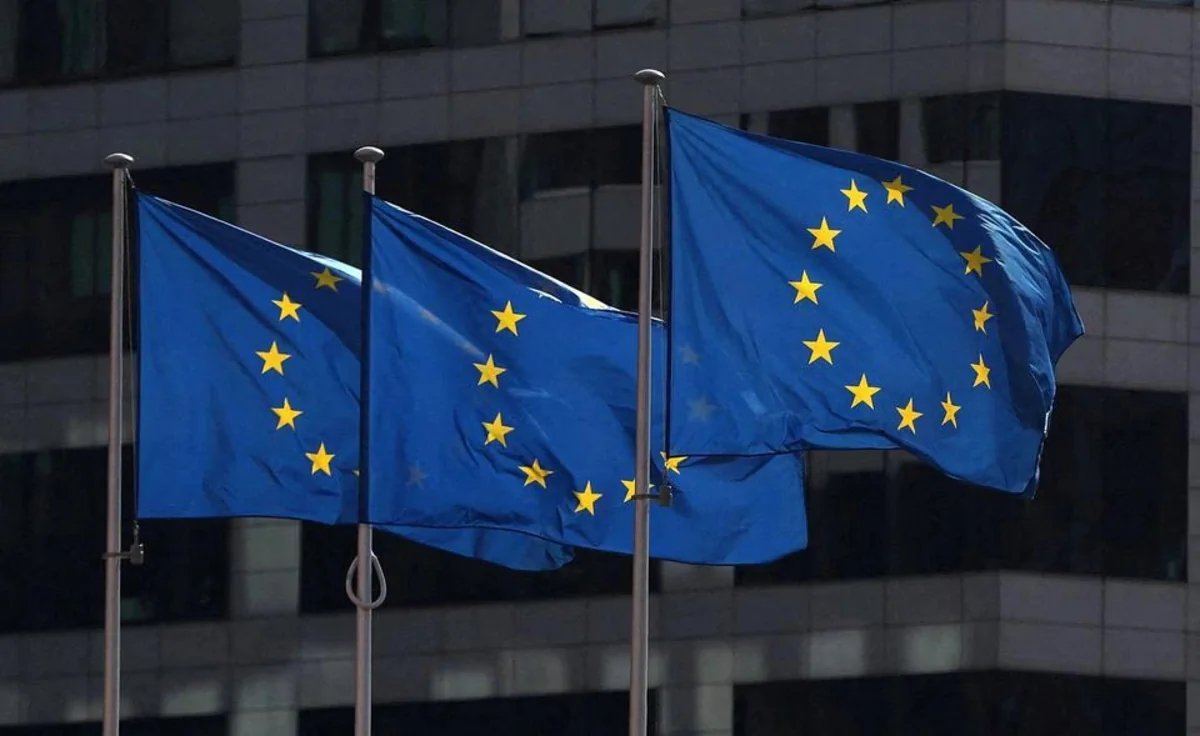
There is a particular kind of diplomatic choreography that gives away more than the speeches do. It must have raised questions as to who was courting whom when Ursula von der Leyen, Antonio Costa, and Kaja Kallas visited Baku over a period of ten months – the president of the European Commission, the president of the European Council, and the European Union’s chief foreign policy official, respectively – all making a beeline to a nation of ten million on the western shores of the Caspian Sea. The official framing, delivered by the EU's newly appointed ambassador to Azerbaijan, Marijana Kujundžić, at a roundtable in Baku last week, was suitably diplomatic.
"We are entering a new phase of our relations," she said. "They have intensified." Negotiations on a new bilateral agreement, stalled for years, are set to resume at the end of September. The EU, she noted, remains Azerbaijan's largest trading partner, three decades after the two sides signed their first partnership agreement in 1996.
All true, and all beside the more interesting point. There is definitely an 'unevenness' in the traffic of visitors between Brussels and Baku. Azerbaijani delegations visiting Brussels consist mostly of ministers, like Minister of Foreign Affairs Jeyhun Bayramov and Minister of Energy Parviz Shahbazov, whereas President Ilham Aliyev has not set foot in Brussels in years.
Perhaps it is the only possible proof of which of the two parties needs the other. The reason is not hard to find, I assume. With the conflict between Russia and Ukraine and the urgent attempts by Europe to disengage itself from Russian gas supplies, Azerbaijan went almost overnight from being simply a useful secondary supplier to a near necessity.
One of the pipelines supplying gas from Azerbaijan to the rest of Europe, via Georgia and Türkiye, through the Southern Gas Corridor, is one of the only non-Russian pipelines that the Europeans can boast about. By her own admission, von der Leyen's main objective in Baku was the implementation of an agreement signed in 2022 according to which Azerbaijan undertook to increase gas deliveries to the EU by almost twofold up to 20 bn m3 annually until 2027, as well as the construction of the "Green Energy Cable" under the Black Sea. For his part, Costa took advantage of his visit to Baku to argue for sustained EU engagement as mediator in the Armenia-Azerbaijan peace process, as well as Baku’s involvement in the development of the Middle Corridor, the Caspian transportation corridor that is now being mentioned in Brussels as a way around the Russian routes.
Kallas’ concern, on the other hand, was even more straightforward: the military-political stability of the South Caucasus, cutting off the channels through which Moscow tries to circumvent Western sanctions, and creating a modicum of security structure in the Caspian-Black Sea basin. This is when the EU's old approach begins to show its limits. The Europeans have always made their agreements on trade and cooperation subject to certain criteria – regulatory convergence, human rights standards, judicial reform, and the trappings of their "values-based" diplomacy.
Extract — continue reading at the source.