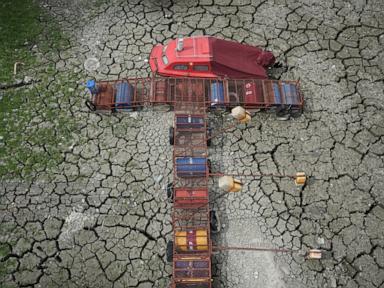
Extreme drought and heat have severely impacted the Danube River and surrounding regions NOVI SAD, Serbia -- Small boats stand idle on cracked ground in a shriveled side channel of the Danube River in northern Serbia, where the water has receded into a couple of shrinking ponds under pressure from extreme drought and heat. Fish circle in the shallow waters. He said the fish are in danger because there is too little water and its temperature is over 30 degrees Celsius (86 degrees Fahrenheit).
Persistent drought and scorching heat this summer have ravaged ecosystems and businesses across the region, from a lake in Slovenia and the side channel of the Danube in Serbia, to fish farms in Bosnia, the Czech Republic, Romania and Hungary. The fish industry has been hit especially hard, with damage estimated in the millions of euros (dollars). This is adding to the already high toll caused by problems with energy and water supplies, devastated crops, losses in river traffic and trade.
Finding themselves unprepared for this year's crisis, countries and businesses are now pondering ways to minimize the effects of future extreme weather events that scientists have tied to human-induced climate change. Around 99% of Hungary’s lands are currently under severe or extreme drought conditions, according to the national meteorological service. Desertification, a process where vegetation recedes because of high heat and low rainfall, threatens much of the Great Hungarian Plain.
Among the most affected are Hungary’s roughly 27,000 hectares (67,000 acres) of fish ponds. The country’s Agriculture and Food Economy Ministry said last week that “persistent heat and water shortages” had led to 1,588 hectares (3,924 acres) of those ponds drying out, causing the deaths of nearly 280 metric tons of fish at 20 farms. The estimated revenue loss from the damage was 1.3 billion forints ($4.2 million), the ministry said.
Producers say replacing lost fish could take years. Sometimes, operators were forced to drain one pond and divert its water to save fish in another, the Hungarian Aquaculture and Fisheries Inter-branch Organization said in early August. For fish farmers in Romania, especially those cultivating carp, this year’s blistering heatwave follows severe droughts in 2023 and 2024, the effects of which are still being felt, says Catalin Platon, president of ROMFISH National Association of Fish Producers.
In carp production, Platon said, the production cycle is three or four years. Water-use policies that prioritized irrigation for agriculture during the previous droughts, “left us with no water for the fish,” Platon complained. Fish farmers across the Czech Republic have taken various emergency measures: reducing or suspending feeding to reduce oxygen use, aerating the ponds or draining them when necessary.
Extract — continue reading at the source.