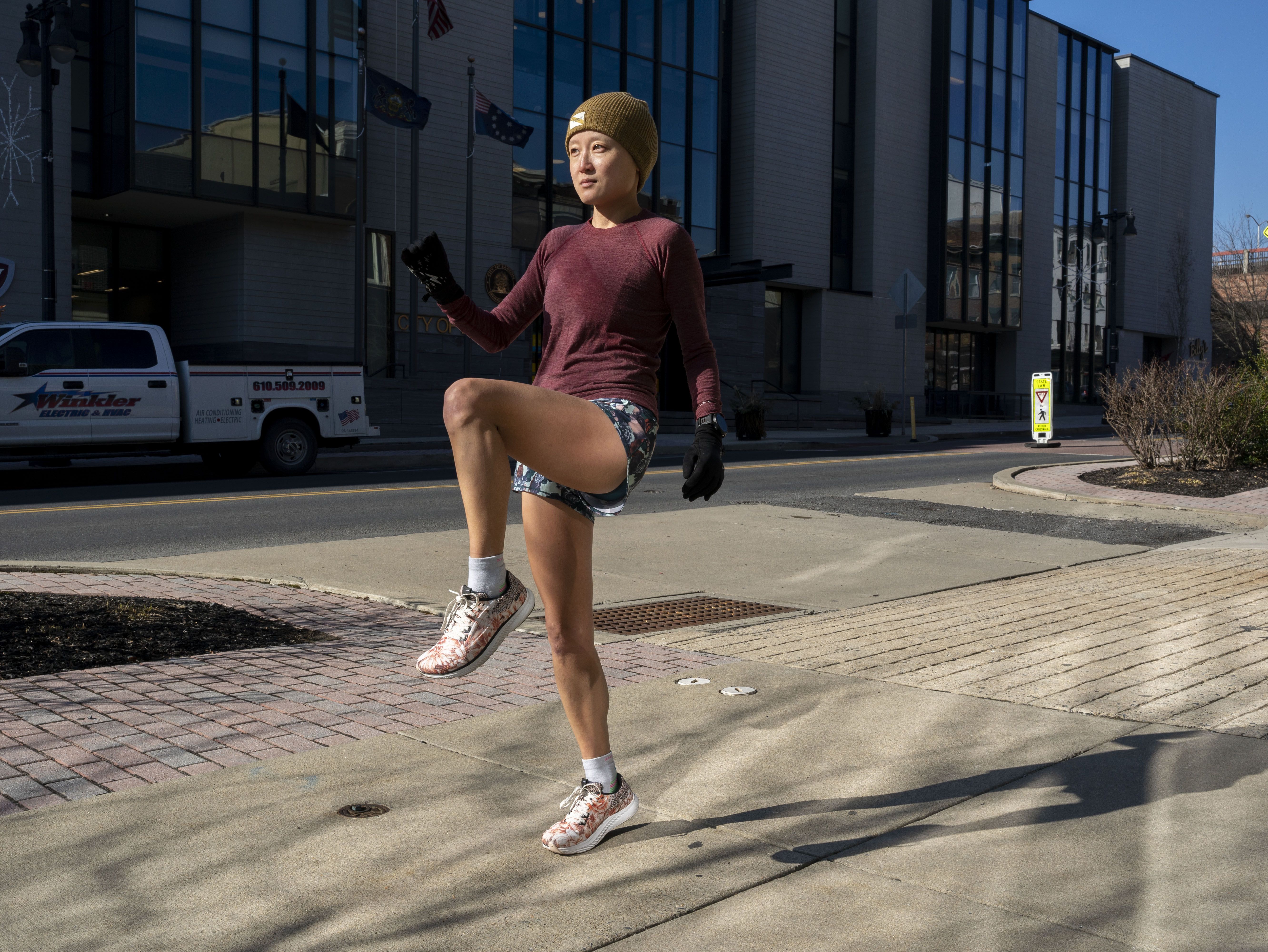
WHETHER THE PAVEMENT PR was getting old or the gauntlet of rugged terrain and varying verticals called, or you just wanted more nature, everybody is running trails now. More than a million more people were doing it last year than the year before—that’s up 9.8 million since 2019. For many runners, the unplugged vibe, the great wide open, and the way the trail demands your focus and attention transform what was once a workout into a way of life.
Even Swiss trail star star and Tudor ambassador Rémi Bonnet (pictured above) hasn’t lost touch with the intense lure of the trail. What makes me happy is that I like mountains,” he says. Let today’s top coaches and athletes help you find your footing.
YOU’RE GOING TO run at least a minute or two slower on trails than the road. To take the stress out of pace, change your watch’s main data screen to show heart rate on interval days. For long run days, Olson just does “a sanity check” to be sure his heart rate data coincides with how the run felt.
If you do check pace, let go of old numbers. A lot of great trail running is actually walking. When the gradient is steep, it’s actually more efficient to walk.
WHICH REALLY MEANS focusing on cadence, or the number of steps you’re taking per minute. NOT ONLY ARE uphills lighter on your body, they train strength. If you don’t have a lot of hills in your area, a treadmill at a steep grade (Olson takes it up to 25 or 30 percent) or a stair climber can work.
Downhill is also important, Olson says, “but it exposes you to a lot of injury risk, whether that’s tripping or putting a huge load on your bones and muscles.” Even on a modest 9 percent decline, your quads get hammered and every foot strike takes on as much as six times your body weight. The best way to master the ups and downs on trails is to run trails (surprise), and go slow. DEPRIORITIZE YOUR V02 max as a training goal.
Extract — continue reading at the source.