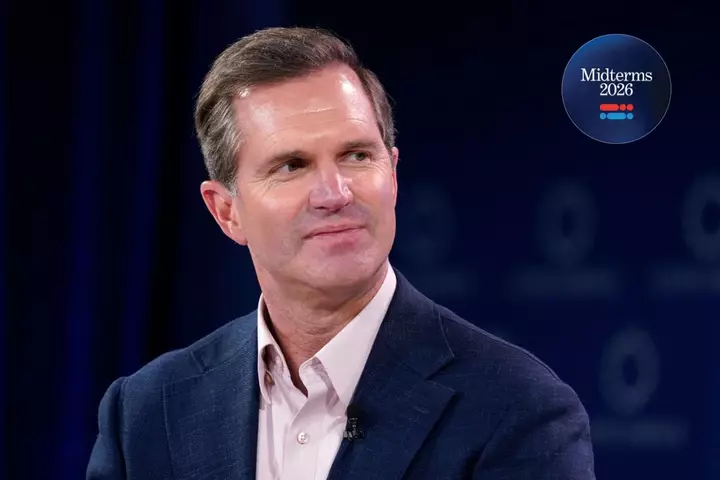
Democrats have secured a majority of governorships for the first time since 2010. The man responsible for leading the effort—Democratic Governors Association Chair Andy Beshear, the governor of Kentucky. Beshear oversaw the effort to expand the electoral battleground map to deep red states like Alaska, Iowa, and Ohio.
The map for 2028 has now been expanded." As of publication time, Democrats have flipped governor’s seats in Georgia, Texas, and Ohio, as Beshear has done previously by winning statewide in Kentucky. As Beshear weighs launching a presidential bid of his own, he said this election is proof that the Democratic Party should elevate its governors if it wants to maintain the night’s gains heading into 2028. This interview has been lightly edited for clarity.
Newsweek: This marks the first time since 2010 that Democrats have had a majority of governorships. Given that, should your party start to place a greater emphasis on states' rights, state autonomy, and state political identity. Afterall, it's been many of these states that have been key bulwarks against Donald Trump.
Governor Andy Beshear: The Democratic Party wouldn't have a brand problem if it put its governors as its face because the governors have the receipts for actually bettering people's lives. You go back to 2024, which was a rough election, Democratic governors didn't lose one seat. And then you move into ‘25 when most Democrats were feeling despair, and it was two Democratic governor elections—Abigail Spanberger and Mikey Sherrill where the DGA was heavily involved—that re-energized the Democratic Party.
People want leaders that get things done—That's what Democratic governors do, and if they would be more of the face of this party, it would be a party that more people would want to join. This cycle has been characterized nationally by buzzwords like Trump, affordability and corruption. What did gubernatorial candidates and the DGA do differently than other politicians to make sure those issues were resonating with voters at a personal and tangible level?
Well, we ensured that we were focused, that our candidates were spending 80 percent of their time talking about things that matter to 100 percent of the people of their state. Our candidates were talking about people's jobs and whether they could afford what their families need. They were talking about their next doctor's appointment and whether or not the local clinic was going to shut down because of the Trump’s Big Ugly Bill.
Extract — continue reading at the source.