The majority of mental health conditions emerges before adulthood, with prevalence increasing especially during childhood and adolescence. Coupled with high comorbidity between disorders, there is an urgent need to identify transdiagnostic mechanisms that underpin both risk and resilience to developmental psychopathology. Here we propose executive functions (EFs), a set of cognitive processes relevant for goal-directed control of thought and actions, as a promising candidate for such a mechanism.
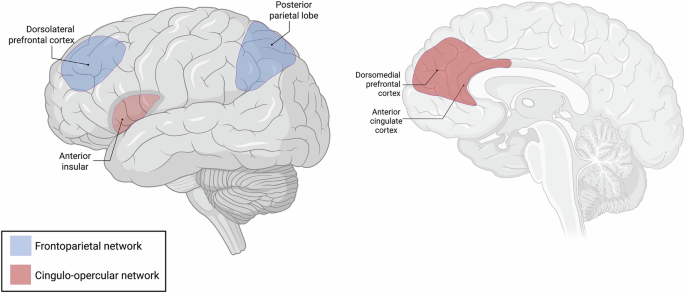
We review evidence that EF development is shaped by both genetic and environmental factors and relies on protracted maturation of neural networks, particularly frontoparietal and cingulo-opercular systems. Disruptions in these systems are associated with elevated risk for internalising and externalising disorders. We therefore propose EFs as a cognitive endophenotype of developmental psychopathology—heritable, measurable, and lying on the pathway from gene to disorder.
We review evidence showing that impaired EF is a shared feature across psychiatric conditions and predictive of future symptomatology, supporting its transdiagnostic relevance. We also propose a mechanistic refinement of the EF construct, moving beyond capacity-based interpretations to a model in which EF performance reflects dynamic and contextually informed cost-benefit computations. Disruptions in reward and effort processing—manifesting as anhedonia and apathy—are common across mental health conditions and may compromise EF performance by altering these computations.
This integrative perspective helps explain the limited efficacy of traditional EF training interventions on improving mental health symptoms and underscores the importance of motivational and contextual factors. We conclude by outlining a future research agenda focussed on disentangling the specific subprocesses underpinning EFs and their mechanistic links to developmental psychopathology. Recognising EFs as a transdiagnostic cognitive endophenotype governed by rational control processes opens new avenues for precise, developmentally informed, and targeted interventions in youth mental health.
Mental health conditions are prevalent and debilitating. They often develop early in life, with a third emerging before the age of 14, and half before age 18 [1]. In 2021 an estimated 1 in 7 (15%) adolescents aged 10–19 years experienced a mental health condition [2], with rates of mental health conditions continuing to rise in children and young people globally [3, 4].
There is therefore a pressing need to advance our understanding of underlying causal mechanisms that might be harnessed for prevention [5]. Here we review work which demonstrates how poor executive functions may be a central mechanism in the emergence and maintenance of developmental psychopathology. Executive functions (EFs) refer to a set of processes that govern the control thoughts and actions in the pursuit of goals while responding flexibly and adaptively to changes in the environment.
Extract — continue reading at the source.