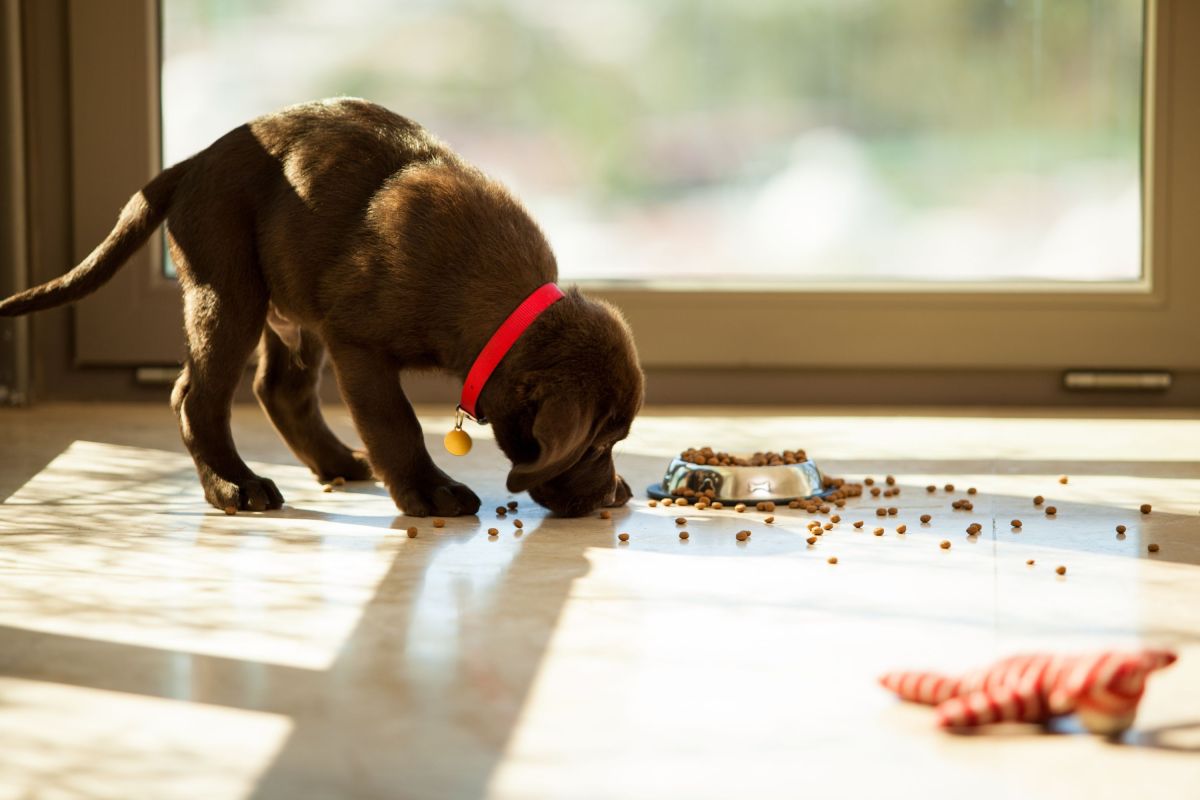
Your puppy may have outgrown its favorite bed, collar and even the puppy look, but that doesn't necessarily mean it's ready to outgrow its food. Knowing when to make the switch from puppy food to adult food isn't as simple as waiting for a dog's first birthday. Elisabetta Pierangelo, global vice president of research and development at Mars Pet Nutrition, says the timing depends largely on when a puppy has finished growing, and that can vary significantly depending on the dog's size.
"A puppy’s growth period depends on their future adult size," Pierangelo told Newsweek. A puppy reaches adulthood when it stops growing, she explained, which can happen at 10 months for very small dogs or take as long as two years for giant breeds. This means some could be ready to switch to adult food shortly after their first birthday, while others may still have important growing to do.
Pierangelo said puppies should be fed a complete and balanced diet specifically formulated for growing dogs until their growth is complete. Rather than using age alone as a guideline, pet parents should pay attention to their puppy's growth. Puppies grow rapidly at first, so owners will typically notice changes in their weight, height and body length from month to month.
As they approach their adult size, that growth gradually slows and eventually flattens out. "This is when a puppy is ready to transition to adult dog food," Pierangelo said. WALTHAM Petcare Science Institute Puppy Growth Charts can also help pet parents track their puppy's growth and determine whether it is following a healthy trajectory.
The timeline can be particularly different between breeds and sizes. Dogs can weigh as little as 4.4 pounds or more than 154 pounds as adults, and they don't all reach that size at the same rate. Small breeds generally mature sooner, while large and giant breeds can continue growing for much longer.
Because puppies are undergoing rapid development, their nutritional requirements differ from those of fully grown dogs. For example, puppies need up to three and a half times more protein than adult dogs to support muscle growth, tissue repair, immune defense and hormone signaling, Pierangelo said. Pups require twice as much dietary fat to meet their high energy demands and obtain essential fatty acids that their bodies cannot produce themselves.
Extract — continue reading at the source.