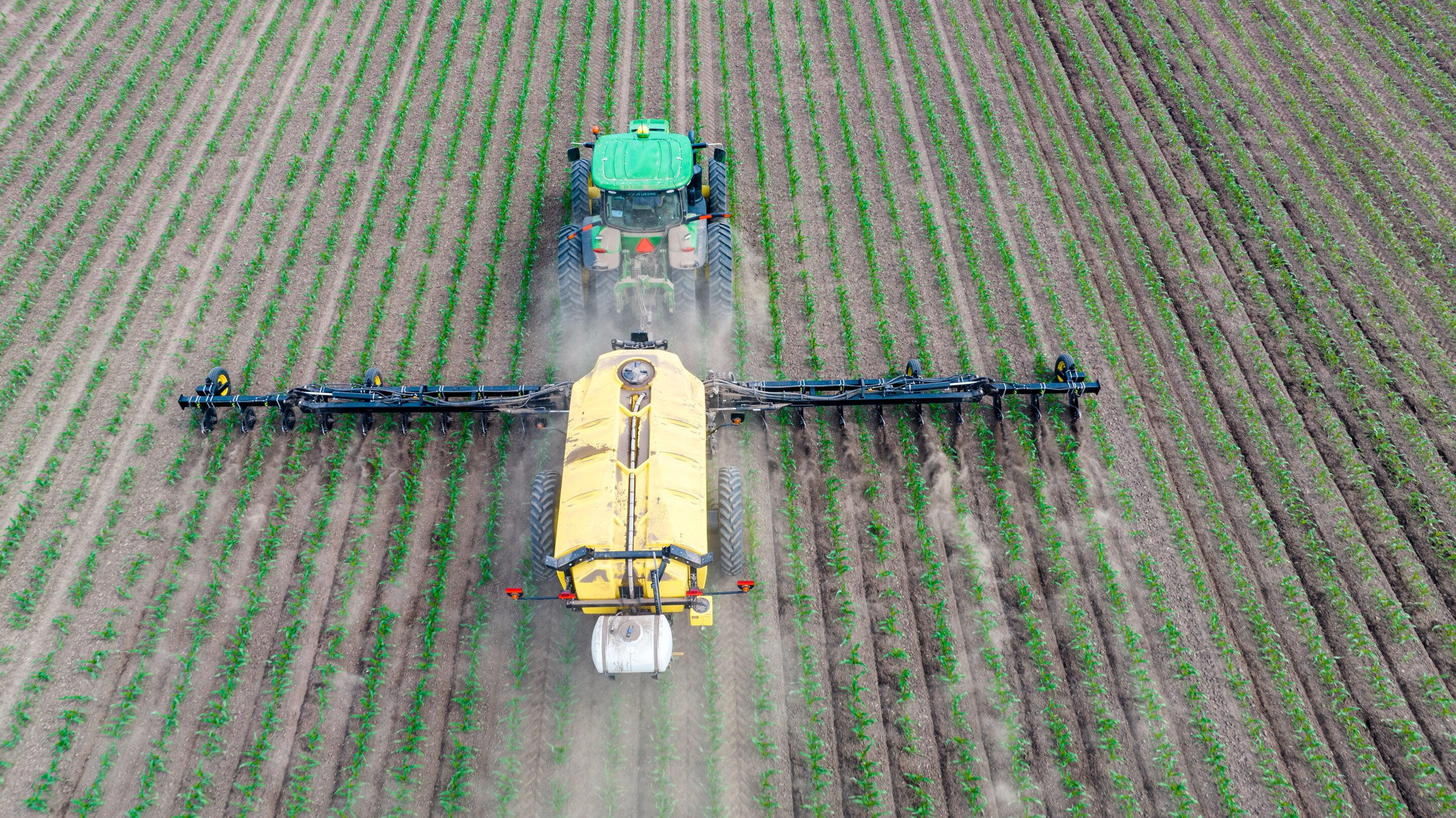
This article has been reviewed according to Science X's editorial process and policies. Editors have highlighted the following attributes while ensuring the content's credibility: Global consumption of fertilizer has doubled since 1980, but some regions that have historically overused fertilizer, including China and parts of Europe, have taken steps to reduce use. Those are some of the findings of a new global dataset from the University of Minnesota's Institute on the Environment.
Deepak Ray, a research professor at the Institute on the Environment, spent six years leading the development of a new global dataset of crop-specific fertilizer application rates. The team's analysis of the data was recently published in Environmental Research Letters. Optimizing fertilizer use—correcting underuse while reducing overuse—could produce enough crops to feed the world while limiting environmental harms.
But to achieve this balance, we need to know global fertilizer application rates—information that has existed only as fragments or snapshots in time. The new global dataset—created in collaboration with Tek Sapkota of the International Maize and Wheat Improvement Center and Achim Dobermann of the International Fertilizer Association—provides crop-specific nitrogen, phosphorus and potassium fertilizer application rates for every country from 1980 to 2022. The team compiled 800,000 existing data points and built imputation software to complete the picture.
The resulting dataset includes application rates for 156 crops, plus pastures and forests, providing the first picture of all three major nutrients at the individual-crop level in a continuous global record. "This information can help identify regions that aren't using the right amount or combination of fertilizers to achieve optimal crop yields," said Ray. "It also can identify areas that are using too much fertilizer, which is financially and environmentally costly." Getting the balance right matters.
Too little fertilizer suppresses yields, limiting food production and farmer incomes. Excessive fertilizer use, however, can result in acidic soils, preventing crops from getting the nutrients they need, and nutrient runoff, which can lead to dead zones in the ocean. Excess fertilizer can also be converted to nitrous oxide, which is approximately 300 times more powerful than carbon dioxide as a greenhouse gas.
Through crop-specific fertilizer data, countries can design targeted nutrient management strategies to reduce fertilizer imports and emissions while increasing food production. "There is no single global fertilizer challenge: Some regions need to use nutrients more efficiently, while others still need greater access to plant nutrition to close yield gaps," said Dobermann. "This dataset helps us see those differences with unprecedented clarity, providing a stronger evidence base for decisions that support both food security and environmental sustainability." The complete dataset and imputation software are available through University of Minnesota Technology Commercialization—free of charge for academic research use.
Extract — continue reading at the source.


