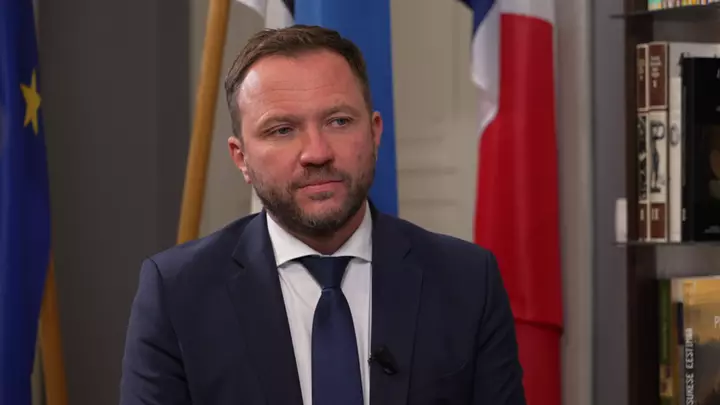
Takeshi Niinami, former chair of the Japan Association of Corporate Executives, or Keizai Doyukai, has criticized Japan’s social trend of labeling people suspected of wrongdoing as guilty before the facts are known. In September last year, the 67-year-old resigned as Keizai Doyukai chief and as chair of beverage giant Suntory Holdings after facing allegations he had imported illegal supplements into Japan. Prosecutors decided not to indict him in May this year.
In a recent interview, Niinami reiterated that the allegations were unfounded. Based on his experiences of the public backlash over reports of his case, he voiced concerns that a climate of presuming people to be guilty in Japan may thwart efforts to invite overseas talent to work in Japan. Still, Niinami said the entire investigation process involving the Fukuoka Prefectural Police department and other parties was “careful and detailed,” with those asking questions in the investigation being “polite.” “I wasn’t under mental stress,” he said.
On his current plans, Niinami said he will start teaching students at Stanford University in the United States about crisis leadership this month as a visiting scholar. He denied that he might return as an executive of a business group, saying he is better suited to filling a role assisting next-generation presidents, such as a chair or an outside director. Touching on the growth strategy of the administration of Prime Minister Sanae Takaichi, which focuses on artificial intelligence, semiconductors and quantum technologies, Niinami said that an institution should be established to oversee the plan-do-check-act (PDCA) cycle, with the private sector taking the initiative in such efforts.
Extract — continue reading at the source.