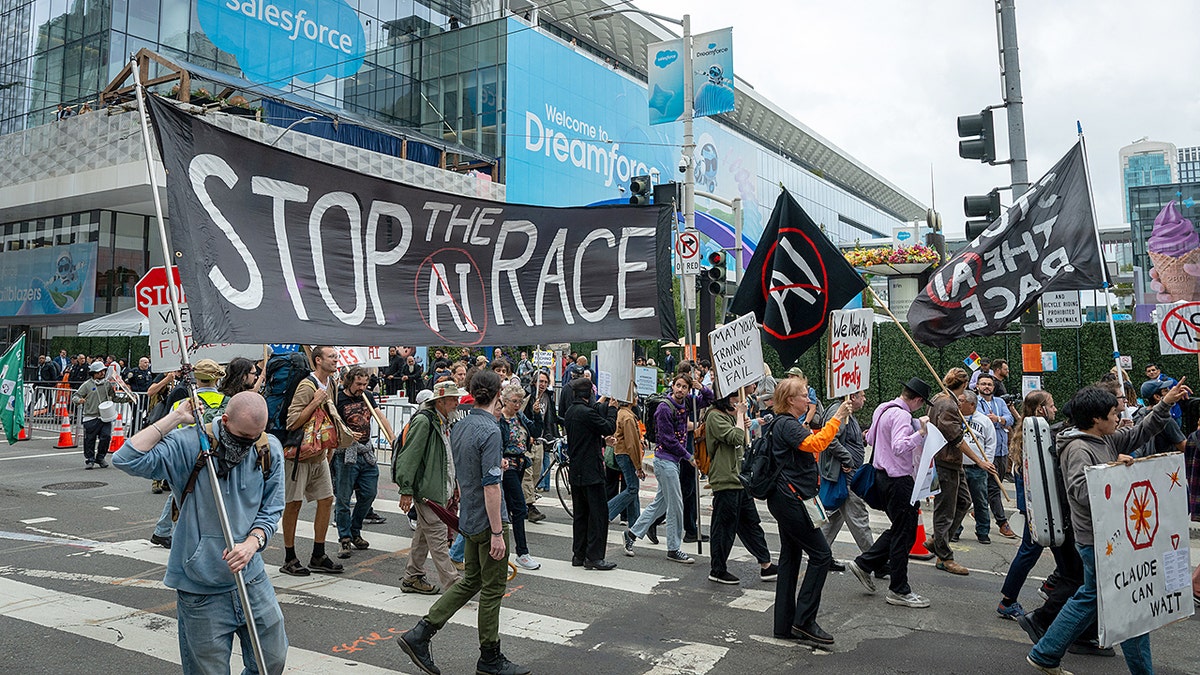
As artificial intelligence becomes increasingly politicized ahead of the midterm elections, the latest Fox News national survey finds voters struggling to reconcile the technology’s promise with the economic and environmental costs of the data centers needed to power it. They are especially against allowing centers in their communities while favoring them in remote locations, creating a "Not In My Backyard" dynamic. A 71% majority opposes building AI data centers in their area, including 46% who strongly oppose them.
Both of those numbers are up a touch since earlier this summer. However, the survey reveals a paradox: a 52% majority favors building them in remote locations (44% oppose). FOX NEWS POLL: SQUEEZED BY COSTS, FRUSTRATED VOTERS TURN TO THE DEMOCRATS The central contrast is seen across community types, as about 7 in 10 urban, suburban and rural voters oppose data centers in their backyards.
That consensus fades regarding remote facilities: half of urban voters (50%) and a majority of suburban voters (57%) favor building them there, while 51% of rural voters remain opposed. Women, White voters, those without a college degree, and Democrats are more likely than men, nonwhite voters, college graduates, and Republicans to oppose data centers, whether near their community or elsewhere. When presented with arguments for and against data centers, reactions are nuanced.
By roughly 30 points, voters are less likely to support construction if told data centers could strain local water supplies (by 28 points), raise energy bills (29 points), or grow to an enormous size (29 points). FOX NEWS POLL: 71% THINK TRUMP ADMINISTRATION LACKS PLAN TO END IRAN WAR Opposition softens when voters see direct benefits to daily life or national interests. They are more likely to be supportive if told data centers are necessary for online activities such as streaming and banking (9 points), critical infrastructure like transportation and water systems (13 points), or help maintain a competitive edge over countries like China (18 points).
These reactions to additional information operate against a backdrop of AI pessimism. Majorities of voters are more likely to see AI as bad rather than good for the U.S. economy (54% bad vs. 36% good), mental health (54-34%), society (56-34%), the environment (60-30%), and jobs (63-29%). The lone exception is day-to-day life, where more voters say AI is a good thing by 4 points (47% good, 43% bad), down from an 11-point spread in November 2025 (50-39%).
Overall, AI technology is viewed more negatively than positively by 23 points (37% favorable vs. 60% unfavorable), widening from an 11-point deficit in April and 9 points in July. The underlying demographic patterns mirror those for data centers. Democrats (67% unfavorable), White voters without a college degree (65%), women (64%), and independents (64%) are the most negative.
Extract — continue reading at the source.