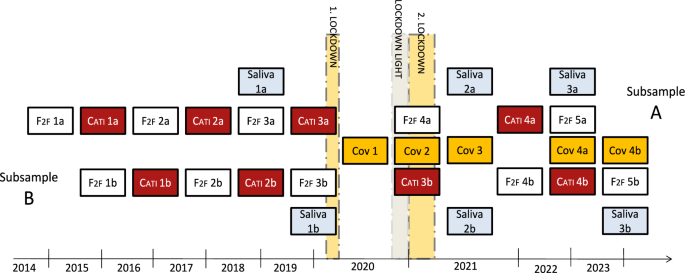
Several meta-analyses have shown that the COVID-19 crisis and the efforts to contain the virus have had a significant impact on mental health, leading to an increase in anxiety-related symptoms, especially in the first phase of the pandemic. The present paper aimed to investigate the development of anxiety symptoms throughout the course of the pandemic in a non-clinical sample. Using longitudinal data from the German TwinLife panel, the study investigates how stressor-related perceptions of threat and burden mediated the development of anxiety symptoms while acknowledging individuals’ genetic susceptibility to developing anxiety symptoms, as well as sex differences.
The study expands the understanding of pandemic-specific processes by incorporating pre-pandemic anxiety levels. Anxiety symptoms remained remarkably stable during the pandemic in relation to pre-pandemic anxiety levels, underscoring the relevance of pre-pandemic differences in anxiety as pandemic risk factors. Genetic predispositions explained differences in initial anxiety levels and in perceived threat and burden, but not in anxiety change over time, which calls for research on the environmental factors through which these predispositions are realized.
Females showed higher initial anxiety, and perceived threat and burden mediated changes in anxiety significantly only in females. Whether these sex differences in mediation reflect distinct mechanisms remains to be tested in future studies. In order to contain the COVID-19 pandemic, governments around the globe took measures that interfered extensively with the lives of people1.
Various meta-analyses have shown that the COVID-19 crisis and the attempts to contain the virus have had an impact on mental health, leading to an increase in anxiety-related symptoms, especially in the first phase of the pandemic (e.g.2,3,4,5). Anxiety and worrying can be seen as natural reactions humans show when faced with certain (unknown) environmental or psychological factors6. According to the American Psychological Association7, anxiety is defined as a future-oriented, long-lasting response in reaction to diffuse threats, making it particularly relevant in the context of longer-term crises such as the COVID-19 pandemic.
Along with the pandemic came many potential threats to one’s personal health (e.g., infection risk), financial security (e.g., uncertain economic developments and individual chances for employment), or fulfillment of social or recreational needs (e.g., lock-downs and restrictions8). Uncertainties and stressors can elicit changes in mental health in various ways and the cumulative risk approach posits that a greater number of stressors can elevate the risk for symptoms of psychopathology9. Several studies have already found that during the COVID-19 pandemic, a higher degree of exposure to pandemic-related stressors was associated with an increased risk of mental health problems10,11,12.
Some of the strongest risk factors predicting change in mental health during the pandemic are economic stressors, like job or wage loss, general financial concerns, as well as the perceived effects of the COVID-19 pandemic on daily life13,14,15,16. Accordingly, research to date suggests that pandemic-related stress perceptions (e.g., feeling threatened or burdened by the pandemic’s consequences) mediated changes in anxiety during the pandemic. Hence, we expect that people who perceive greater threat and burden report higher levels of anxiety symptoms.
Extract — continue reading at the source.