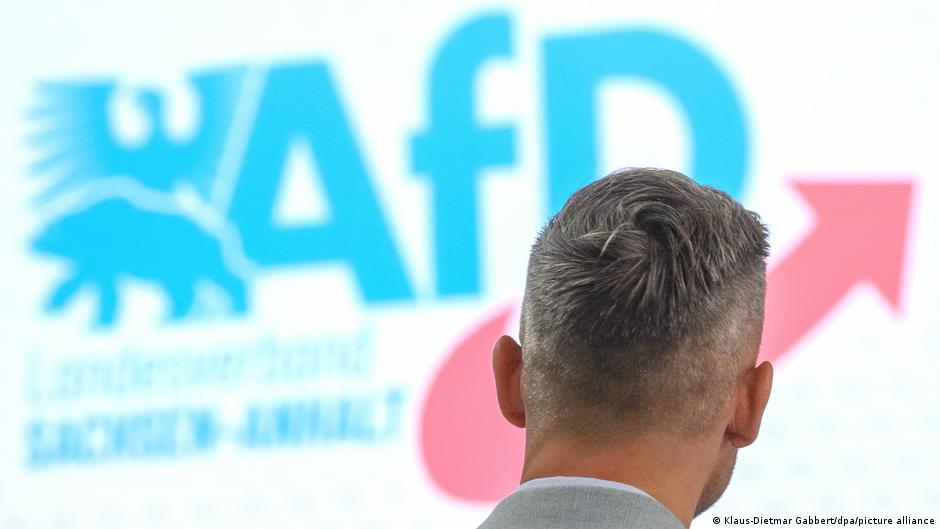
Germany is watching the upcoming state election in the eastern state of Saxony-Anhalt with keen interest. Much of the attention is focused on the performance of the far-right Alternative for Germany (AfD), whose state branch in Saxony-Anhalt has been classified by the domestic intelligence agency as "confirmed right-wing extremist." According to opinion polls, the AfD could emerge as the clear election winner. In the last state election in 2021, the AfD won around 20% of the vote and has since been the largest opposition party.
The state is governed by a coalition of the Christian Democrats (CDU), the Social Democrats (SPD) and the Free Democrats (FDP), with Sven Schulze (CDU) serving as state premier. The AfD is campaigning on the claim that Saxony-Anhalt has been left behind — both socially and economically. The unemployment rate in Saxony-Anhalt is higher than the national average, while median earnings for full-time employees are lower than across Germany as a whole.
Of Saxony-Anhalt's roughly 2.1 million residents, just under 800,000 are in jobs subject to social security contributions. The chemical industry has traditionally been one of the state's major employers and among the most productive sectors of the economy, particularly in the so-called chemical triangle around the cities of Leuna, Merseburg and Bitterfeld-Wolfen. Machinery and plant engineering companies, including suppliers to the struggling automotive industry, also play an important role in the manufacturing sector.
The retail, transport and hospitality sector accounts for around one-fifth of jobs, including many positions in tourism. The Harz Mountains, the Luther cities of Wittenberg and Eisleben, and Quedlinburg, with its UNESCO World Heritage status, are key destinations. The perception that the eastern German states have still not caught up with the former West German states appears to resonate with voters.
The AfD has built broad support around this message, particularly among younger voters. It is often claimed that pensions are lower in eastern Germany than in the West, but this is no longer the case. It is true, however, that the proportion of pensioners in Saxony-Anhalt is slightly higher than the national average.
Many pensioners in the East also rely solely on their state pension, whereas many in the West receive company pensions or income from private retirement savings in addition to their state pension. Partly because of its higher proportion of pensioners, Saxony-Anhalt has one of the lowest levels of economic output per capita in Germany, at just three-quarters of the national average. The state's economy has also generally grown more slowly than the national economy in recent years.
Extract — continue reading at the source.