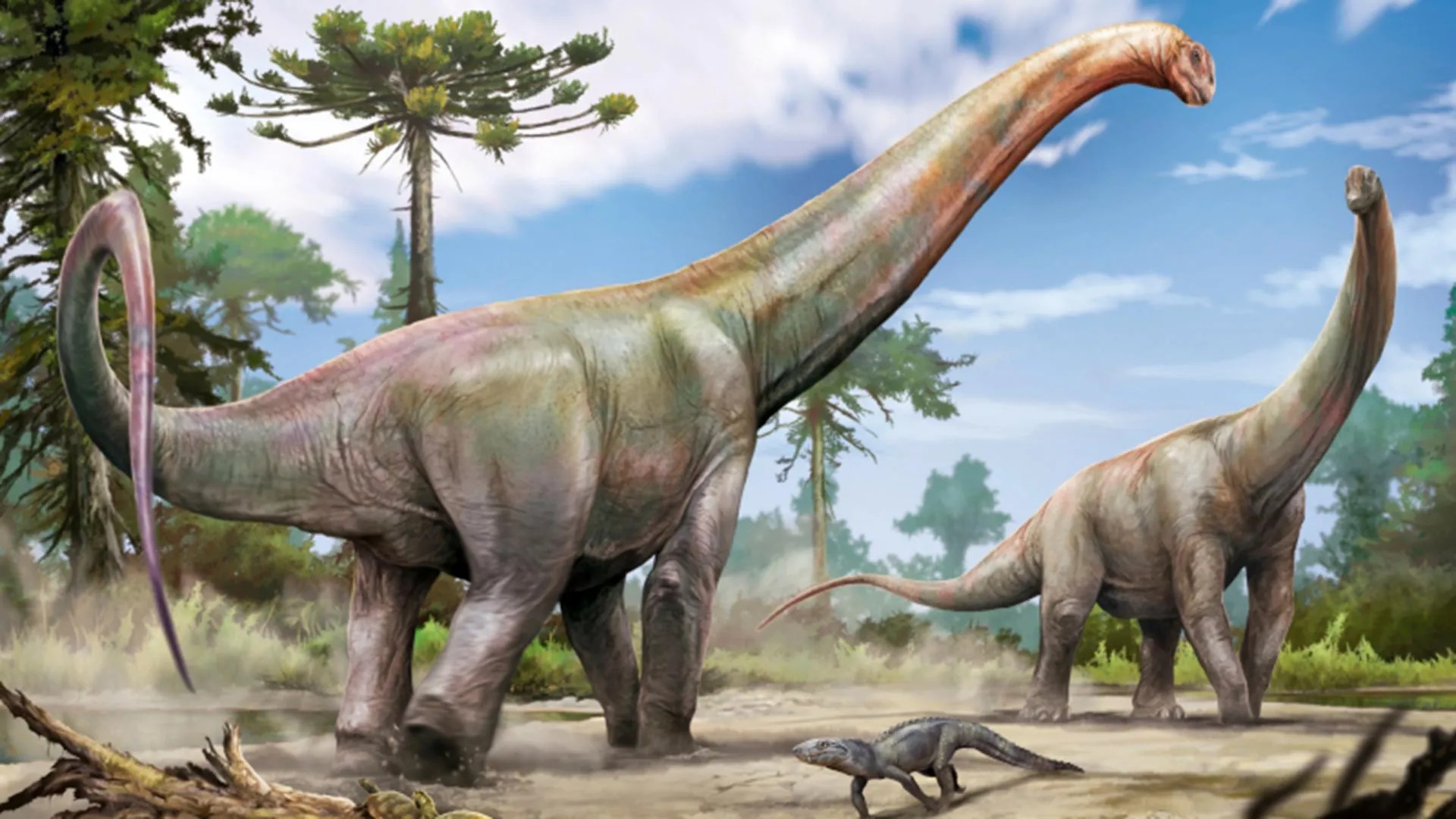
A newly identified dinosaur species discovered during construction work in northeastern Brazil is offering fresh clues about how giant dinosaurs spread across ancient continents. The species, named Dasosaurus tocantinensis, is described in a study published in the Journal of Systematic Palaeontology. The animal measured about 20 meters long and lived roughly 120 million years ago.
Its fossils were found at the site of a road rail terminal under construction in Davinópolis, a city in the state of Maranhão. One of the most striking aspects of the discovery is the dinosaur's evolutionary connection to Europe. Its closest known relative lived in what is now Spain, suggesting that these animals belonged to a broader lineage that once occupied regions that are now separated by the Atlantic Ocean.
Researchers propose that the ancestors of Dasosaurus tocantinensis reached South America by moving through North Africa sometime between 140 and 120 million years ago. At the time, these landmasses were still connected within the supercontinent Gondwana. "It's the largest known dinosaur for Maranhão, which has other species, but not sauropods like this one; rather, it has smaller ones, such as the diplodocid Amazonsaurus maranhensis, which was about 10 meters long," says Elver Luiz Mayer, a professor at the Federal University of the São Francisco Valley (UNIVASF) in the state of Bahia.
Mayer normally studies mammals from the Quaternary period, which is far more recent than the age of the dinosaur fossils. He became involved with the find in 2021 while working in São Félix do Xingu in the state of Pará, where he was then a professor at the Federal University of Southern and Southeastern Pará (UNIFESSPA) The fossils had been uncovered by archaeologists who were monitoring the Davinópolis construction project as part of environmental licensing requirements. At first, the remains were thought to belong to large prehistoric mammals that may have lived alongside ancient humans.
Mayer quickly suspected that the bones were much older. "Given its depth of about eight meters, I realized that it was much older. The age of the geological formation was already known from previous research and indicated that it was material from the transition from the Lower to the Upper Cretaceous, about 120 million years ago," says Mayer.
He then contacted various specialists and formed a multidisciplinary group to study the specimen. The fossils went through an extensive preparation process before being analyzed in Pará. Afterward, the specimen was returned to Maranhão.
Extract — continue reading at the source.


