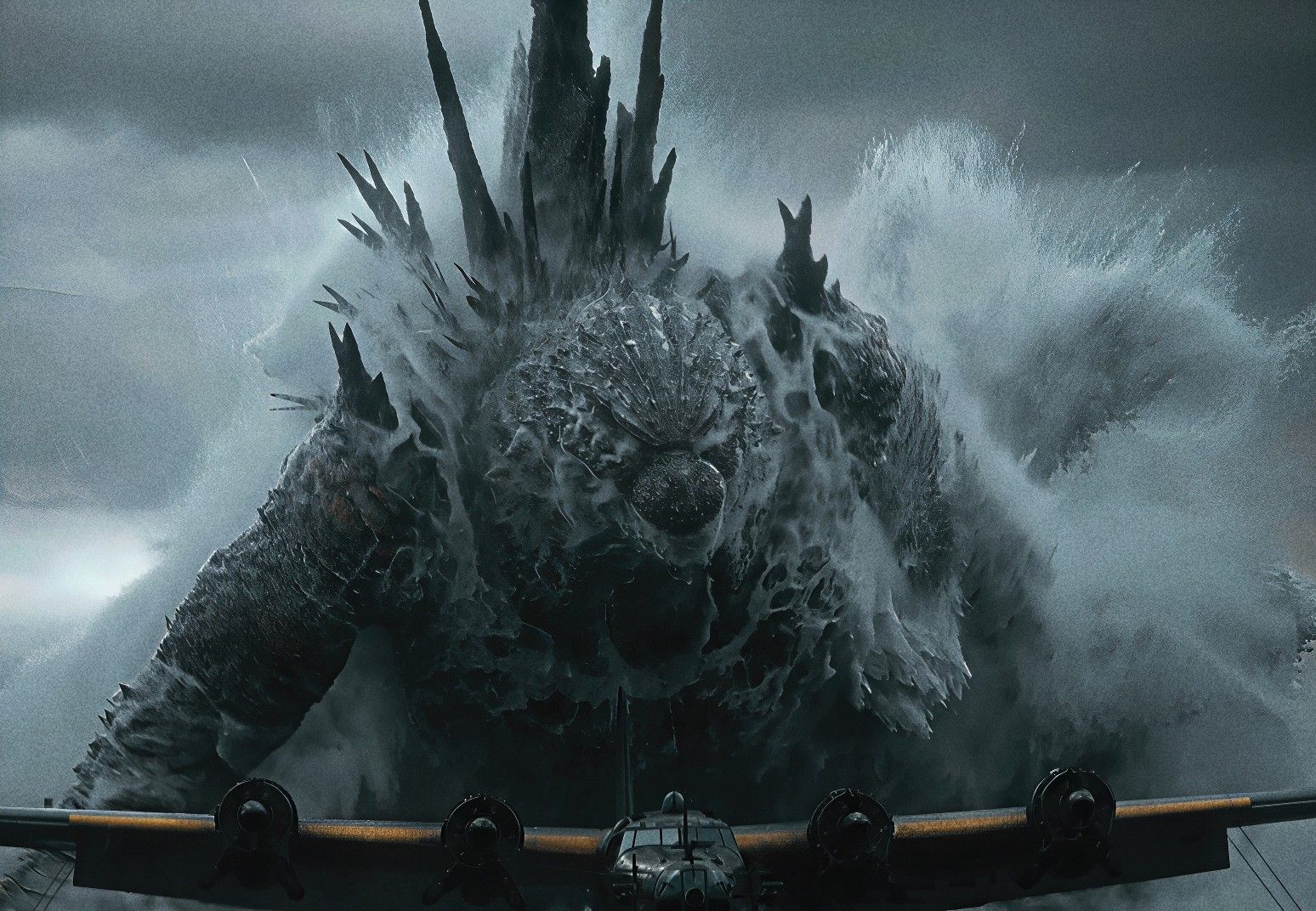
Godzilla Minus One was a primordial blast of pure kaiju energy, calling back to the 1954 original while pushing the limits of storytelling and special effects in the monster movie genre. So how did writer-director Takashi Yamazaki follow that up? By going even bigger with a direct sequel in Godzilla Minus Zero, which is playing now in theaters across the planet.
In an interview with Polygon, the film's producer, Kazuaki Kishida, wouldn't say exactly how big the budget for Godzilla Minus Zero was (though it's been confirmed to be a significantly "more" than Minus One's $15 million), but he did reveal one way that extra money changed how Yamazaki and his team approached making the sequel. "With Godzilla Minus One, there were 35 artists working on the VFX," Kishida says. "With the additional resources, we had the option to scale that up a lot more, but we only increased it to about 50." According to the producer, this choice directly reflects Yamazaki's style of filmmaking.
He's not just the writer and director, he's also the VFX supervisor overseeing every piece of art created for the film. Keeping the team small allowed Yamazaki to retain that same level of quality control. He likes the idea of everyone being on the same floor "He likes the idea of everyone being on the same floor," Kishida says.
"He can just roll his chair around, take a look at different shots, give feedback, go to the next artist, etc. That exchange of ideas and that environment was very important to him." Speaking to Kishida and the team behind Godzilla Minus Zero, it quickly becomes clear just how vital that "exchange of ideas" really is to Yamazaki. In our interview, the team behind this new kaiju spectacle break down some of its most memorable moments, from the sights and sounds of King Ghidorah to that awesome New York City sequence.
Godzilla's arrival in New York City was teased in the earliest trailer for Minus Zero, but this turned out to be a bit of a trick. The monster never actually travels to America in the movie. Instead, we're seeing the fantasy of one character who survived the nuclear bombing of Hiroshima and plans to weaponize Godzilla to get revenge on the United States.
The sequence begins with the kaiju toppling over the Statue of Liberty and ends with a massive energy blast that eviscerates a large chunk of Manhattan as the flesh melts off the faces of anyone unlucky enough to be in the blast radius. We increased the size of Godzilla for that scene. It's a terrifying, visually stunning moment, and the fact that it doesn't actually happen in the movie gave Yamazaki and his team the freedom to go even further than they normally would with Godzilla — but it also introduced some unique limitations.
Extract — continue reading at the source.