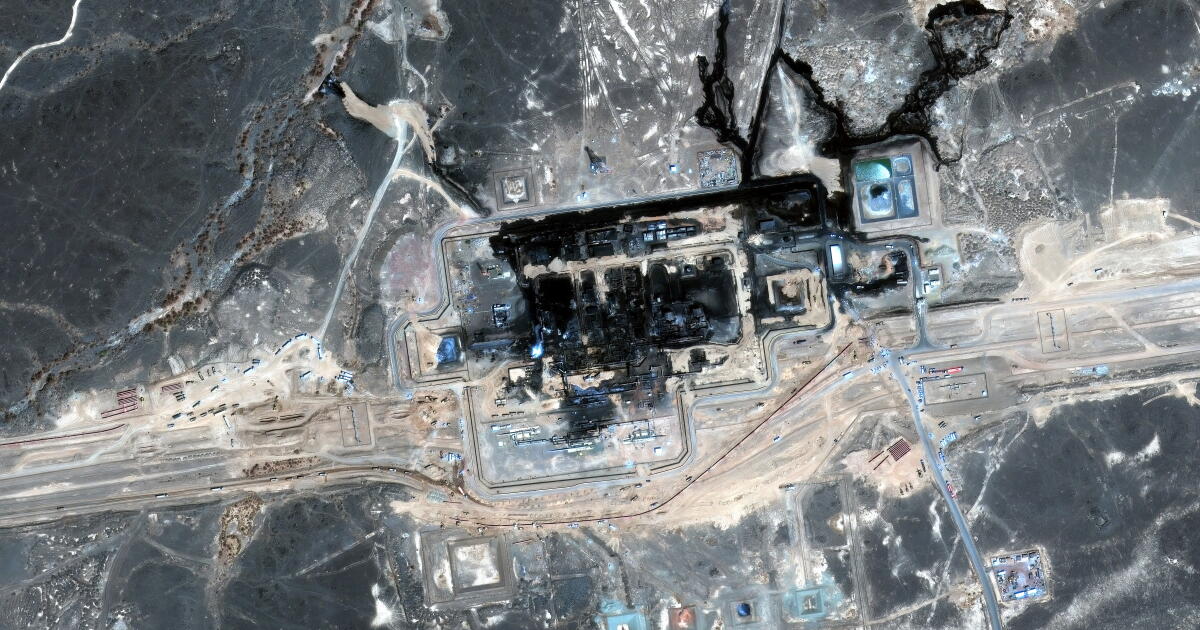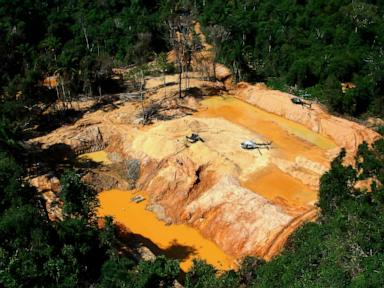
A new report by the Amazon Environmental Research Institute has found that gold mining poses a significant threat to Indigenous lands in the Brazilian Amazon SAO PAULO -- Indigenous lands face the greatest threat from the expansion of gold mining in the Brazilian Amazon, according to an analysis released Tuesday by the nonprofit Amazon Environmental Research Institute, known as IPAM. The area affected by gold mining across the Amazon was 20 times larger in 2024 than in 1985. The growth was even more dramatic on Indigenous lands, where mining covered 24 times as much land — and expanded nearly sevenfold between 2016 and 2024 alone.
Record-breaking gold prices, driven largely by investor demand for safe assets amid rising global risks, have driven a renewed mining rush in the Amazon, spiking deforestation and mercury contamination of riverine and Indigenous communities. IPAM said the mining is aggravating the climate risks facing Indigenous communities. Climate change, driven primarily by human activities that increase greenhouse gas concentrations in the atmosphere, has intensified droughts and heat in the Amazon.
One of them is the Munduruku Indigenous Territory, located in the northern state of Para. Earlier this month, representatives of the Inter-American Court of Human Rights traveled to Para for a series of hearings with the Munduruku people, including sessions in their territory. The visit sought to assess Brazil’s compliance with provisional measures recommended by the court in 2022 to protect Indigenous communities’ rights.
Munduruku leaders presented evidence — including satellite imagery and field-monitoring reports — showing that illegal gold miners had returned to the territory, after federal operations in 2024 and 2025 expelled them. They also reported that health impacts include a surge in malaria cases, higher infant mortality rates and mercury contamination linked to delays in children’s language and motor development. Under President Luiz Inácio Lula da Silva, Brazilian authorities have stepped up efforts to combat illegal mining.
Police and environmental agencies have carried out major operations targeting criminal networks, while investigators have increasingly used forensic science to trace gold and identify illegally mined metal. Still, enforcement has not eliminated illegal mining across the Amazon. When authorities destroy mining equipment in one area, miners often move elsewhere or resume operations after officials leave.
In the Munduruku territory, Indigenous watchdogs had identified 10 new illegal mining sites as of August. In a Sept. 10 statement, Brazil’s Ministry of Human Rights said that government officials attended the hearings and discussed continued territorial enforcement, along with improvements to the water supply and food safety. The ministry also acknowledged the need for a “more detailed technical response” to mercury contamination.
Extract — continue reading at the source.