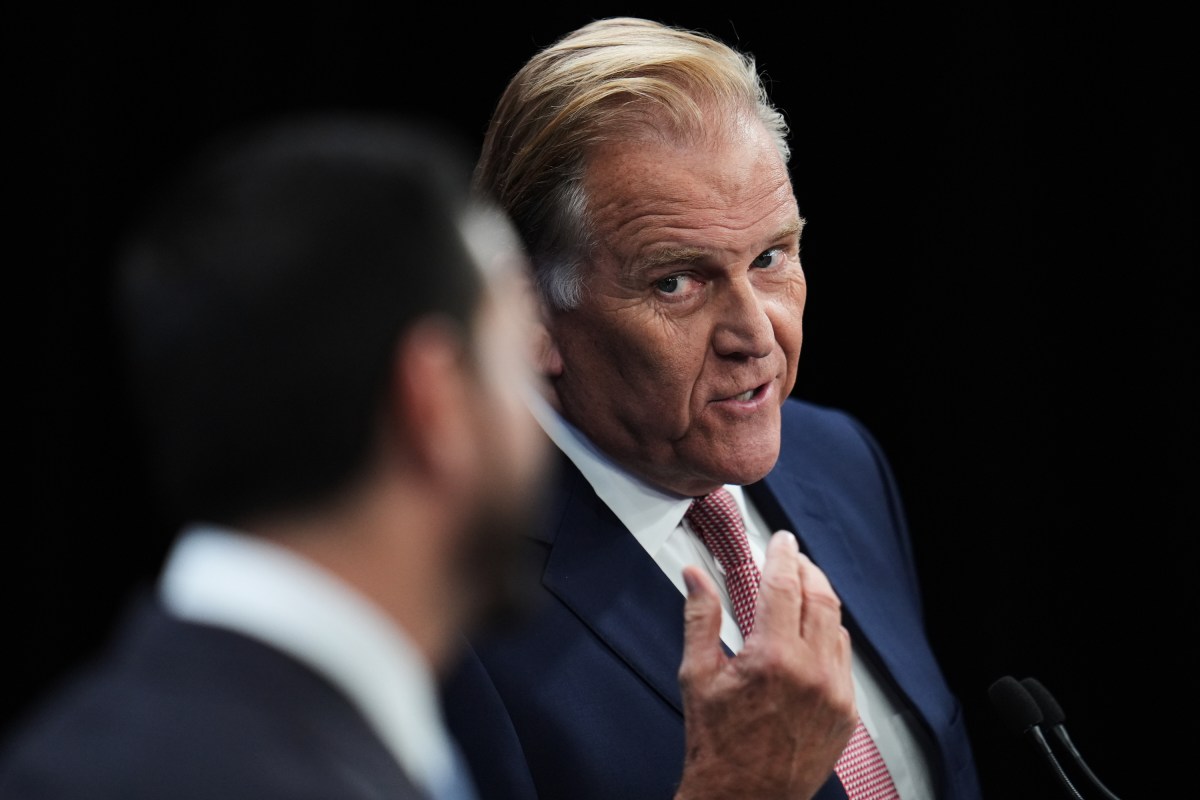
Republicans have a shot at a Michigan Senate seat that Democrats have held since 1979, and three weeks before Election Day on November 3 the race between former Representative Mike Rogers and Democrat Abdul El-Sayed is close. The seat is open because Democratic Senator Gary Peters decided not to seek a third term. Democrats have held it since Carl Levin defeated Republican Senator Robert Griffin in 1978.
Levin served for 36 years before Peters succeeded him in 2015. A Rogers victory would also end a longer losing streak for Republicans. The party has not won a Senate race in Michigan since 1994, when Spencer Abraham captured the state's other seat in the upper chamber of Congress.
El-Sayed holds a slight lead in polls released this month, mostly within the margin of error. The Cook Political Report rates the race a Toss-Up, and strategists in both parties count it among the handful of contests likely to determine who controls the chamber in January. Rogers came within 20,000 votes of beating now-Senator Elissa Slotkin in 2024.
He had no primary opponent this time and carries President Donald Trump's endorsement. El-Sayed, a progressive and former public health official backed by independent Vermont Senator Bernie Sanders, edged Michigan Representative Haley Stevens in the August 4 Democratic primary by less than a percentage point. Newsweek reached out to the Rogers and El-Sayed campaigns for comment via email on Monday.
Six polls taken between late September and this past weekend have El-Sayed ahead, from 1 point to 7 percentage points. The newest, an InsiderAdvantage survey of 1,200 likely voters conducted October 9-10, put El-Sayed at 48 percent and Rogers at 46 percent, with 5 percent undecided. Wedgewood Polls was in the field the two days prior and gave El-Sayed his best number of the stretch, 53 percent to Rogers' 47 percent among 607 likely voters.
Other recent surveys showed a race inside the margin of error. Quantus Insights found El-Sayed up 48 percent to 47 percent among 744 likely voters polled October 5-6. YouGov, working with a much larger sample of 3,947 likely voters September 22-October 4, also landed on a one-point gap, 49 percent to 48 percent.
Extract — continue reading at the source.
