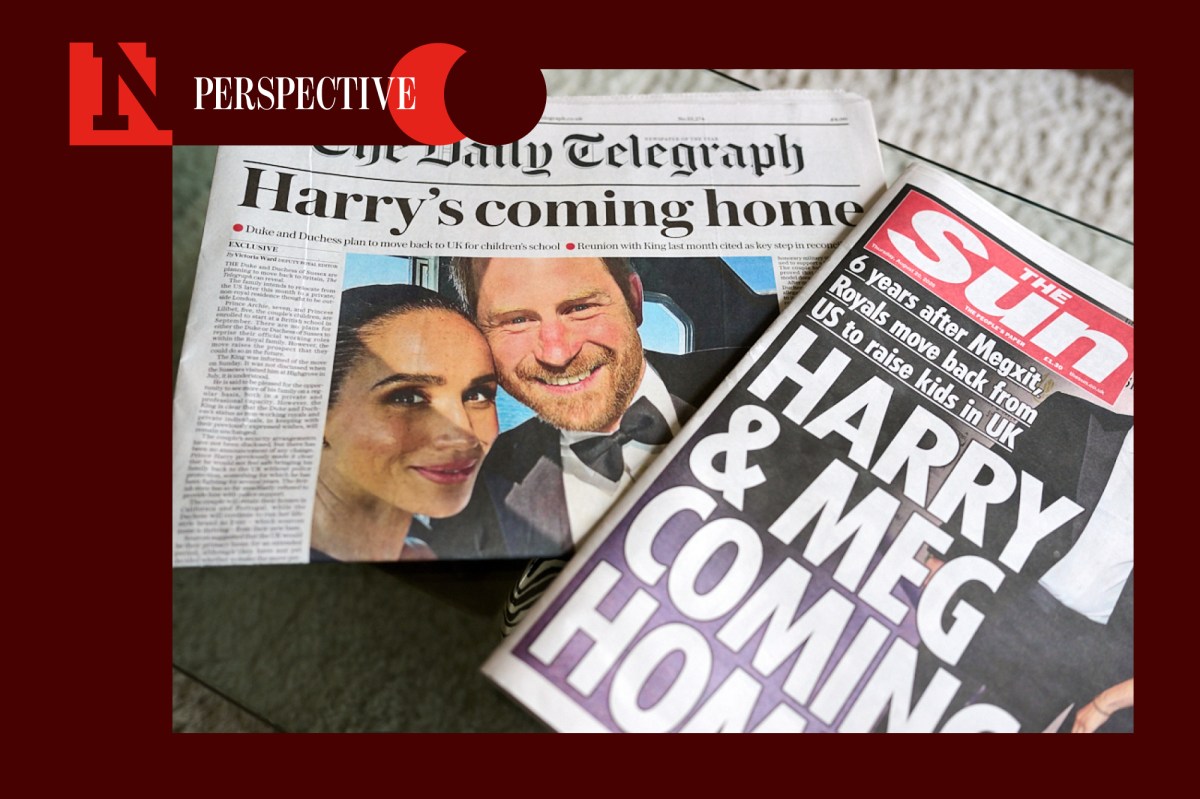
Prince Harry and Meghan Markle have returned to Britain six years after escaping a country they said had become intolerable, only to find that many of the pressures they described in 2020 now seem less like royal peculiarities than features of British life. The Duke and Duchess of Sussex arrived in the United Kingdom with their children on Wednesday for an extended stay, while remaining outside the ranks of working royals and retaining their home in California. Their timing is, to say the least, interesting: when Harry and Meghan announced their retreat from royal life on January 8, 2020, they spoke carefully of wanting financial independence and enough “space” to raise their son while dividing their lives between the U.K. and North America.
They were leaving, though nobody could know it then, on the lip of a national rupture. Within weeks came COVID-19; within a year Britain had completed its departure from the European Union’s single market; then came the energy-price shock, falling living standards and a period of political disorder that would bring four prime ministers in six years. The country the Sussexes left was already angry and divided, but the one they have returned to is poorer, less trusting and more visibly strained.
What emerged afterward from Harry and Meghan’s own account was darker. Harry said the British press had become toxic, described racism as a significant factor in leaving the country and told Oprah Winfrey that the couple had spent years asking the royal institution for help. Six years later, the striking thing is how much of the language once attached to their very peculiar royal crisis—feeling trapped, unheard, exposed and badly served by powerful institutions—now has echoes far beyond palace walls.
January 2020 turns out to be an unusually revealing date from which to measure Britain's decline. The Sussexes left just before the pandemic, the completion of Brexit, the European energy shock and a prolonged squeeze on living standards. Sure, Britain was hardly alone in absorbing those blows, but the before-and-after comparison is striking.
At the end of 2019, real household disposable income per person stood at £6,377 (about $8,669). In the first quarter of 2026 it was £6,295 (about $8,558), according to the Office for National Statistics: Britons on this measure were still slightly poorer in real terms than when the Sussexes left. Daily life feels sharply different, though: food prices were 38 percent higher in July 2026 than in January 2020, rising from an index level of 104.1 to 144.0.
Falling inflation doesn’t really make up for those accumulated increases, especially when analyzed alongside other factors, like public services: England's elective NHS waiting list stood at 4.4 million in December 2019, with 1,467 cases waiting longer than a year. By June 2026, the list had reached 7.3 million treatment pathways, including 105,711 waits longer than 52 weeks. To be clear, Britain is not in ruin.
Extract — continue reading at the source.